
Cracking Sounds After Knee Injury? Research Shows Possible Early Osteoarthritis Changes
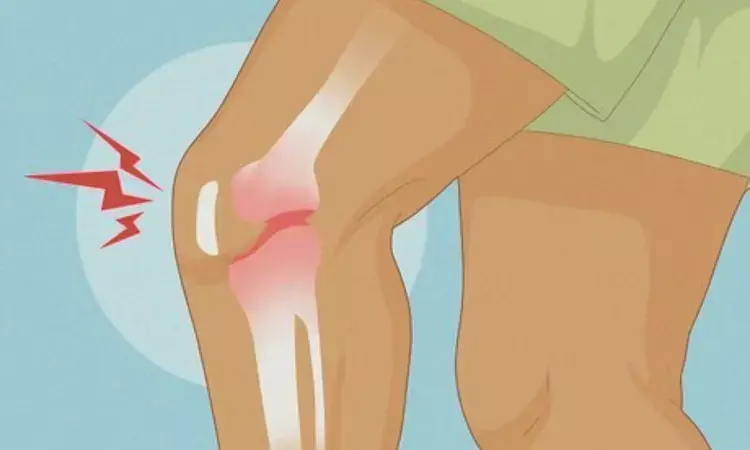


Canada: A new study published in Arthritis Care & Research reports that knee crepitus-commonly described as clicking, cracking, or grinding sensations—may be an early indicator of cartilage damage in young adults recovering from traumatic knee injuries. However, the presence of crepitus does not appear to predict faster worsening of osteoarthritis (OA) features over the longer term.
The research was led by Jamon L. Couch and colleagues from La Trobe University, the Australian International Olympic Committee Research Centre, and Arthritis Research Canada.
The study examined whether self-reported crepitus one year after anterior cruciate ligament reconstruction (ACLR) was linked to structural OA features and patient-reported knee outcomes. A total of 112 adults (median age 28 years) who had undergone ACLR were evaluated. Participants reported whether they experienced knee crepitus using an item from the Knee Injury and Osteoarthritis Outcome Score (KOOS).
Magnetic resonance imaging (MRI) scans at one and five years post-surgery were reviewed for patellofemoral and tibiofemoral OA features, including cartilage lesions, osteophytes, and bone marrow lesions. Pain, quality of life (QoL), and knee function were assessed using KOOS subscales and the International Knee Documentation Committee (IKDC) subjective form.
The following were the notable findings:
- Individuals reporting crepitus one year after ACLR were 2.7 times more likely to have full-thickness patellofemoral cartilage defects compared with those without crepitus.
- Crepitus did not predict progression of osteoarthritis features—such as cartilage deterioration, osteophytes, or bone marrow lesions—over the following four years.
- No significant association was found between crepitus and worsening structural OA changes between one and five years post-ACLR.
- Participants with crepitus reported higher pain, poorer knee-related quality of life, and worse functional scores at the one-year assessment.
- Those experiencing crepitus demonstrated greater improvements in pain and function between one and five years, indicating that early symptoms did not necessarily translate into long-term decline.
The authors noted several limitations, including the secondary nature of the analysis and a sample size that may have been too small to detect certain associations, especially given the low prevalence of crepitus and specific OA features. Some estimates had wide confidence intervals, indicating imprecision. Additionally, about 30% of participants were lost to follow-up at five years, raising the risk of selection bias despite similar baseline characteristics between those retained and those who dropped out.
Despite these caveats, the study contributes important insights into the clinical relevance of knee crepitus following ACL injury. While crepitus may signal early cartilage damage and correlate with worse short-term symptoms, it does not appear to accelerate structural OA progression within the first five years after reconstruction.
The authors suggest that further research with larger cohorts is needed to clarify the prognostic value of crepitus in young, active individuals recovering from traumatic knee injuries.
Reference:
Couch, J. L., Patterson, B. E., Crossley, K. M., Guermazi, A., King, M. G., Oliveira Silva, D. D., Whittaker, J. L., Girdwood, M. A., & Culvenor, A. G. Knee Crepitus and Osteoarthritis Features in Young Adults Following Traumatic Knee Injury. Arthritis Care & Research. https://doi.org/10.1002/acr.25637

Next Story