Cup anteversion significant risk factor for Femoral Neck Notching following THA with Dual Mobility Cups: study
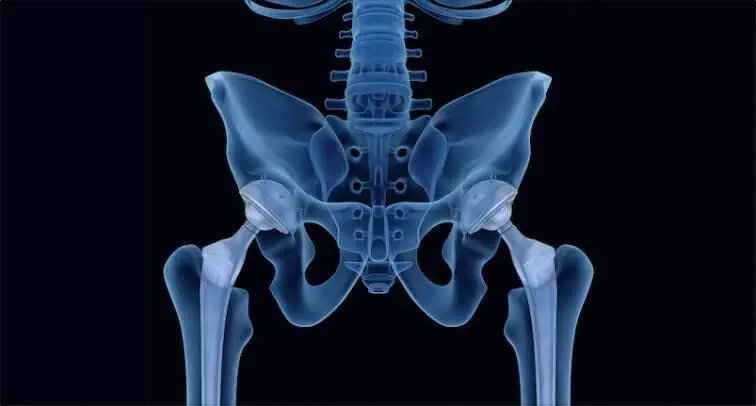


Dual-mobility cups (DMCs) are increasingly used in total hip arthroplasty (THA) because of their low dislocation rates. However, a unique complication associated with DMCs is femoral neck notching (FNN), which is believed to result from impingement between the metal liner and the femoral stem neck. The risk factors for FNN, however, remain poorly understood.
Yuto Kawamura et al conducted a study to identify the risk factors associated with FNN in patients undergoing THA with DMCs. The article has been published in ‘JBJS Open Access’ journal.
This retrospective analysis included 766 patients who underwent THA with DMCs. Patients with follow-up durations of less than 1 year and those with mixed-manufacturer components (i.e., an acetabular cup and a femoral stem from different manufacturers) were excluded. Cup positioning angles and the presence of FNN were assessed using standard radiographs. Spinopelvic alignment was evaluated in a subgroup of 204 patients using EOS imaging.
EOS (EOS Imaging, Paris, France) is a low-dose modality that captures standing and sitting full-body skeletal images, enabling dynamic and detailed spinopelvic and lower limb alignment evaluation. Spinopelvic parameters—including pelvic tilt (PT), pelvic incidence (PI), sacral slope (SS), ante-inclination (AI), pelvic femoral angle (PFA), combined sagittal index (CSI), and lumbar lordosis (LL)—were measured in both standing and sitting positions.
The key findings of the study were:
• FNN was identified in 24 of 766 patients (3.1%). Among these, posterior FNN occurred in 15 cases (68.2%), lateral FNN in 6 (27.3%), and anterior FNN in 1 (4.5%).
• Patient characteristics revealed no significant differences in age, sex, or BMI between the FNN and non-FNN groups
• Among these, 14 patients underwent EOS imaging, compared with 190 patients without FNN.
• Patients with FNN demonstrated significantly higher cup anteversion (31.4 ± 6.1) than those without FNN (15.2 ± 4.8, p < 0.0001).
• Logistic regression analysis showed that increased cup anteversion was significantly associated with FNN, with an odds ratio of 1.62 (95% confidence interval: 1.32-2.27, p < 0.0001), identifying it as the primary risk factor for FNN formation.
The authors concluded – “In this study, the incidence of FNN following DMC-THA was 3.1%. Logistic regression analysis identified cup anteversion as the most significant independent risk factor. By contrast, patient-related factors such as age, sex, and spinopelvic parameters (PI-LL, SS) were not statistically significant. These findings underscore the importance of avoiding excessive anteversion and suggest that dynamic assessments may aid in identifying patients at increased risk of FNN in DMC-THA.”
Level of Evidence: Prognostic Level IV.
Further reading:
Impact of Cup Anteversion and Hip-Spine Relationship on Femoral Neck Notching in Dual Mobility Total Hip Arthroplasty- Yuto Kawamura et al JBJS Open Access 2026:e25.00314. http://dx.doi.org/10.2106/JBJS.OA.25.00314