
Customized Blade-Plate Promotes Rapid Union in Pediatric Subtrochanteric Femur Fractures: Study Suggests
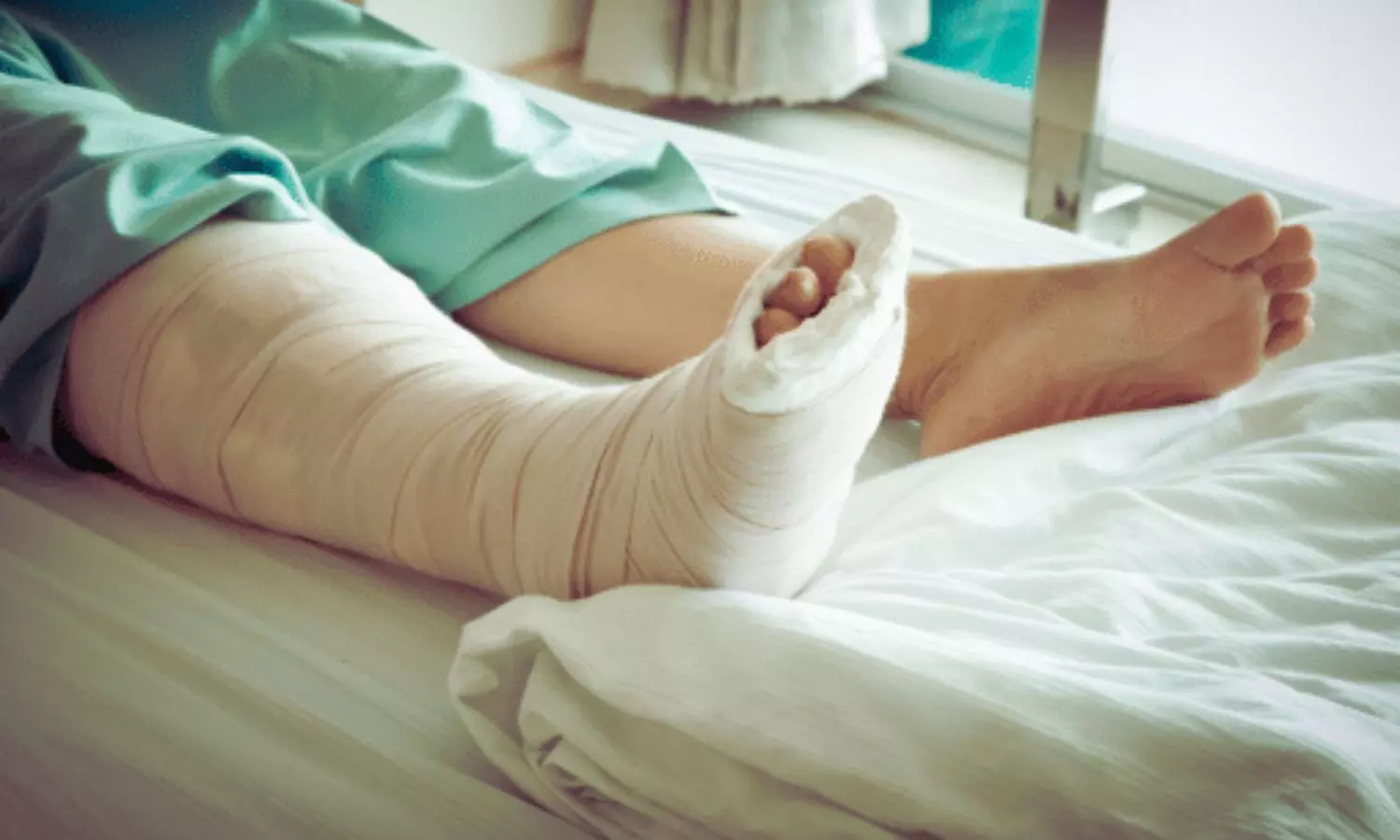


A recent retrospective study published in the Indian Journal of Orthopaedics in August 2026 shows that a customized, low-profile blade-plate achieves complete bone union at a median of 84 days in children with subtrochanteric fractures. This innovative construct successfully maintains anatomical alignment with zero implant failures.
Managing subtrochanteric femur fractures in children aged 4 to 10 years remains a significant clinical challenge due to the need for stable, low-profile fixation. To address this gap, Sandeep Patwardhan, Sanika Rapole, Vivek Sodhai, Tejas Gandhi, and Parag Sancheti aimed to evaluate a customized blade-plate construct fabricated from a readily available low-profile plate, assessing its ability to achieve union, maintain alignment, and avoid reoperation or implant failure in this retrospective series.
Therefore, the retrospective, single-centre study (2018–2023) evaluated 11 children aged 4 to 10 who underwent customized blade-plate fixation for closed subtrochanteric fractures, excluding patients with alternative fracture profiles or under 24 months of follow-up. Primary outcomes measured bone union, alignment preservation, and implant stability, while secondary assessments tracked joint mobility, hardware irritation, and functional recovery.
Key Clinical Findings of the Study Includes:
• Rapid Bone Healing: The analysis showed that radiographic callus developed at a median of 28 days (interquartile range [IQR], 28–42 days), while complete fracture union was achieved at a median of 84 days (IQR, 76–91 days).
• Excellent Functional Recovery: The study revealed that 90.9% of patients (10/11) achieved "good" functional outcomes, whereas only 9.1% (1/11) experienced "fair" outcomes according to Ratliff criteria at the final follow-up.
• Robust Alignment Preservation: The research demonstrated that the mean neck–shaft angle changed by only 2.8° ± 1.8° from the immediate postoperative stage to final follow-up, with only a single patient developing a 7° varus deformity.
• Favorable Safety Profile: The evaluation recorded zero cases of avascular necrosis, deep infection, implant failure, or clinically significant limb-length discrepancy, yielding an estimated upper 95% confidence interval (CI) for zero-event complications of approximately 27%.
The results suggest that utilizing a customized blade-plate construct is highly feasible and effective for managing pediatric subtrochanteric femur fractures, as it successfully maintained skeletal alignment with a minimal mean neck–shaft angle change of 2.8° ± 1.8° and secured complete bone union with zero implant failures in all 11 patients analyzed.
Thus, the study concludes clinicians may consider this customized low-profile blade-plate technique as a viable and practical option for securing stable fixation and preserving anatomical alignment in young patients with subtrochanteric femur fractures.
Although the retrospective single-center design and a small sample size of 11 patients represent inherent limitations, these encouraging early outcomes highlight the value of conducting future comparative trials with larger cohorts to fully establish efficacy and identify any rare, uncommon complications.
Reference
Patwardhan, S., Rapole, S., Sodhai, V., Gandhi, T., & Sancheti, P. (2026). Customized Blade-Plate Technique for Pediatric Subtrochanteric Femur Fractures for Ages 4–10: Case Series with Early Outcomes in Eleven Patients. Indian Journal of Orthopaedics. Published online August 19, 2026.
