
Diacerein Ineffective for Knee Pain in Osteoarthritis with Effusion-Synovitis: JAMA
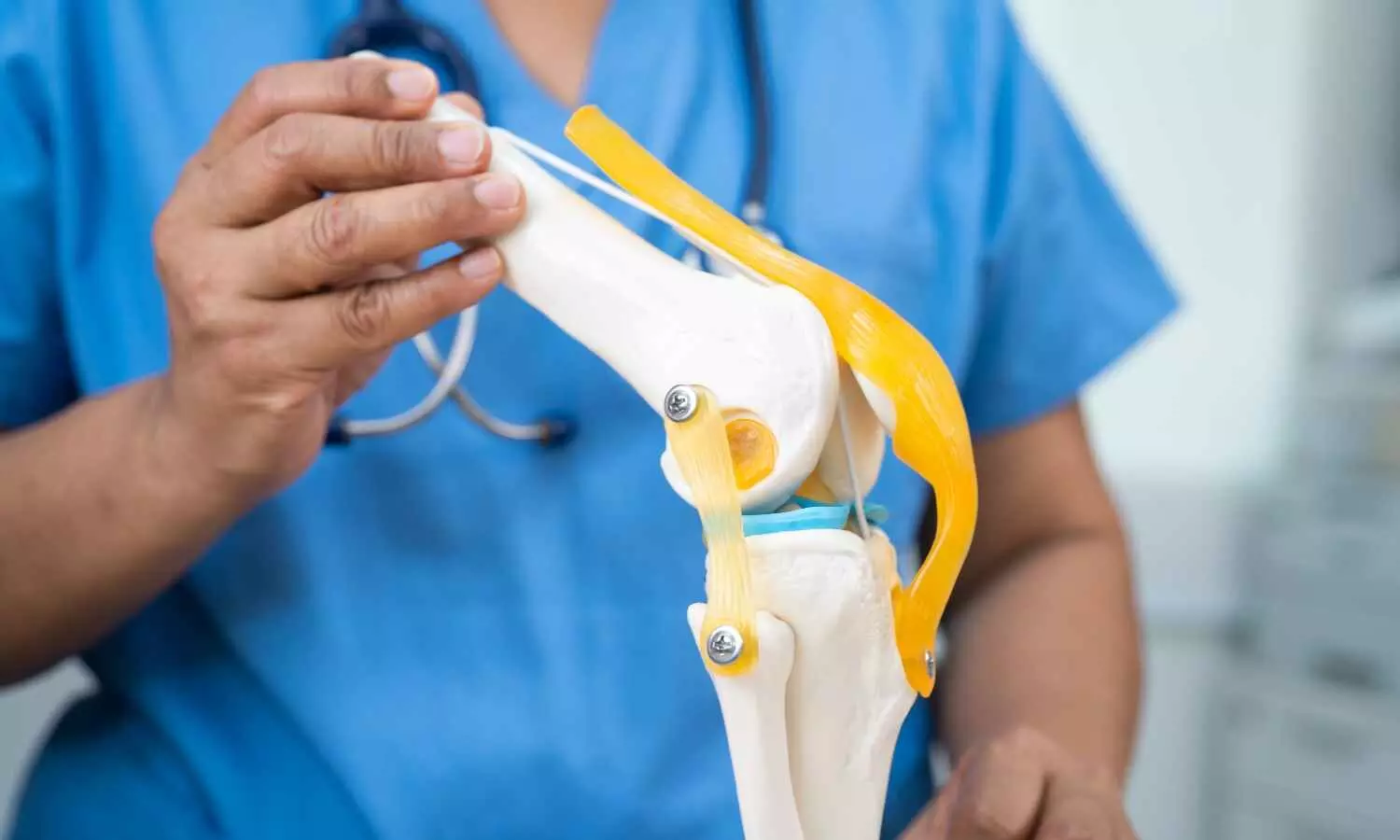


A new study published in the Journal of the American Medical Association showed that Diacerein did not reduce knee pain in patients with osteoarthritis (OA) and effusion-synovitis.
Osteoarthritis of the knee is incapacitating and has few effective therapies. Patients with an inflammatory phenotype may benefit from anti-inflammatory therapies. Thus, this research compared the effectiveness of diacerein, an interleukin-1β blocker, with a placebo for treating knee pain in individuals with knee OA who have significant knee pain and inflammation (effusion-synovitis on MRI).
This study was carried out in 4 Australian locations from June 2019 to September 2022, where the participants with effusion-synovitis on magnetic resonance imaging (MRI), significant knee pain, and clinical knee OA were included. The last follow-up took place on February 6, 2023. On July 7, 2023, data analysis got underway.
For the first two weeks, participants were randomly assigned (1:1) to either 50 mg of diacerein once daily or an identical placebo; if side effects were manageable, the dosage was raised to 50 mg twice daily until 24 weeks. The main result was a decrease in knee discomfort over a 24-week period as measured by the visual analogue scale (range, 0-100 mm; minimal clinically significant improvement, 15).
231 (88.2%) of the 262 randomly assigned individuals (mean [SD] age, 54.9 [6.1] years; 147 [56.1%] females and 115 [43.9%] males) finished the experiment. Over a 24-week period, diacerein did not alleviate knee discomfort (−19.9 mm [diacerein] vs. −18.6 mm [placebo]; between-group mean difference, −1.3 mm; 95% CI, −9.8 to 7.3).
Gastrointestinal symptoms, most frequently diarrhea (51 [38.6%] in the diacerein group vs. 29 [22.3%] in the placebo group), were the most frequent adverse events, occurring in 55 individuals (41.7%) in the diacerein group and 33 (25.4%) in the placebo group. 13 individuals (9.8%) who received diacerein showed a change in urine color.
Overall, the findings of this randomized clinical study showed that diacerein (50 mg, twice daily) over a 24-week period did not reduce knee pain more than a placebo in individuals with symptomatic knee OA with effusion-synovitis on MRI. These results do not support the use of diacerein to treat inflammatory knee OA.
Reference:
Aitken, D., Cai, G., Hill, C. L., Cicuttini, F. M., Wluka, A. E., Wang, Y., Keen, H. I., Thompson, M. J. W., Asthana, C., Antony, B. E., Wang, X., Winzenberg, T., de Graaff, B., Buttigieg, K., Otahal, P., & Jones, G. (2026). Diacerein for knee osteoarthritis: A randomized clinical trial. JAMA Internal Medicine. https://doi.org/10.1001/jamainternmed.2025.8237

