
Glucocorticoid Exposure Remains High in Giant Cell Arteritis Despite Reduced High-Dose Use: Study
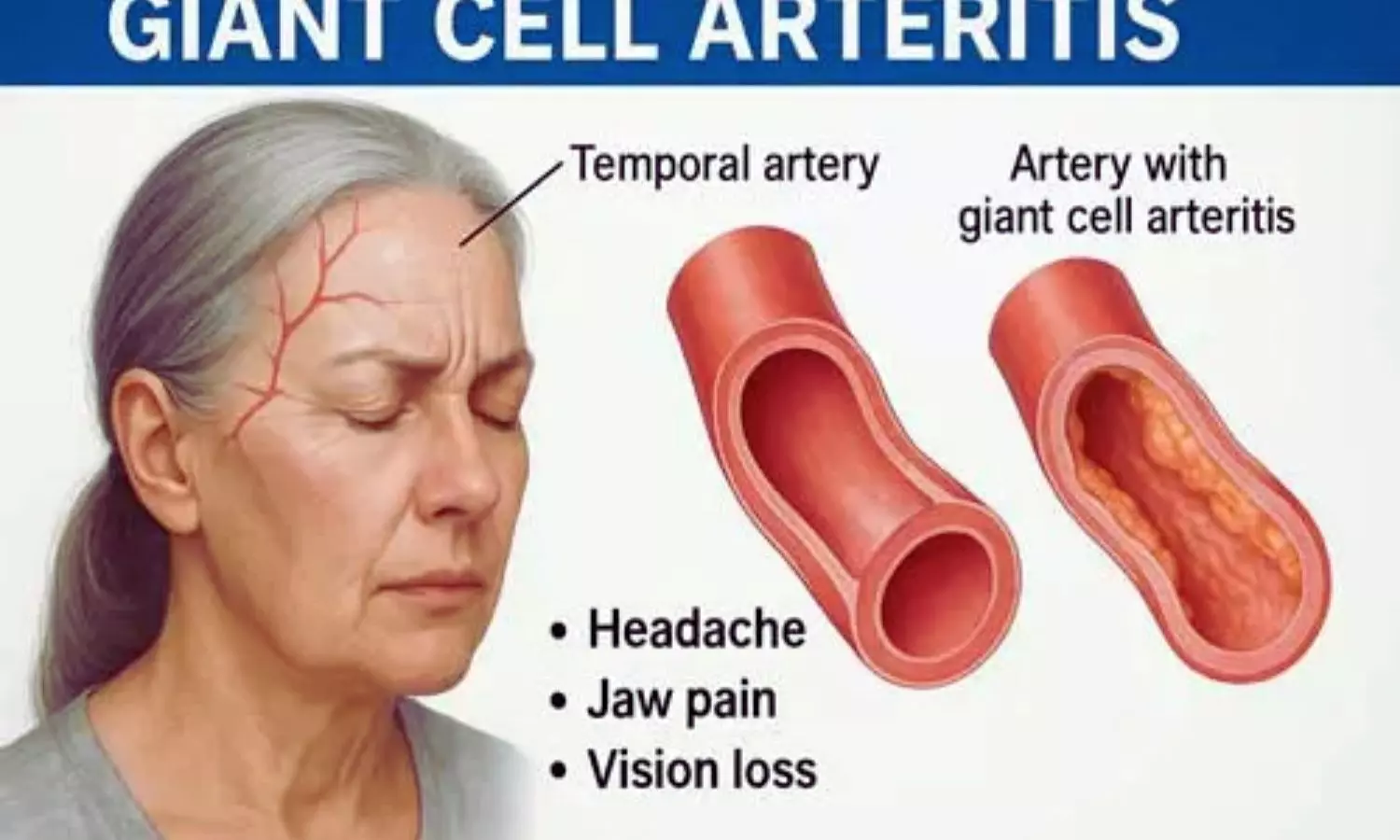


France: A French nationwide study found that although the use of very high-dose glucocorticoids in giant cell arteritis (GCA) declined between 2010 and 2022, patients continued to receive high cumulative steroid doses. Clinically significant adverse effects were observed even at prednisone-equivalent doses of ≤5 mg/day, highlighting the need for steroid-sparing strategies to minimize long-term treatment toxicity.
The findings were published in RMD Open: Rheumatic & Musculoskeletal Diseases by Maxime Beydon and colleagues. The researchers examined real-world glucocorticoid treatment patterns in patients with giant cell arteritis and evaluated how cumulative steroid exposure influenced the risk of adverse health outcomes.
Glucocorticoids remain the cornerstone of treatment for giant cell arteritis, but prolonged use is associated with serious complications. With the increasing availability of steroid-sparing therapies such as methotrexate and tocilizumab, clinicians have sought to reduce long-term glucocorticoid exposure. However, evidence on real-world prescribing patterns and the health burden associated with cumulative steroid use has been limited.
For the study, the investigators conducted a retrospective population-based analysis using the French National Health Insurance Database. The study included 18,301 patients newly diagnosed with giant cell arteritis between 2010 and 2022. Using latent class growth modelling, the researchers identified distinct glucocorticoid treatment trajectories over the first two years after diagnosis and assessed their association with mortality, serious infections, major adverse cardiovascular events (MACE), and osteoporotic fractures.
Key findings from the study include:
- Four distinct glucocorticoid treatment trajectories were identified, including two high-dose regimens that became less common over the study period.
- Despite this decline, the mean cumulative glucocorticoid dose over two years remained high, reaching 7.6 g among patients diagnosed in 2022.
- Use of methotrexate increased until 2020 before stabilizing, while tocilizumab prescriptions continued to rise, exceeding 25% of patients by 2022.
- Male sex and treatment with methotrexate or tocilizumab at baseline were associated with faster glucocorticoid tapering.
- Age over 75 years, hypertension, chronic kidney disease, and neurodegenerative disorders were linked to slower steroid dose reduction.
- Each additional gram of cumulative glucocorticoid exposure was associated with an increased risk of mortality.
- Even low maintenance doses (≤5 mg/day prednisone equivalent) were associated with a higher risk of serious infections and major adverse cardiovascular events.
- The study also demonstrated a dose-dependent relationship between glucocorticoid exposure and the risks of mortality and serious infections.
The authors noted that despite increased use of steroid-sparing therapies and reduced reliance on high-dose glucocorticoids, cumulative steroid exposure in giant cell arteritis remains high. They also found that even low daily glucocorticoid doses were associated with clinically significant adverse outcomes.
The researchers concluded that cumulative glucocorticoid exposure increases the risk of mortality and treatment-related complications in giant cell arteritis. They called for greater use of steroid-sparing strategies to reduce glucocorticoid exposure, particularly in older patients and those at high risk of steroid-related toxicity.
Reference:
Beydon M, Lacaille D, Fautrel B, Seror R, Hajage D, Tubach F. Glucocorticoid in giant cell arteritis: real-world treatment patterns over time and associated burden in a nationwide hospital-based study within the French health insurance database. RMD Open. 2026;12:e006866. https://doi.org/10.1136/rmdopen-2026-006866

Next Story