
One of the world's most common knee surgeries does not help and may even be harmful: Study
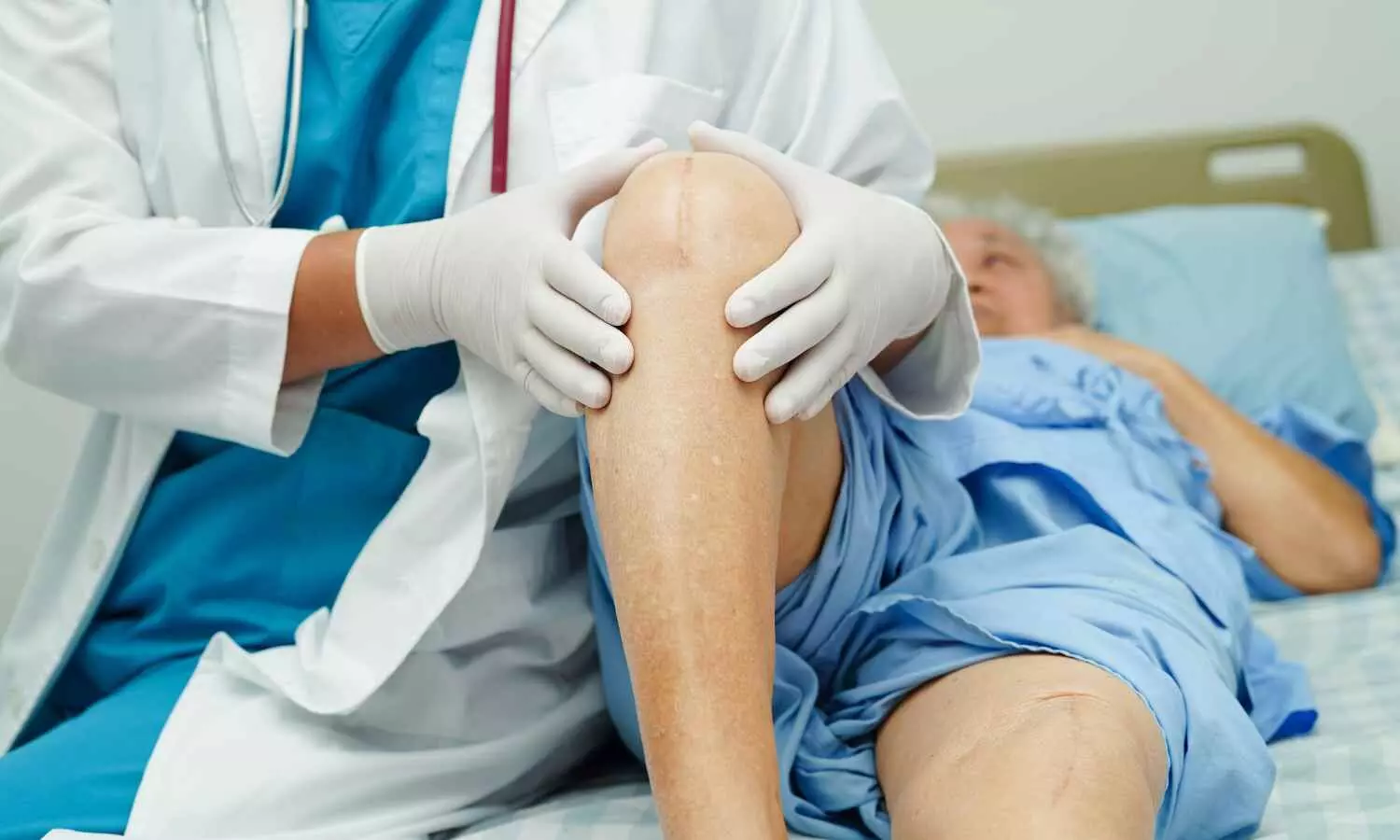


Partial meniscectomy does not improve patient symptoms or function, reveals a 10-year follow-up of the FIDELITY, a placebo-surgery controlled trial.
Trimming a degenerated meniscus, or partial meniscectomy, is one the most common orthopaedic surgeries in the world. Even though the number of procedures in Finland has decreased significantly in recent years, the surgery continues to be performed widely internationally.
A 10-year follow-up study has revealed that, compared to sham surgery, partial meniscectomy did not improve patients’ symptoms or function. On the contrary, the 10-year follow-up of patients who had undergone partial meniscectomy found them to have more symptoms, more reduced function, increased progression of osteoarthritis and a higher probability of subsequent knee surgery when compared to sham surgery.
The Finnish Degenerative Meniscal Lesion Study (FIDELITY) study is unique both with regard to its research design, i.e., the sham surgery control group, and its 10-year patient follow-up. In the study, patients with degenerative meniscal tears were randomised to undergo a partial meniscectomy or sham surgery.
Teppo Järvinen, Professor at the University of Helsinki and the principal investigator of the FIDELITY emphasises the broader significance of the results:
“Our findings suggest that this may be an example of what is known as a medical reversal , where broadly used therapy proves ineffective or even harmful.”
“The surgery is based on the assumption that pain in the inside of the knee is caused by a medial meniscus tear, which can be treated surgically. Such reasoning – assumption based on biological credibility – is still very common in medicine but in this case, the assumption does not withstand critical examination. Based on current understanding, pain in various joints, such as the knee joint in this case, is related to degeneration brought about by aging,” says Raine Sihvonen, Specialist in Orthopaedics and Traumatology and the other principal investigator of the FIDELITY study.
Concerns about the adverse effects of surgery
The registry and other observational data published in recent years have elicited concern about the potential harm caused by partial meniscectomy. Based on this data, the risk of arthroplasty, or joint replacement surgery, as well as a potentially higher risk of complications following the surgery has been associated with partial meniscectomy. However, the evidence provided by observational studies is inherently indirect and cannot be used to demonstrate a causal effect.
“Several randomised studies have already demonstrated that partial meniscectomy has not improved patients’ symptoms or function in the short (1–2 years) or medium (5 years) term. Regardless, the procedure has remained widely used in many countries,” says Doctoral Researcher and Specialist in Orthopaedics and Traumatology, Dr. Roope Kalske.
“For nearly a decade, many independent, non-orthopaedic organisations providing clinical guidelines have recommended that the procedure should be discontinued. Still, for example, the American Academy of Orthopaedic Surgeons (AAOS) and the British Association for Surgery of the Knee (BASK) have continued to endorse the surgery.
This effectively illustrates how difficult it is to give up inefficient therapies,” Järvinen sums up.
Reference:
Teppo Järvinen, Arthroscopic Partial Meniscectomy for Degenerative Tear-10-Year Outcomes, New England Journal of Medicine, DOI: 10.1056/NEJMc2516079.
