Patellar Resurfacing Lowers Knee Effusion After TKA in Severe Chondrocalcinosis: study
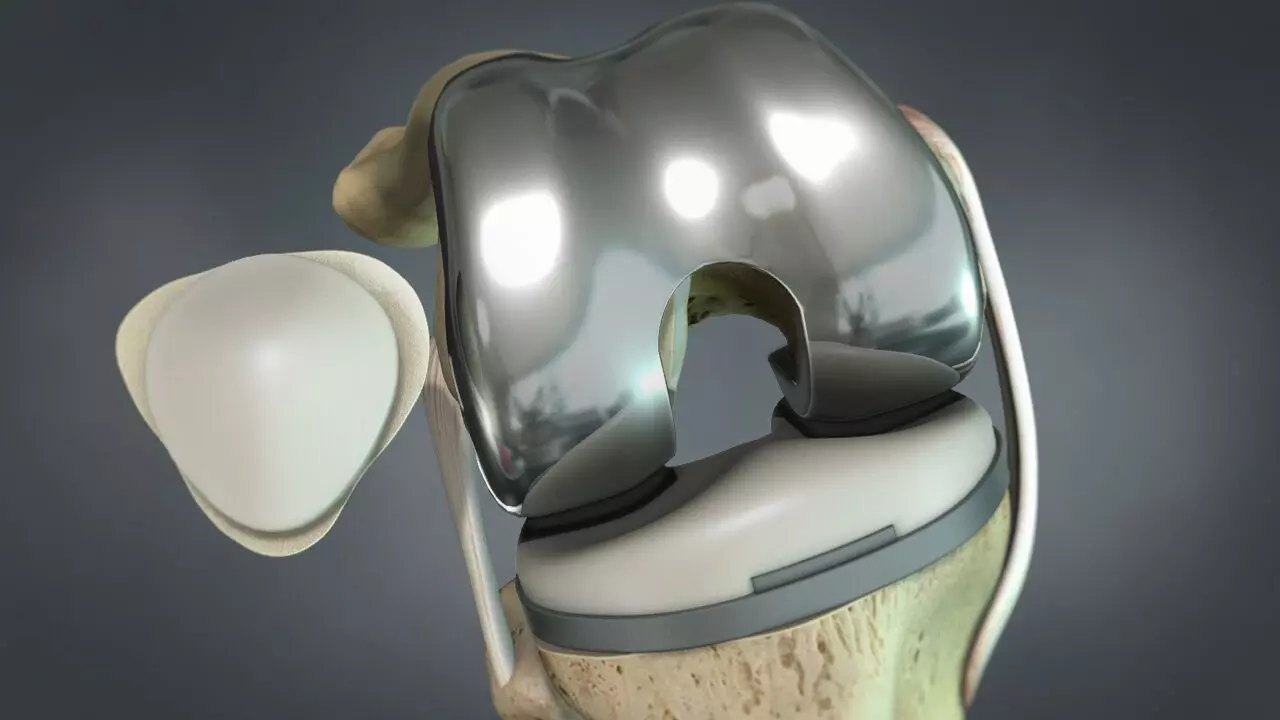


Regarding patellar resurfacing in total knee arthroplasty (TKA), no consensus has been reached, but most studies have not addressed specific pathological circumstances. Evidence on the roles of patellar resurfacing and synovectomy in managing postoperative effusion in patients with severe chondrocalcinosis is limited.
This single-centre observational cohort study included 160 patients who underwent the same TKA for osteoarthritis with severe chondrocalcinosis (grade 4). A matched design created four comparable groups of 40 patients each: (1) TKA without patellar resurfacing or synovectomy, (2) TKA with patellar resurfacing alone, (3) TKA with synovectomy alone, and (4) TKA with both patellar resurfacing and synovectomy.
Severe chondrocalcinosis (advanced calcium pyrophosphate deposition disease) was confirmed through radiographic findings, synovial fluid analysis using polarized light microscopy, and histology. Significant postoperative effusion was diagnosed with ultrasound, quantified by sterile joint aspiration, and classified as stage I (10–20 cm3), stage II (21–30 cm3), or stage III (> 30 cm3).
The key findings of the study were:
• Postoperative joint effusion varied significantly between the strategies. In the patellar resurfacing group, 25% (10/40) of patients developed only stage I effusion without synovectomy.
• Conversely, 45% (18/40) of patients in the synovectomy only group developed stage II effusion, while 62.5% (25/40) of patients without either procedure developed stage III effusion (p < 0.0001).
• TKA with both patella resurfacing and synovectomy resulted in either stage I (7/40) or stage II effusion (6/40).
• Multivariate regression confirmed patellar resurfacing as an independent protective factor against postoperative effusion (p < 0.01).
• Average aspirated effusion volumes further supported these findings: 39 ± 6 cm3 for TKA without additional procedures, 18 ± 8 cm3 with synovectomy, 6 ± 4 cm3 with patellar resurfacing, and 7 ± 4 cm3 with both patellar resurfacing and synovectomy.
• The results showed that as total knee effusion volume increased, inflammatory markers (C-reactive protein level) increased, and range of motion decreased.
The authors concluded – “In patients with severe chondrocalcinosis undergoing total knee arthroplasty, patellar resurfacing is linked to a significant reduction in postoperative joint effusion, while synovectomy alone does not provide lasting benefit and may increase complications. These findings support the idea that, in CPPD-related knee disease, removing crystal-laden cartilage might be more effective than synovial excision in reducing postoperative inflammation. Surgical decision-making in TKA should therefore consider not only mechanical alignment and implant design but also the underlying biological condition of the joint.”
For further details on the article refer to:
Patellar resurfacing is associated with reduced postoperative effusion compared with synovectomy in severe chondrocalcinosis undergoing total knee arthroplasty
Philippe Hernigou et al
International Orthopaedics (2026) 50:1009–1019
https://doi.org/10.1007/s00264-026-06767-6