
Pediatric Humeral Shaft Fractures: Distal, Oblique Patterns May Increase Risk of Poor Radial Nerve Outcomes, Finds Review
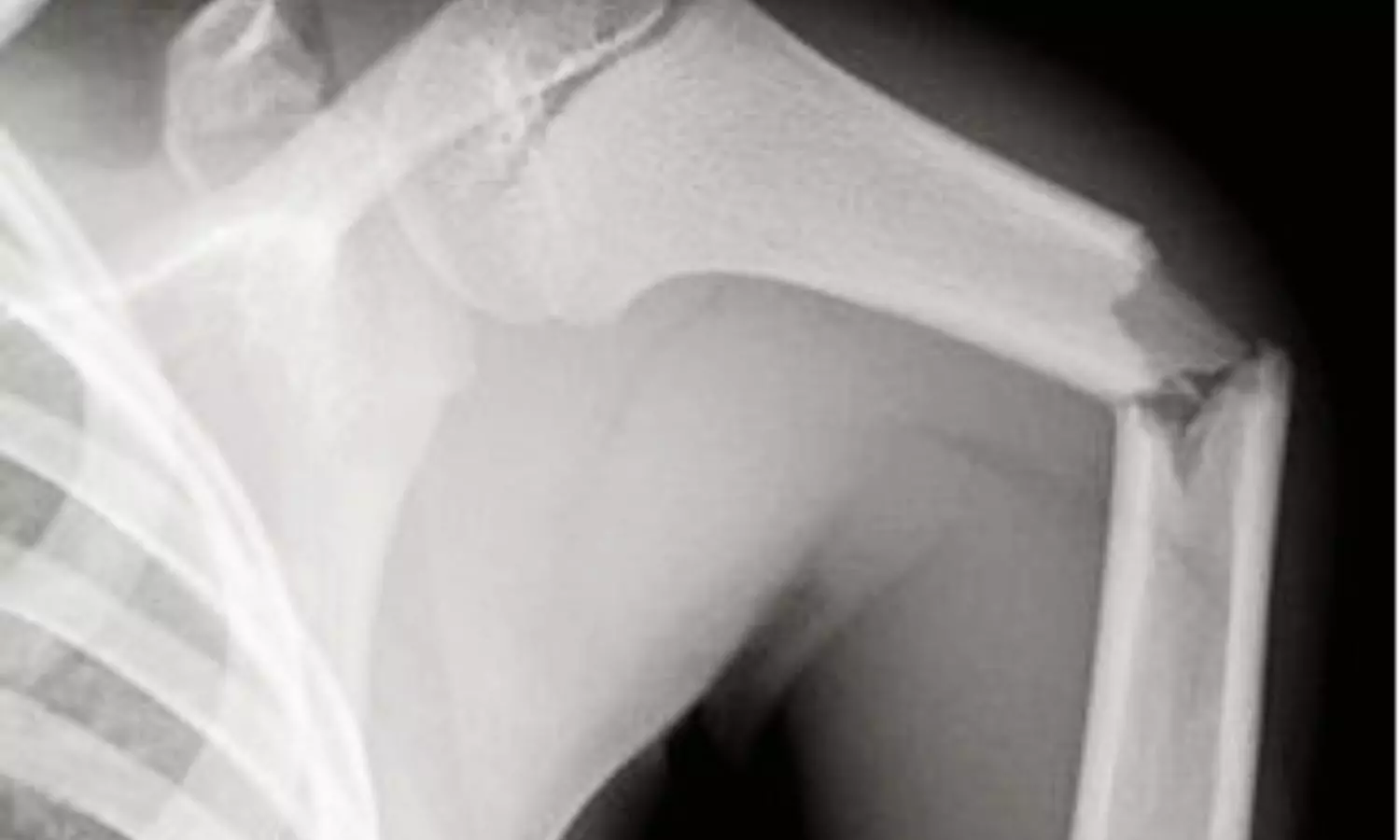


USA: Researchers have found in a review that among children, distal and oblique humeral shaft fractures appear to be more frequently associated with poorer outcomes following radial nerve injury compared with adults. The findings highlight the importance of careful and early radial nerve assessment in children with displaced distal, oblique humeral fractures to identify nerve injury promptly and guide appropriate management.
The findings are from a systematic review and pooled analysis published in the Journal of Pediatric Orthopaedics B. The study was led by Adam J. Metivier from the Department of Orthopaedic Surgery, Saint Louis University School of Medicine, Missouri, USA, and colleagues. The researchers evaluated factors associated with recovery following radial nerve palsy in children with humeral shaft fractures, an uncommon but potentially serious complication.
Radial nerve palsy occurs in approximately 4% to 4.35% of pediatric humeral shaft fractures. While previous research has mainly focused on how often the injury occurs, this review examined recovery patterns and clinical factors linked to delayed or incomplete nerve recovery.
The researchers searched PubMed, Cochrane Central, and Google Scholar for relevant studies involving children aged 1–18 years with humeral shaft fractures complicated by radial nerve palsy. Case reports, retrospective studies, and systematic reviews published in English were eligible. Of the 13 studies identified, 11 studies involving 32 patients provided sufficient patient-level data for pooled analysis.
Key findings included:
- Oblique humeral shaft fractures were significantly more likely to be associated with delayed recovery (more than four months) or no recovery of radial nerve function.
- Neurotmesis (complete nerve disruption) and fibrosis surrounding the radial nerve were strongly associated with delayed nerve recovery.
- Children treated with closed reduction and fixation experienced poorer nerve outcomes than those managed conservatively.
- Patients who underwent nerve exploration or surgical nerve procedures were more likely to have impaired nerve recovery, although differences in the overall degree of recovery between treatment groups were not statistically significant.
- Compared with findings reported in adults, distal and oblique humeral shaft fractures in children were more frequently linked to unfavorable radial nerve recovery.
The authors noted that the findings should be interpreted cautiously because they were based on a small number of published cases, most of which were retrospective. The rarity of pediatric radial nerve palsy and variations in treatment and follow-up may also have influenced the results.
Despite these limitations, the review identifies fracture characteristics associated with poorer nerve recovery that may help guide clinical evaluation and follow-up.
The authors concluded that children with displaced distal, oblique humeral shaft fractures should undergo early, careful radial nerve assessment to enable timely diagnosis and management. They called for larger multicenter studies to validate these findings and optimize treatment strategies.
Reference:
Raju, S., Metivier, A. J., & Callahan, W. T. (2026). Radial nerve palsy following pediatric humeral shaft fractures: a systematic review and pooled analysis. Journal of Pediatric Orthopaedics B. https://doi.org/10.1097/BPB.0000000000001376

Next Story