Perioperative and Pre-Incision Dexamethasone Offer Similar Outcomes in TKA: Study
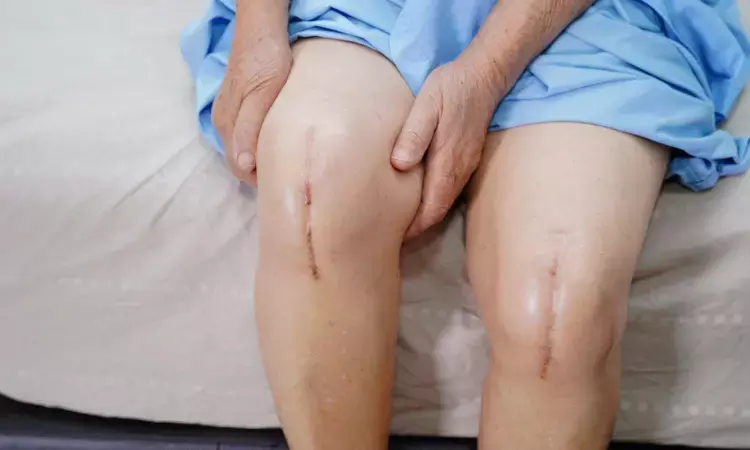


Researchers have found in a new study that Perioperative dexamethasone injection delivers clinical results and inflammation control comparable to dosing 8 hours before incision, supporting both intravenous approaches as viable options in current total knee arthroplasty pathways.
Theoretically, intravenous dexamethasone administered 6-8 hours prior to surgical trauma may inhibit the transcription of genes via the genomic pathway and optimize their anti-inflammatory effects. Thus, the purpose of the study was to compare the efficacy of intravenous dexamethasone administered preoperatively and more common use, perioperative injection for controlling pain after total knee arthroplasty (TKA).
One-hundred fifty total knee arthroplastys were randomized to receive 10 mg of intravenous dexamethasone 8 hours prior to incision (preoperative group) or to receive before incision (perioperative group). The outcomes included a visual analog scale (VAS) for pain, morphine consumption, frequency of postoperative nausea and vomiting, knee circumference, C-reactive protein levels, and blood glucose levels.
Results: No differences in VAS at rest and during movement were observed between groups at any time point, except the perioperative group had 0.45 lower VAS during movement at 4 hours postoperatively (P = .038). The preoperative group had 0.75 mg lower morphine consumption at 12 hours postoperatively (P = .020). However, both differences did not reach the minimal clinically important difference. There were no significant differences between groups regarding postoperative nausea and vomiting, knee circumference, and C-reactive protein. Over 50% of patients in both groups experienced high blood glucose level (>137 mg/dl) during the first 48 hours postoperatively, however, no infection was observed during 3 months of follow-up.
Perioperative dexamethasone injection provides comparable clinical outcomes and inflammation level after total knee arthroplasty to those administered 8 hours prior to incision. Thus, both intravenous dexamethasone approach can be an option for current clinical pathways of total knee arthroplasty.
Reference:
Sutthapakti, Burin, et al. "Intravenous Dexamethasone Administered Perioperatively Vs 8 Hours Prior to Incision to Control Pain After Total Knee Arthroplasty. a Prospective Randomized Clinical Trial." Arthroplasty Today, vol. 36, 2025, p. 101912.