Peroneus Longus Tendon Emerges as Effective Alternative to Hamstring Grafts in ACL Reconstruction: Study


Anterior cruciate ligament (ACL) reconstruction with hamstring tendon autografts is well-established, but peroneus longus autografts have emerged as a promising alternative. Optimal graft diameter is a prerequisite for knee stability and satisfactory postoperative outcomes. Attainable autograft diameter is shown to directly correlate with patient height. The relative efficacy of hamstring (HS-R) versus peroneus longus (PL-R) reconstruction for ACL tears among graft-commensurate, short-statured patients is unknown.
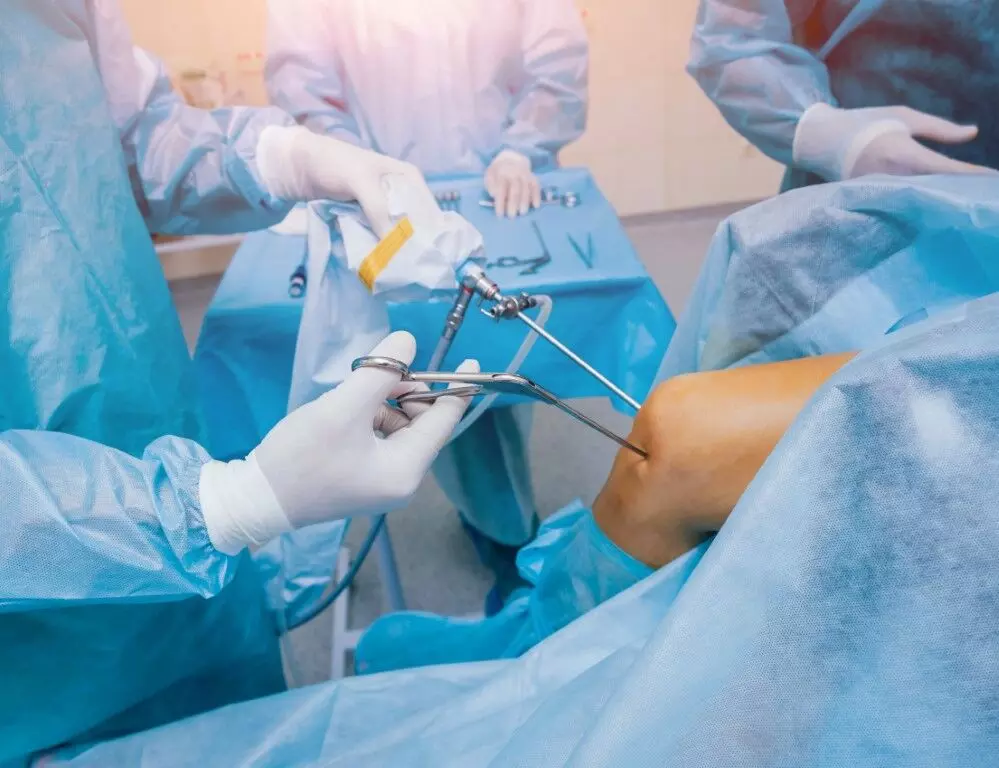
Kanthi Kiran Kumar Koppolu et al conducted a prospective observational study, 44 patients with a height of 173 cm or less who underwent arthroscopic single-bundle anterior cruciate ligament reconstruction using quadrupled HS-R or tripled PL-R for isolated ACL tears were followed for a minimum of 12 months postoperatively. Patient groups were compared in terms of their demographic and anthropometric characteristics, mode and side of injury, preoperative clinical assessment findings, autograft dimensions attained, and postoperative clinical assessment findings. Donor site morbidity and postoperative complications, where present, were recorded.
The key findings of the study were:
• The study cohort comprised 22 men each, who underwent HS-R and PL-R.
• The patient groups were comparable in terms of age, height, weight, body mass index, mode and side of injury, and preoperative International Knee Documentation Committee (IKDC), Lysholm, and Modified Cincinnati Score (MCS).
• PL-R was associated with significantly longer grafts (median (interquartile range (IQR)): 90 (89.5-90) mm vs. 90 (80-90) mm; P = 0.024) with larger diameters (median (IQR): 9 (8-10) mm vs. 8 (8-9) mm; P = 0.011) and resulted in lower postoperative thigh hypotrophy (median (IQR): 1 (0-1) cm vs. 2 (1-3) cm; P = 0.004) when compared with HS-R.
• Significant improvements in IKDC, Lysholm, and MCS were observed in both groups following surgery, though their postoperative scores were comparable. All patients in the PL-R group had satisfactory ankle function.
• Six patients (27.3%) in the HS-R group reported anterior knee pain and hypoesthesia around the proximal leg.
The authors concluded – “PL-R is a viable alternative to HS-R for ACL reconstruction, with comparable functional outcomes, but yields longer and thicker autografts. It may be a better graft option in patient subsets with low anticipated graft diameters, such as women and short-statured patients. Given its inevitable use in revision surgery and when hamstring autograft yield is insufficient, arthroscopic surgeons may consider adopting this technique more frequently, particularly in selected patients likely to benefit.”
For further details on the article refer to:
Graft Dimensions and Clinical Outcomes Following Anterior Cruciate Ligament Reconstruction Using Hamstring Versus Peroneus Longus Autografts in Graft-Commensurate, Short- Statured Patients: A Prospective Observational Study Kanthi Kiran Kumar Koppolu et al Cureus 18(4): e107965. DOI 10.7759/cureus.107965