
Brachial Plexus Birth Injury May Reduce QoL in Childhood Due to Psychosocial Factors and Pain: JAMA
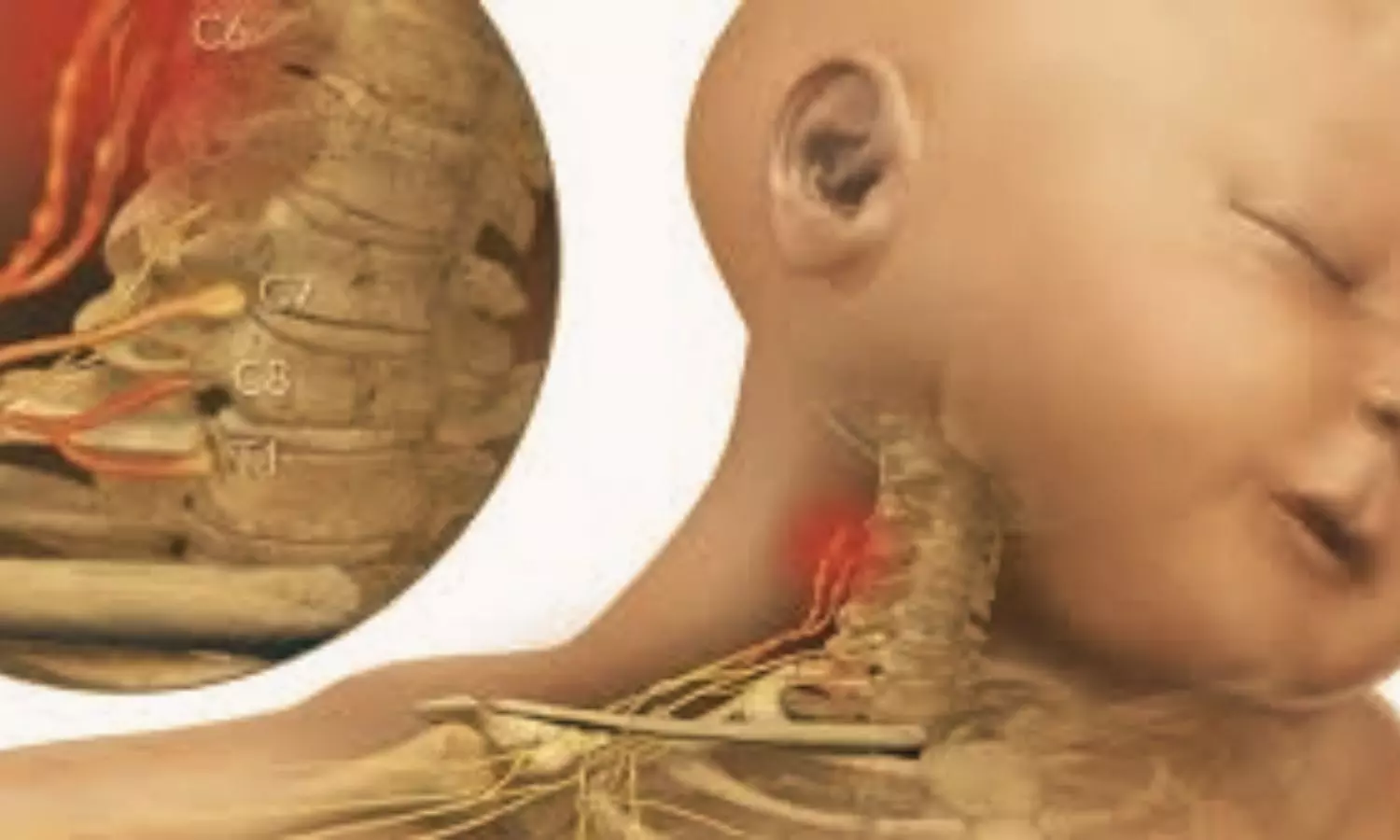


USA: A study has found that brachial plexus birth injury (BPBI) is associated with poorer overall health-related quality of life (HRQOL) in children, with psychosocial challenges and pain having a greater impact than physical disability. The findings suggest that emotional well-being, social functioning, and pain may play a more significant role in patient-reported quality of life than physical function alone, challenging current treatment strategies that mainly focus on motor recovery and physical outcomes.
The study, published in JAMA Network Open, was led by Andrea S. Bauer from the Department of Orthopedics and Sports Medicine at Boston Children’s Hospital, along with collaborators from multiple pediatric centers across North America.
Brachial plexus birth injury (BPBI), the most common serious birth-related injury, affects approximately one to three infants per 1000 live births, with nearly one-third developing permanent neurologic deficits. Although treatment advances have improved care, many children continue to face long-term physical and psychosocial challenges.
To better understand factors affecting quality of life, researchers conducted a multicenter cross-sectional study involving children aged 8 to 18 years from four specialized BPBI centers in Boston, Toronto, Cincinnati, and Sacramento. Participants underwent standardized physical examinations and completed patient-reported outcome assessments evaluating multiple health domains.
The study included 207 children with a mean age of 12.1 years. Of these, 75.4% had upper BPBI affecting the shoulder and elbow, while 24.6% had global BPBI involving the entire upper limb. Researchers analyzed how physical, emotional, and social factors influenced overall health-related quality of life.
The researchers reported the following findings:
- Children with brachial plexus birth injury had lower overall health-related quality of life scores compared with the general pediatric population.
- HRQOL scores did not significantly differ between children with upper BPBI and those with global BPBI, indicating that the severity of physical involvement alone did not determine overall well-being.
- Physical examination findings showed only minimal correlation with overall HRQOL scores.
- Emotional functioning demonstrated one of the strongest positive associations with a better quality of life.
- Positive family and peer relationships were strongly associated with improved HRQOL.
- Pain interference and pain intensity showed strong negative associations with HRQOL.
- Higher levels of perceived stigma were also linked to poorer quality of life.
- Factor analysis identified key latent factors, including social and family relationships, self-image, sensation, motor function, and physical structure.
- Social and family-related factors showed the strongest direct association with overall HRQOL.
- Physical function and structural impairment appeared to influence quality of life mainly through their effects on self-image and psychosocial well-being.
The authors noted that the study was limited to participants from North America, which may affect the generalizability of the findings to other regions. In addition, the cross-sectional design prevented assessment of long-term changes over time or the effects of specific treatments.
Overall, the researchers concluded that improving psychosocial support, addressing pain, and promoting emotional well-being may be critical components of care for children with BPBI, alongside efforts to improve physical function.
Reference:
Bauer AS, Manske MC, Dorich JM, et al. Children’s Health-Related Quality of Life After Brachial Plexus Birth Injury. JAMA Netw Open. 2026;9(5):e2610237. doi:10.1001/jamanetworkopen.2026.10237

Next Story