Inhaled Ambroxol Improves Respiratory Symptoms in Children With ALRTI: Study
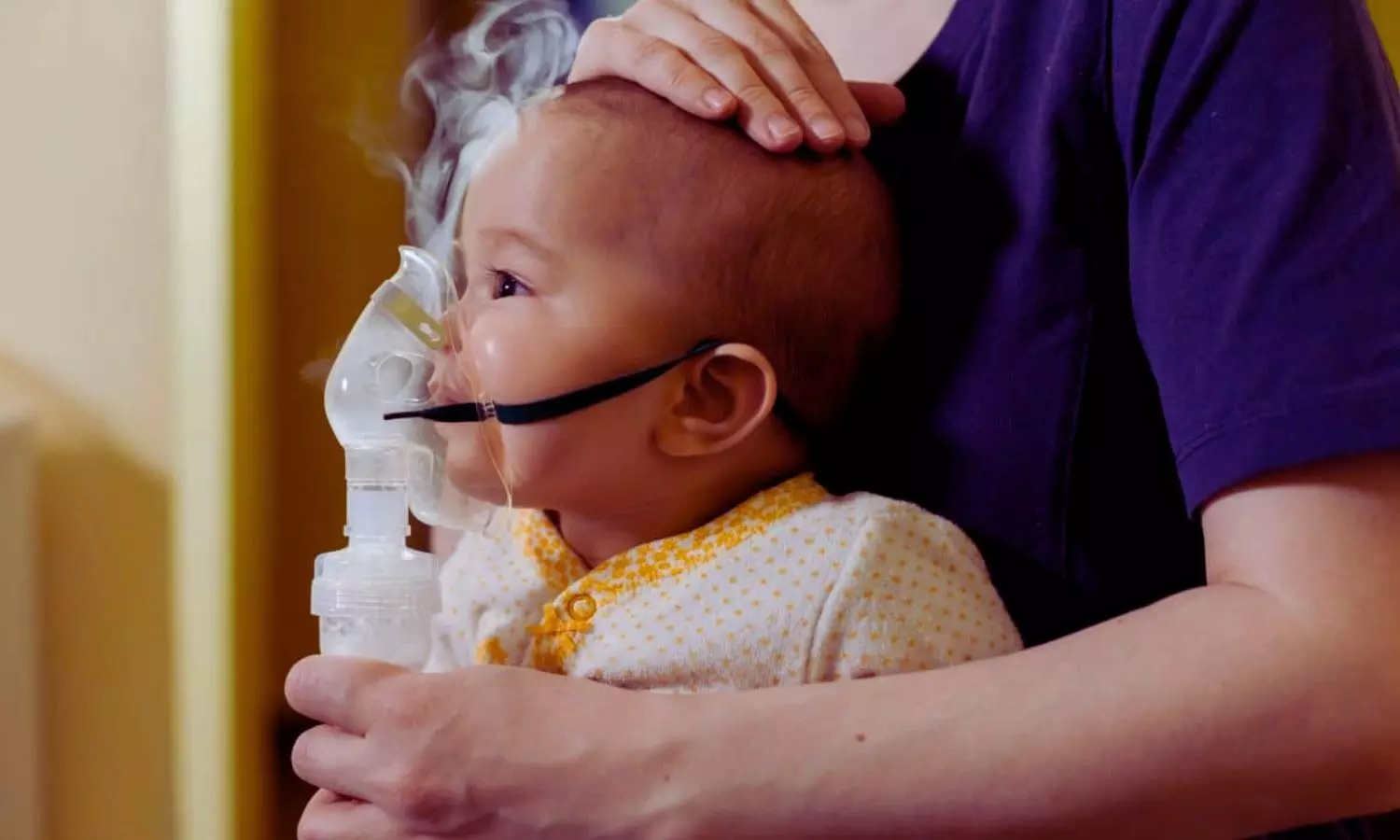


Researchers have found in a large real-world study that a 7-day course of AHSI, added to standard care, improved respiratory symptoms and was well tolerated in children with acute lower respiratory tract infections (ALRTI). Benefits were consistent across disease subtypes and nebulizer devices, supporting its practical use as an expectorant. However, randomized controlled trials are needed to confirm its effectiveness and establish its role in first-line therapy. The study was published in Translational Pediatrics journal by Han Z. and colleagues.
In order to conduct a comprehensive assessment of these interventions, researchers conducted a non-randomized, observational multicenter study using 30 different medical centers in China. In this study, there were a total of 407 children who had been admitted into hospitals, aged 14 years old and below, and who had been diagnosed with ALRTI accompanied by mucoid sputum production.
According to the localized clinical decision-making process and based on guardian preferences, 254 out of the 407 patients were assigned to AHCHOS, while 153 were assigned to AHSI. For the entire period of seven days, researchers carefully followed the development of patients' condition using composite respiratory symptoms score and a visual analogue scale.
Key findings:
- Quantitative analysis of the multicenter clinical database produced irrefutable, highly precise numerical data confirming the obvious superiority of the oral combination therapy.
- In this study conducted with 407 pediatric patients, the total score of respiratory symptoms decreased more pronouncedly in the AHCHOS group than in the AHSI group from Day 7 with the rate of −4.35±2.25 against −3.56±1.89 (P < .001).
- The percentage reduction in overall respiratory symptom severity in the case of oral combination therapy was also more pronounced as compared to the group of patients who received the single-agent injection (−77%±30% vs −65%±28%, P < .001).
- Individual subscales analysis demonstrated that the oral combination therapy showed significant improvement in the cough score (P < .001), total sputum volume (P = .03), and wheezing rale score (P = .008) on Day 7 as compared to the single-agent injection therapy.
- The visual analog scale scores of the self-reports on overall symptoms' severity were reduced even more in the case of oral combination therapy as compared to single-agent injection therapy (−4.12±2.04 vs −3.51±1.78, P = .006).
- No statistical differences were found in the expectoration difficulty subscore (P = .90), while the incidence of adverse reactions was 0% in both groups.
To conclude, AHSI has demonstrated efficacy in the improvement of respiratory symptoms and has been found to be safe in children suffering from ALRTI associated with sputum production. The strong evidence provided above proves that oral combinations are superior to IV expectorants in providing airway clearance in pediatric pulmonology.
Reference:
Han, Z., Zheng, Y., Lin, R., Zhao, D., Gu, L., Tian, W., Hu, B., Li, B., Chen, C., Zhuo, Z., Dong, X., Liu, C., Zi, H., He, L., Lu, Q., Liu, H., Tian, Z., Ai, T., Zou, Y., … Wu, J. (2026). Ambroxol hydrochloride and clenbuterol hydrochloride oral solution versus ambroxol hydrochloride injection for pediatric lower respiratory tract infection with mucoid sputum: a multicenter, non-randomized observational study in ChinaTranslational Pediatrics, 15(4). https://doi.org/10.21037/tp-2026-0271