USG guided Brachiocephalic Vein Cannulation Offers Superior First-Attempt Success in Neonates, reveals research
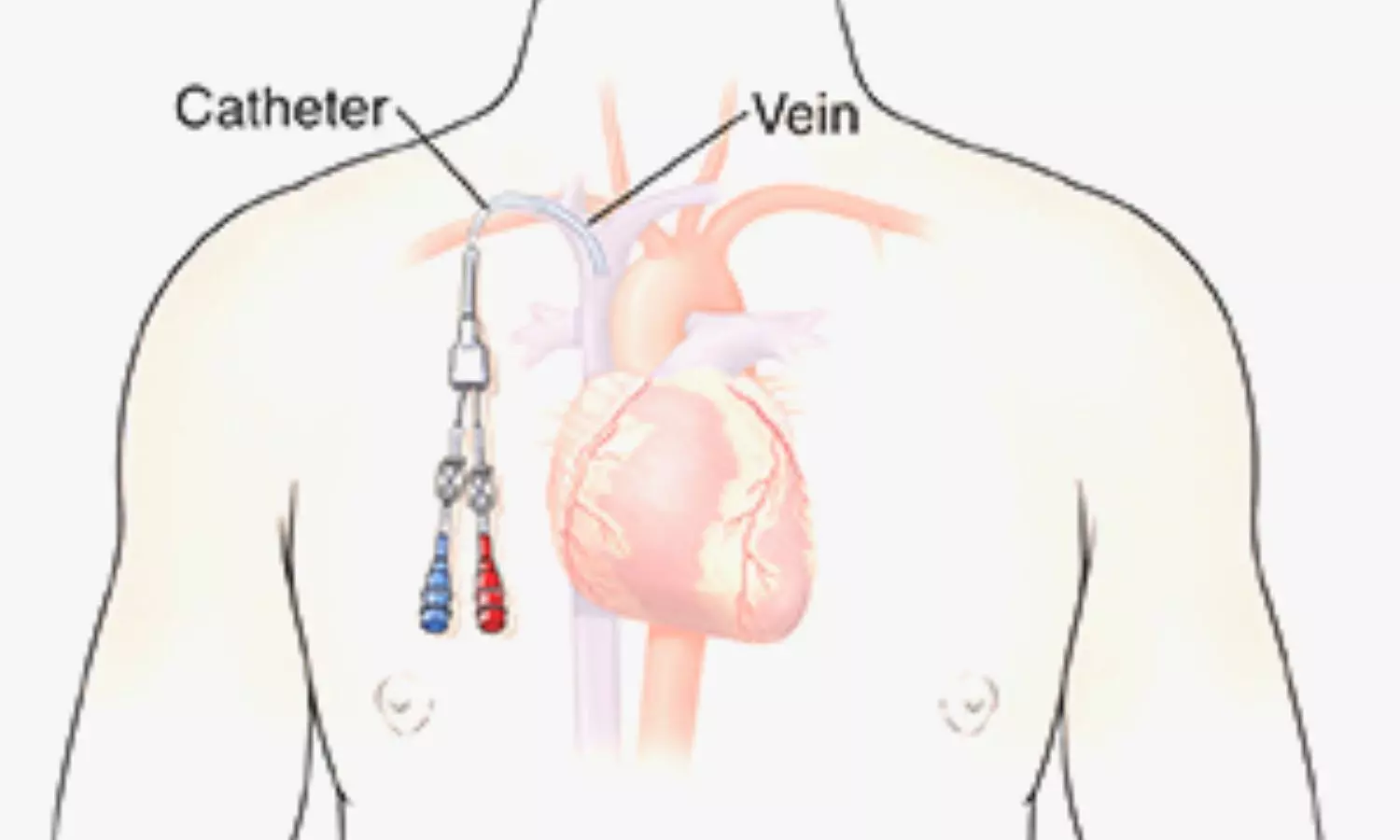


Securing central venous access in neonates and infants is one of the most technically demanding tasks in pediatric anesthesia and critical care. Traditional internal jugular vein (IJV) cannulation, even under ultrasound guidance, can be fraught with challenges in the smallest patients. A recent prospective randomized controlled trial provides new guidance for clinicians seeking a safer, more effective approach.
The Challenge of Vascular Access in Neonates
Central lines are vital for critically ill newborns and infants, enabling life-saving therapies and monitoring. Yet, their small vein size, easy collapsibility, and anatomical variability make access difficult and risky. IJV cannulation is standard but not without limitations—vein collapse, guidewire kinking, and limited maneuvering space can all lead to multiple attempts and increased procedural time.
Study Design: Comparing Two Ultrasound-Guided Approaches
This study enrolled 80 neonates and infants, randomly assigning each to either:
Group A: Ultrasound-guided in-plane right IJV cannulation
Group B: Ultrasound-guided supraclavicular in-plane left brachiocephalic vein (BCV) cannulation
All procedures were performed under general anesthesia by a highly experienced pediatric anesthetist. Outcomes assessed included first-attempt success, cannulation time, number of attempts, overall success, and complications.
Key Findings: Brachiocephalic Vein Shows Clear Advantages
First-attempt success was significantly higher with BCV cannulation (95% vs 77.5% with IJV, P=0.02).
Cannulation time was shorter for BCV (50.7 seconds) compared to IJV (86.6 seconds, P<0.008).
Number of attempts trended lower in the BCV group (mean 1.08 vs 1.30, P=0.057).
Overall success rates were high for both, but only BCV achieved 100%.
No immediate or delayed complications were seen in either group.
The enhanced performance of BCV cannulation was attributed to the vein’s larger caliber, straighter path, and resistance to collapse—important factors when time and vascular access are critical.
Clinical Impact: Why This Matters
For pediatric anesthesiologists, intensivists, and neonatologists, these findings support incorporating ultrasound-guided BCV cannulation as a primary strategy for central lines in neonates and infants, especially when IJV access proves difficult or time-sensitive. The BCV approach appears to combine high efficiency with remarkable safety.
Conclusion
BCV cannulation under ultrasound guidance stands out as a reliable, efficient, and safe alternative to IJV cannulation for central venous access in your youngest, most vulnerable patients.
Key Takeaways
Brachiocephalic vein cannulation is faster and more successful on the first attempt than IJV in neonates and infants.
Ultrasound guidance is essential for both approaches, improving visualization and safety.
No procedural complications were observed in either group, confirming safety when performed by experienced hands.
BCV’s anatomy (larger size, less collapsibility) makes it especially suitable for critically ill patients.
Consider BCV as a first-line central venous access site when rapid, reliable cannulation is needed in newborns and infants.
Citation: Parmar U, Ray S, Dias R. Comparison of ultrasound-guided brachiocephalic and internal jugular vein cannulation in neonates and infants: A prospective randomized controlled trial. Journal of Anaesthesiology Clinical Pharmacology. 2026;42(3):405-411. doi:10.4103/joacp.joacp_492_25.