
Transcranial Ultrasound Stimulation Significantly Improves Depression, Reports Research
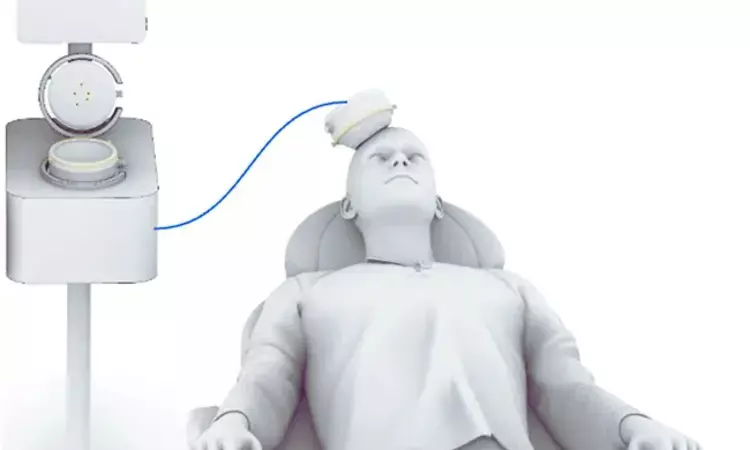


China: Low-intensity transcranial ultrasound stimulation targeting the BA46 region of the left dorsolateral prefrontal cortex (dlPFC) showed significant improvements in depression, anxiety, and sleep patterns. Compared with TMS and tDCS, TUS provides greater spatial precision and deeper brain penetration, reducing off-target effects.
The study confirmed TUS to be a safe and effective neuromodulation approach without the common side effects seen with other non-invasive brain stimulation techniques.
These findings were reported in a study published in the Journal of Affective Disorders by Xin Cai from the Department of Neurology, Shenzhen Samii Medical Center, Shenzhen, China, and colleagues. The researchers evaluated the safety and therapeutic potential of low-intensity transcranial ultrasound stimulation (TUS) as a novel treatment option for patients with depression.
Depression remains a leading cause of disability worldwide, and while non-invasive brain stimulation techniques such as transcranial magnetic stimulation (TMS) and transcranial direct current stimulation (tDCS) are widely used, they have limitations related to depth of stimulation, spatial accuracy, and side effects. TUS has emerged as a promising alternative, offering the ability to precisely target deeper brain regions with minimal discomfort.
The single-blind, randomized, sham-controlled clinical study enrolled 36 patients with depression, of whom 24 were assigned to active TUS treatment and 12 to a sham stimulation group. Participants underwent comprehensive psychiatric evaluations and functional MRI scans. Using an MR-compatible ultrasound transducer combined with optical navigation and MR acoustic radiation force imaging, the investigators precisely targeted Brodmann area 46 of the left dlPFC, a region strongly implicated in mood regulation.
Patients in the treatment group received active low-intensity TUS, while those in the sham group underwent an identical procedure without ultrasound energy delivery. After the sham phase, these participants also received real TUS treatment, allowing for within-group comparisons.
The study led to the following notable findings:
- Patients receiving active low-intensity TUS showed significant reductions in depressive symptoms, anxiety, and sleep disturbances.
- Clinical improvements were maintained for up to four weeks after treatment.
- The sham group showed only modest symptom changes during sham stimulation, with clear improvement observed after initiation of active TUS.
- Functional neuroimaging revealed significant alterations in brain networks involved in emotional processing.
- Changes in functional connectivity were noted between the dlPFC and key regions such as the subgenual anterior cingulate cortex, ventral posterior cingulate cortex, and precuneus.
- These connectivity changes were strongly correlated with improvements in clinical symptom scores, indicating a link between neural modulation and therapeutic benefit.
- Low-intensity TUS was well tolerated, with only minimal and mild adverse effects reported.
- No serious safety concerns were identified, supporting the clinical feasibility of TUS therapy.
The authors concluded that low-intensity TUS represents a promising, precise, and safe neuromodulation strategy for treating depression. They emphasized that future studies should focus on optimizing stimulation parameters, exploring long-term outcomes, and investigating the effects of TUS on other brain regions involved in mood disorders. If validated in larger trials, TUS could expand the therapeutic landscape for depression and other psychiatric conditions.
Reference:
Cai, X., Sun, W., Zheng, X., Ding, N., Luo, M., Tu, Y., Meng, D., Liu, Y., Ding, S., Yuan, B., & Long, X. (2026). Safety and efficacy of low intensity transcranial ultrasound stimulation for depression: A single-blind randomized controlled clinical study. Journal of Affective Disorders, 394, 120666. https://doi.org/10.1016/j.jad.2025.120666

Next Story