
BGF Triple Therapy Improves Exacerbation Control and Outcomes in Uncontrolled Asthma: Study
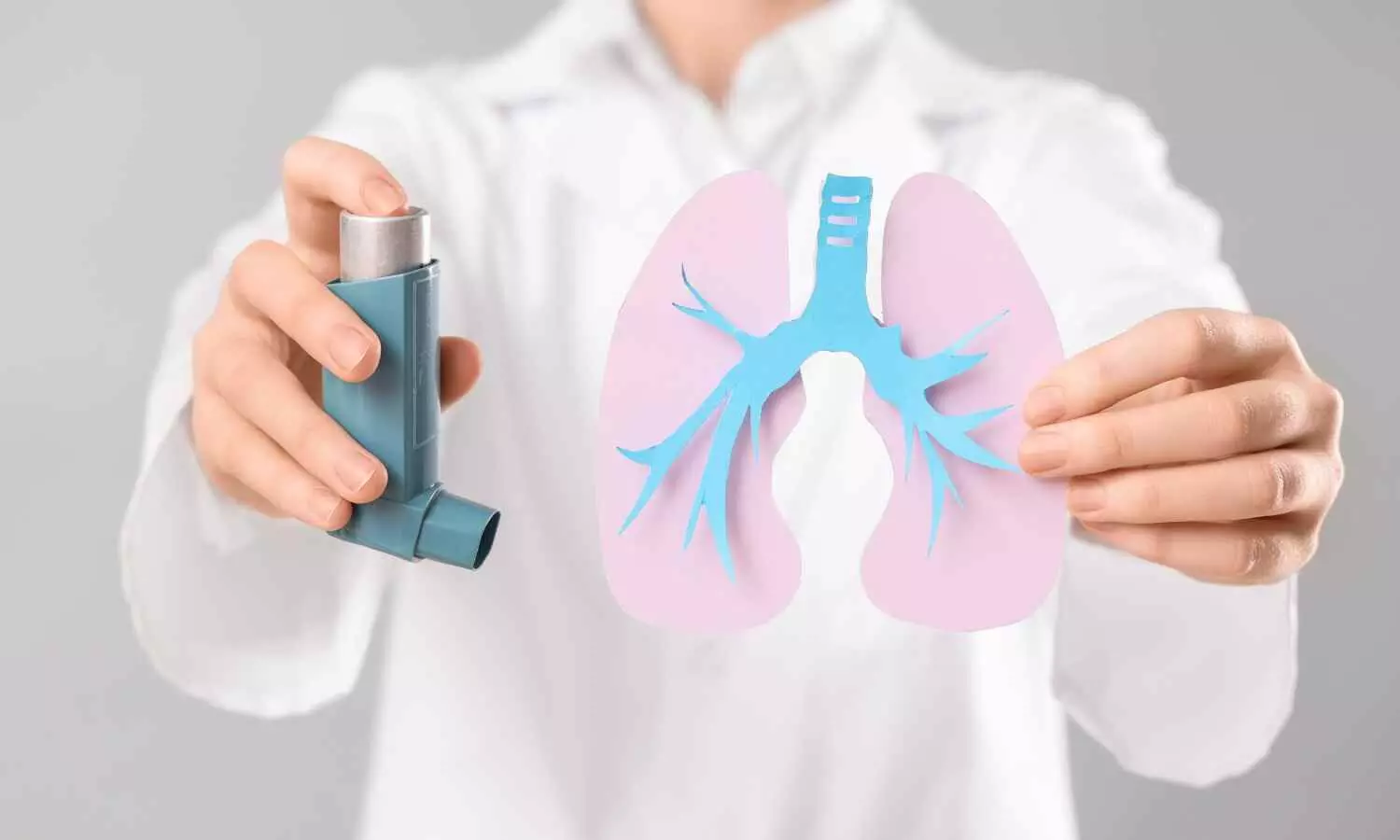


A new study published in the journal of The Lancet Respiratory Medicine showed that budesonide-glycopyrronium-formoterol fumarate (BGF) triple therapy provides superior lung function improvement and better exacerbation control when compared to standard dual therapy in patients with uncontrolled asthma.
In a large phase 3, double-blind trials (KALOS and LOGOS), patients aged 12–80 years with asthma inadequately controlled on inhaled corticosteroids-long-acting β2-agonists (ICS–LABA) therapy were treated with BGF or with budesonide–formoterol dual therapy for 24–52 weeks.
These were delivered either through Aerosphere co-suspension technology (BFFA) or via the widely used suspension formulation (BFFS). BGF triple therapy demonstrated significant improvements in lung function, including increases in trough FEV₁ (76 mL) and FEV₁ AUC₀–₃ (90 mL), along with a reduction in severe exacerbation rates.
Across hundreds of sites in more than 20 countries, the trials enrolled over 8,800 participants, all of whom had inadequately controlled asthma despite ongoing treatment. Of these, 4,311 participants received study medications over a period ranging from 24 to 52 weeks.
The results showed that the higher-dose triple therapy (BGF 28.8 μg glycopyrronium component) consistently outperformed dual therapies in key measures of lung function. The patients using BGF experienced statistically significant improvements in both morning pre-dose lung capacity and overall airflow within the first 3 hours after dosing. These gains, while modest in absolute volume, are considered clinically meaningful in chronic respiratory disease management.
The triple therapy reduced the rate of severe asthma exacerbations. BGF lowered exacerbation rates by about 14%, and by 18% when compared specifically to the traditional suspension inhaler. While the comparison against the Aerosphere-based dual therapy did not reach statistical significance, the overall trend still favored the triple regimen.
Safety outcomes were broadly similar across all treatment groups. Adverse events occurred in roughly half of participants in each arm, with no treatment-related deaths reported. This suggests that adding a long-acting muscarinic antagonist (LAMA) does not introduce substantial new safety concerns, which is an important consideration for long-term asthma management.
Overall, the findings could most possibly influence future treatment guidelines by supporting earlier use of triple-combination inhalers in patients who remain symptomatic on standard ICS–LABA therapy.
Source:
Papi, A., Wise, R. A., Jackson, D. J., Lugogo, N., Chen, R., Trasieva, T., Obasi, C., Movitz, C., Helman, J., Salter, P., Springer, K., Bondoc, M., Shah, M., Knappenberger, K., Bowen, K., Pandya, H., Megally, A., Patel, M., & KALOS and LOGOS study investigators. (2026). Budesonide-glycopyrronium-formoterol fumarate dihydrate in uncontrolled asthma (KALOS and LOGOS): twin multicentre, double-blind, double-dummy, parallel-group, randomised, phase 3 trials. The Lancet Respiratory Medicine, 14(4), 350–362. https://doi.org/10.1016/S2213-2600(25)00457-6

