
COVID-19 Pneumonia Survivors Show Persistent Lung Abnormalities Radiologically 5 Years Later: Study
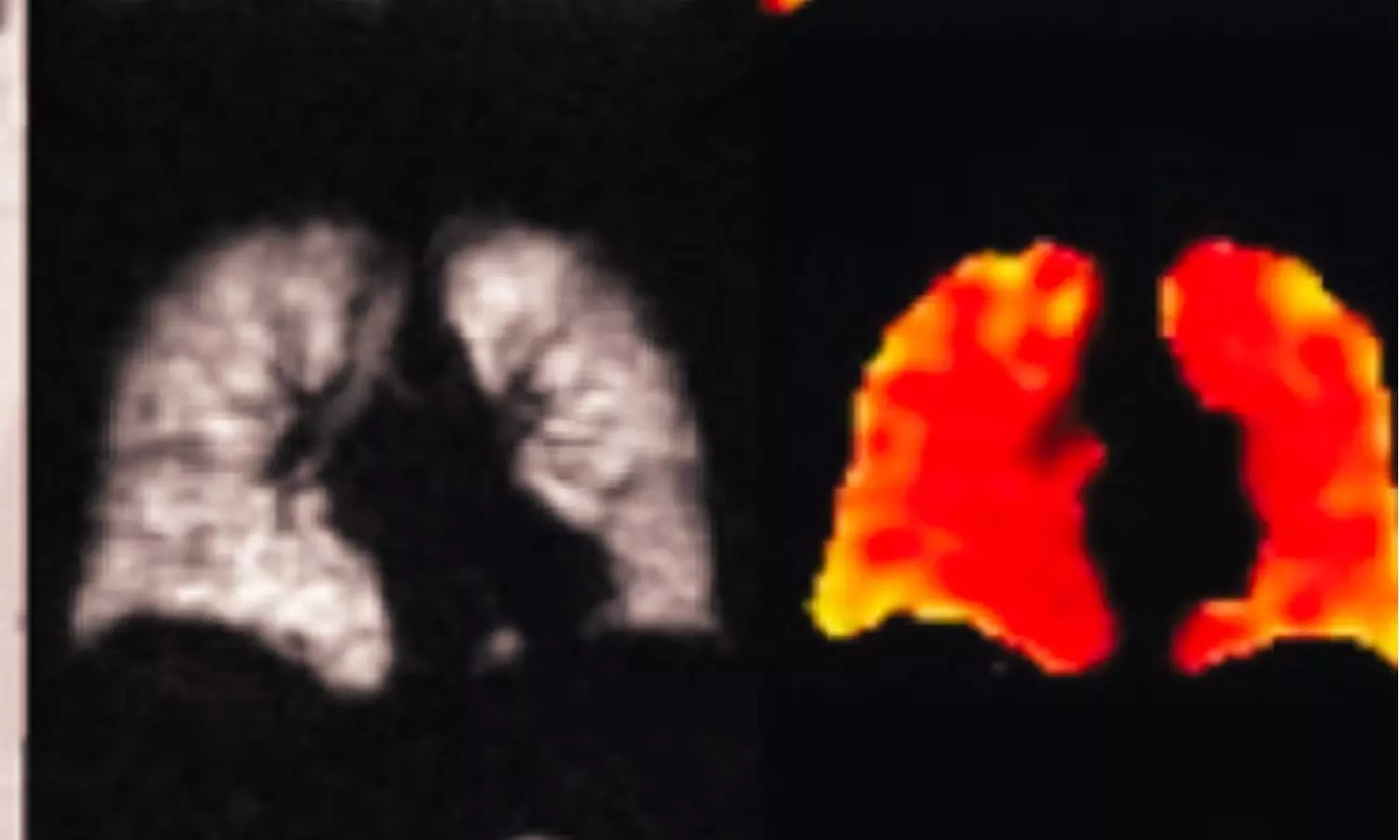


China: A Wuhan study found that survivors of COVID-19 pneumonia continued to experience respiratory symptoms, impaired diffusing capacity, and ventilation abnormalities five years after infection. Compared with 39 healthy controls, 104 COVID-19 survivors showed abnormalities on quantitative CT and xenon-129 ventilation MRI, suggesting that advanced functional imaging may detect persistent lung disease that conventional CT can miss.
The findings were reported in a prospective longitudinal study published in Radiology by Xiaoyu Han, MD, PhD, Department of Radiology, Union Hospital, Tongji Medical College, Huazhong University of Science and Technology, Wuhan, China, and colleagues. The researchers investigated long-term pulmonary complications using serial chest CT scans, pulmonary function tests, and hyperpolarized xenon-129 (¹²⁹Xe) ventilation MRI.
The study included 143 participants with a mean age of 62 years, comprising 83 survivors of severe COVID-19 pneumonia, 21 survivors of nonsevere pneumonia and 39 age-, sex- and body mass index-matched healthy controls. The survivors underwent chest CT during the acute infection and at six months, one year, two years and five years after infection. At the five-year assessment, participants also underwent inspiratory-expiratory CT, lung function testing, symptom evaluation and ventilation MRI.
The researchers compared structural and functional lung abnormalities between the survivor groups and healthy controls, while also examining associations between imaging findings, respiratory symptoms and pulmonary function.
The analysis revealed the following findings:
- Persistent lung abnormalities: Five years after infection, residual lesions were detected on chest CT in 35.6% of survivors (37 of 104), while 25.5% (26 of 102) continued to have impaired diffusing capacity.
- Limited improvement after two years: Respiratory symptoms, pulmonary function, and conventional CT findings showed no significant changes between the two- and five-year assessments, with all comparisons reporting P values of .88 or higher for symptoms, .67 or higher for lung function, and .81 or higher for CT abnormalities.
- Ventilation abnormalities: At five years, ventilation defect percentage and parametric response mapping measures of functional small airway disease and emphysema differed significantly between survivors and healthy controls. These abnormalities were generally more pronounced in survivors of severe COVID-19 pneumonia, with all comparisons against controls showing P values of .005 or lower.
A higher ventilation defect percentage was associated with lower maximum vital capacity and forced vital capacity, as well as persistent respiratory symptoms, while higher CT abnormality scores were linked to impaired diffusing capacity.
The study was limited by its single-center design, inclusion of patients infected during the early pandemic, and lack of preinfection imaging and lung function data. The original cohort’s selection criteria may have overestimated persistent abnormalities, while the absence of longitudinal data from healthy controls limited the ability to distinguish COVID-19-related damage from general postviral changes.
Reference:
Five-year Quantitative Chest CT and Hyperpolarized Xenon 129 Ventilation MRI Findings in Survivors of COVID-19 Pneumonia. Xiaoyu Han, Yiwan Guo, Wenliang Fan, Zhuang Nie, Ruiyao Tang, Yingqi Luo, Qiuyue Li, Fan Pu, Yanqiao Ren, Wenjuan Tang, Hongying Wu, Yimeng He, Yuting Zheng, Licheng Zhu, Lijie Zhang, Qinyue Luo, Lei Chen, Shiqi Li, Heshui Shi, Qun Yu, Chuansheng Zheng, and Fan Yang. Radiology 2026 320:3

Next Story