
Full MIST2 Intrapleural Enzyme Therapy Linked to Better Outcomes in Pleural Infection Cases: Study
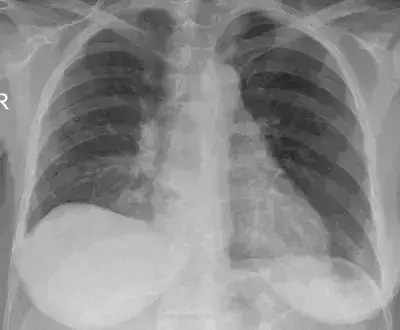


A new study published in the Chest Journal showed that Full MIST2 dosing of intrapleural enzyme therapy (IET) was Linked to Better Outcomes but infrequently administered and showed substantial variation across hospitals.Patients who received full dosing had a lower risk of treatment escalation or bleeding and experienced a shorter hospital length of stay.
Serious pleural infections with significant morbidity include complicated parapneumonic effusion and empyema. As an addition to drainage, intrapleural enzyme treatment has been developed with the goal of increasing pleural fluid clearance and decreasing surgical referrals. In order to provide practical information on the efficacy, safety, and resource usage of intrapleural enzyme treatment for pleural infection across a range of patient demographics, this study looks at patterns of use and clinical outcomes within an integrated health system. Thus, this study determined how the entire MIST2 regimen dosage of IET varied among 21 hospitals for persons admitted with complex parapneumonic effusion or empyema, as well as the relationships between full MIST2 dosing and outcomes.
A retrospective cohort of 1,730 people with complex parapneumonic effusions or empyema who were admitted to Kaiser Permanente Northern California and given at least one dose of IET, tube thoracostomy, and antibiotics. Receiving six doses of alteplase 10 mg and dornase 5 mg, with two doses of each drug administered every 24 hours for at least two days in a row, was the major exposure complete MIST2 dosage.
Mixed effects modeling was used to evaluate facility-attributable variance in IET dose. A time-to-event analysis with mortality as a competing risk was used to assess the primary outcome of treatment escalation (second contemporaneous chest tube or surgery) or bleeding (transfusion of blood products or surgical evacuation of hematoma).
Hospital duration of stay was a secondary outcome. Of 1,751 encounters, 99 (5.7%) involved complete MIST2 dosage. Full MIST2 dose varied significantly at the facility level (ICC=0.57). Comorbidity and disease severity did not significantly differ between exposed and unexposed individuals. 498 (28.4%) interactions had treatment escalation; 137 (7.8%) encounters involved bleeding.
Treatment escalation and bleeding were prevented by full MIST2 dose (HR 0.61, 95% CI 0.43-0.88, P=0.009). A 15% (CI 5%-23%, P=0.003) decrease in hospital length of stay (mean 13.4 versus 11.4 days) was linked to full MIST2 dose. Overall, there was a significant degree of facility-level variance and occasional full MIST2 dosage. Receiving full dosage was linked to shorter hospital stays and a decreased risk of bleeding or treatment escalation.
Source:
Solbes, E., Thai, K. K., Kipnis, P., Daly, K. A., Sakoda, L. C., Velotta, J. B., Liu, V. X., & Myers, L. C. (2025). Use of and outcomes related to intrapleural enzyme therapy for complicated parapneumonic effusion and empyema in an integrated health system. Chest. https://doi.org/10.1016/j.chest.2025.11.042

