
Dark-Field X-Ray Speeds Up Pneumothorax Detection Without Losing Accuracy: Study Shows
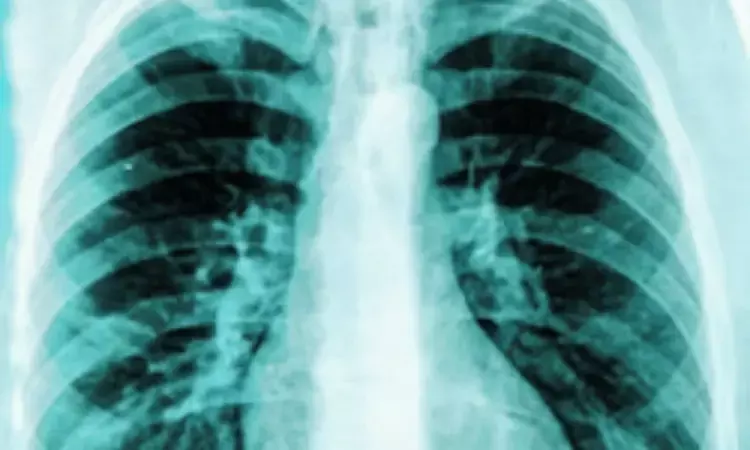


Germany: Adding dark-field radiography to standard chest X-rays may significantly improve the detection of pneumothorax while markedly shortening interpretation time, according to a prospective study published in Radiology: Cardiothoracic Imaging.
The findings suggest that this emerging imaging technique could enhance diagnostic efficiency and confidence without compromising accuracy, offering a promising adjunct to conventional radiography in clinical practice.
Pneumothorax, commonly referred to as a collapsed lung, remains a critical diagnostic challenge. If missed or diagnosed late, it can rapidly progress to severe respiratory distress and become life-threatening. Although chest radiography is the most commonly used imaging modality for suspected pneumothorax due to its availability, affordability, and low radiation exposure, its sensitivity can be limited. Subtle pneumothoraces may be obscured by overlapping anatomical structures such as ribs, the heart, or soft tissues, increasing the risk of missed diagnoses.
Dark-field chest radiography is a novel technique designed to overcome the limits of conventional X-rays. It captures ultrasmall-angle scattering at air–tissue interfaces in lung alveoli, offering additional microstructural detail beyond attenuation alone. The approach uses a modified X-ray system with interferometers to acquire standard and dark-field images simultaneously. Earlier studies suggest its usefulness in detecting conditions that disrupt alveolar structure, including emphysema, pulmonary fibrosis, and COVID-19–related lung changes.
In the current prospective study, researchers from the Technical University of Munich evaluated a prototype dark-field radiography system in 100 participants, including 36 patients with clinically confirmed pneumothorax and 64 healthy controls. Imaging was performed between March 2022 and September 2023, with both attenuation-based and dark-field images obtained during the same examination.
Five radiologists with varying levels of experience independently reviewed the images. In the first session, readers assessed only conventional attenuation-based chest radiographs. After a four-week washout period, they reviewed images that included dark-field overlays, with the option to toggle the dark-field signal on and off. This design allowed direct comparison of diagnostic performance, reading time, and confidence between the two approaches.
The study revealed the following findings:
- The use of dark-field overlays led to a small, non-significant improvement in sensitivity for detecting pneumothorax, with specificity and overall accuracy remaining essentially unchanged.
- Median image interpretation time decreased by about 60%, from 30.8 seconds with conventional radiographs to 10.3 seconds when dark-field data were included.
- Diagnostic confidence improved consistently among all readers.
- The marked reduction in reading time without compromising diagnostic performance underscores the potential clinical value of dark-field radiography.
- Faster and more confident assessments may be especially useful in emergency and critical care settings, where timely decisions are crucial.
Despite these encouraging results, the researchers emphasized that dark-field radiography is still in the prototype phase. Commercial availability, cost considerations, and integration into routine workflows remain unresolved. The technology is being developed as a complementary tool rather than a replacement for standard chest radiography.
Overall, the study supports further investigation of dark-field chest radiography as an adjunct imaging technique for pneumothorax detection. Larger studies and real-world evaluations will be necessary to determine its role in everyday clinical practice.
Reference:
https://doi.org/10.1148/ryct.240560

Next Story