
Low Skeletal Muscle Density on Coronary CT Linked to Higher Heart Attack and Mortality Risk: Study
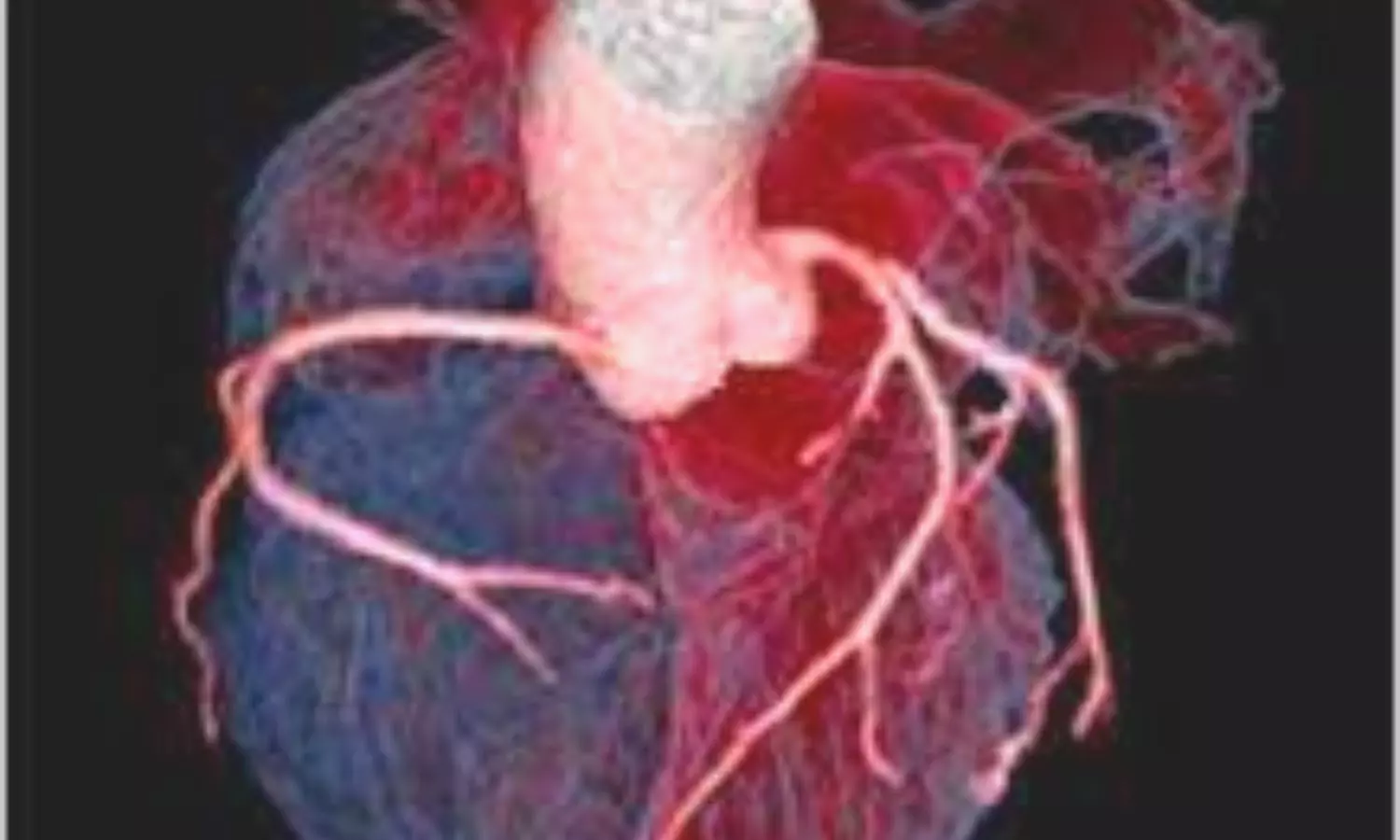


UK: A machine learning analysis of coronary CT angiography (CCTA) scans has found that skeletal muscle quality may provide important information about long-term cardiovascular risk. Researchers reported that lower skeletal muscle attenuation, a marker of reduced muscle quality, was independently associated with a significantly higher risk of myocardial infarction (MI) and all-cause mortality over a 10-year follow-up. The findings suggest that body composition analysis from routine CCTA scans could complement traditional cardiovascular risk assessment.
The findings, published in Radiology, are from a study led by Alan Ranieri Guimaraes, PhD, at the British Heart Foundation Centre for Research Excellence, Institute for Neuroscience and Cardiovascular Research, University of Edinburgh, United Kingdom, and colleagues. According to the researchers, this is the first study to evaluate the long-term prognostic value of machine learning-derived multiorgan body composition measured directly from coronary CT angiography.
For the study, the researchers retrospectively analyzed wide field-of-view coronary CT angiography images from 1,722 participants enrolled in the SCOT-HEART trial between 2010 and 2014. Using the machine learning model TotalSegmentator, they automatically segmented 25 organ structures and measured organ volume and tissue attenuation. Associations between body composition features and 10-year risks of all-cause mortality and myocardial infarction were assessed using multivariable Cox proportional hazards models adjusted for age, sex, and scan length.
During follow-up, 133 patients (7.7%) died and 106 (6.2%) experienced a fatal or nonfatal myocardial infarction.
Key findings:
- Increased skeletal muscle attenuation was independently associated with a lower risk of all-cause mortality.
- Higher myocardial volume and lower rib and skeletal muscle attenuation were associated with an increased risk of myocardial infarction.
- After additional adjustment for coronary artery calcium score, skeletal muscle attenuation remained the only body composition measure independently associated with myocardial infarction.
- Patients with skeletal muscle attenuation below the median had an 85% higher risk of all-cause mortality and a 58% higher risk of myocardial infarction over 10 years.
- Coronary artery disease was also associated with greater lung attenuation, lower liver attenuation, and increased torso fat volume.
The findings suggest that skeletal muscle quality provides prognostic information beyond conventional cardiovascular imaging markers, including coronary calcium score, and may improve long-term risk prediction when incorporated into routine CCTA analysis.
The researchers noted that standardized imaging protocols, validation across diverse populations and scanners, clinically relevant thresholds, and integration with electronic health records are needed before clinical implementation. Overall, the study highlights machine learning-based body composition analysis as a promising tool for cardiovascular risk stratification, while emphasizing the need for further research before its use in routine patient care.
Reference: https://doi.org/10.1148/radiol.251821

Next Story