China to introduce AI, interactive technologies at Dr Dwarkanath Kotnis Memorial
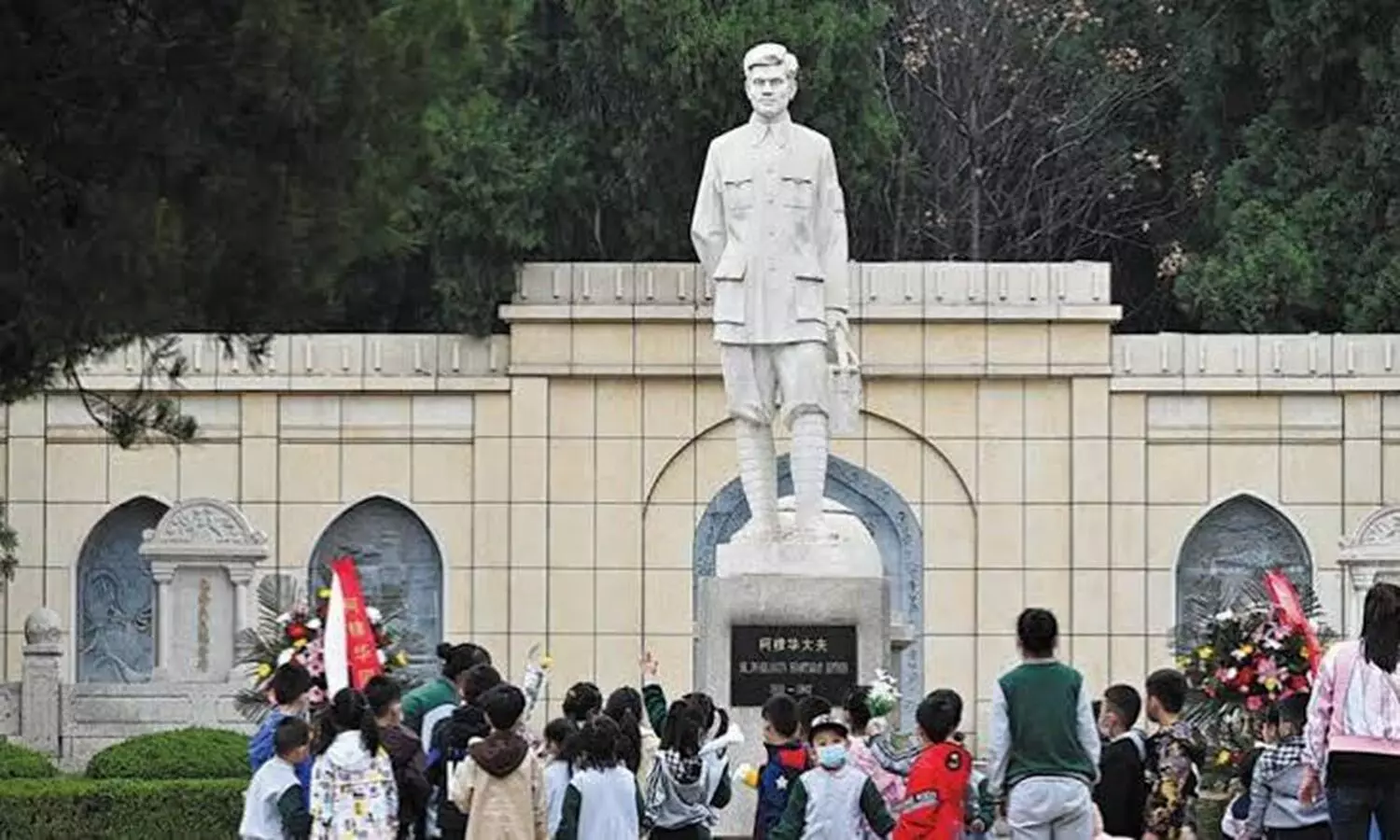


Mumbai: China is planning to introduce artificial intelligence (AI) and interactive technologies at the memorial hall dedicated to Indian doctor Dr Dwarkanath Kotnis, who travelled to the country in 1938 as part of an Indian medical mission to treat soldiers wounded during the Second Sino-Japanese War.

Established in the 1970s, the memorial hall preserves sculptures of all five doctors, along with their letters, photographs, artefacts and information panels documenting their contributions. The planned technological revamp aims to make the exhibits more engaging and interactive, allowing visitors to explore the doctors' work through modern digital features.
The initiative is part of China's wider efforts to upgrade its cultural institutions. On October 20, the country announced a programme to modernise small and medium-sized museums during the 15th Five-Year Plan period, spanning 2026 to 2030. The programme will focus on improving museum collections, exhibitions and educational activities.
The team was sent after Chinese military commander-in-chief, General Zhu De, submitted a letter to Jawaharlal Nehru requesting him to send help in 1938 during Japan’s invasion, and the doctors from the Indian Medical Mission subsequently arrived in China in September that year. The team included Dr Kotnis, Dr Bejoy Kumar Basu, Dr Madan Atal, Dr Mohanlal Cholkar and Dr Debesh Mukherjee, reports the Daily.
According to a letter by Dr Kotnis, almost 500 to 800 patients coming directly from the battlefield used to receive treatment under the five doctors at Guaimao Hospital. One year later, Dr. Kotnis started living in close proximity to the local society and learnt Chinese. In 1941, he served as the first president of International Peace Hospital and started treating and operating on patients there while guiding medical students. He got married to one of the Chinese nurses, Guo Qinglan, while the other members gradually returned to India.
He passed away in Gegong village while serving with the Eighth Route Army, and his remains were transferred to the North China Military Region Martyrs Cemetery in the 1970s. In China, where he is known as Ke Dihua, Kotnis continues to stand as an emblem of friendship between India and China.
Elated over the recent plan of technological upgradation of the memorial, Dr Sumangala Kotnis Borkar, his grand-niece, informed The Indian Express, “It was an emotional moment, and we were touched by the respect bestowed by the Chinese. When I visited again in 2015, the museum had evolved into a much bigger facility. They had carried out renovations, while still carefully preserving the artefacts.”

The family members of the doctor recently visited the memorial last year during the 80th anniversary of the war. In 2014, Chinese President Xi Jinping himself honoured the last surviving sibling of the doctor, Manorama. Dr. Kotnis’s influence is clearly perceived in the professional choices of many of his family members who also serve in medicine. His family has been running Dr. Kotnis Memorial Clinic for the last 49 years in Vile Parle as a tribute to him.