Punjab to launch 1,100 Pind Clinics to boost rural healthcare
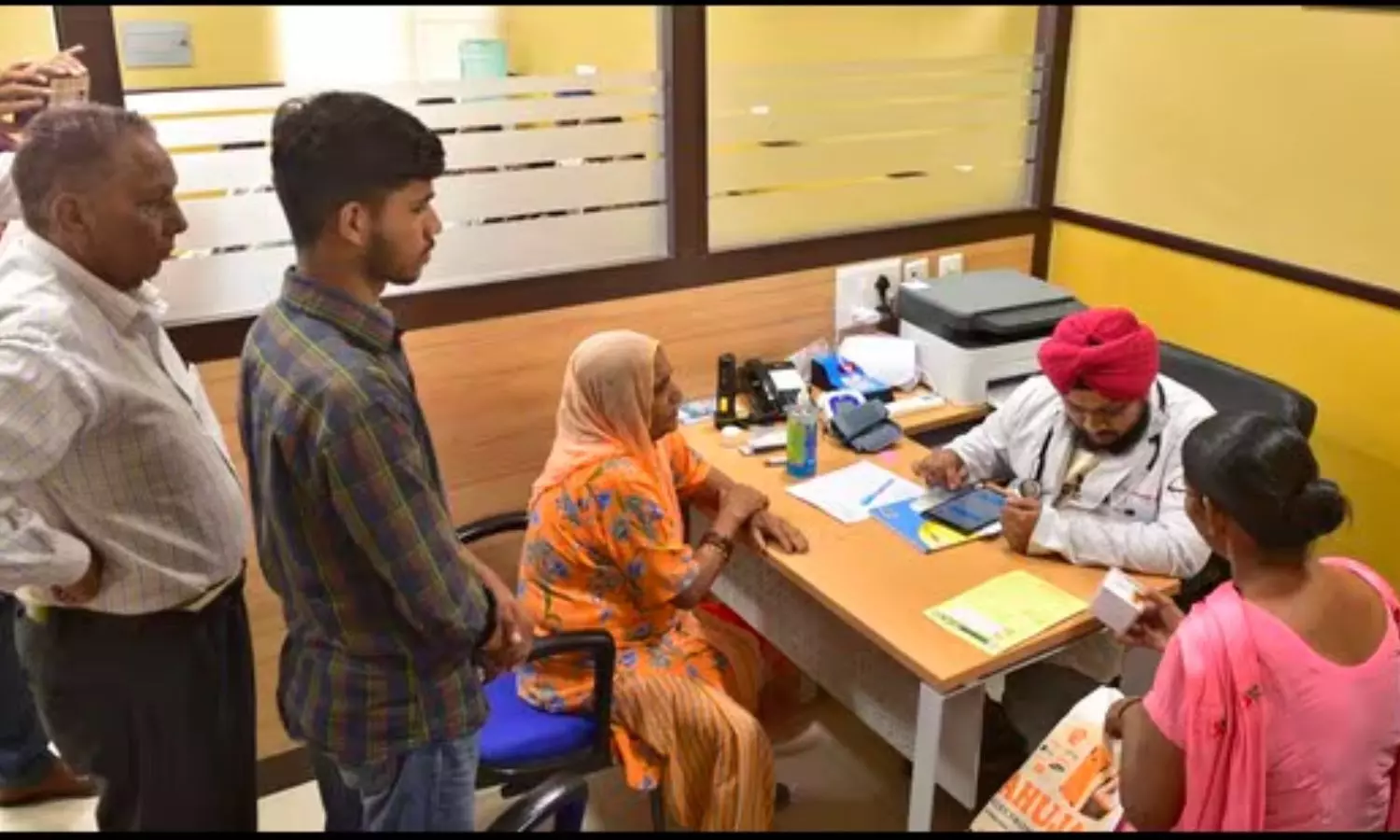


Patiala: Taking a significant step, the Punjab government plans to soon enhance access to healthcare services in rural areas by launching approximately 1,100 "Aam Aadmi Pind Clinics." Currently, only 16% of Punjab's villages fall within the coverage of the 881 Aam Aadmi Clinics.
In the first phase, the government plans to open up to 1,100 'Pind Clinics', and subsequently increase their number to 2,500, to cover all 12,500 villages in Punjab. The existing 881 'Aam Aadmi Clinics' provide services to approximately 2,000 villages, which constitute only 16% of the state's total villages.
Speaking to HT, Punjab Health Minister Dr Balbir Singh said, “The pind clinics are aimed at providing affordable, accessible and quality primary healthcare services to underserved villages. These clinics will serve as the first interface of contact for individuals seeking medical treatment”.
Meanwhile, health officials stated that these pind clinics will be set up at easily accessible locations, based on population density, existing healthcare infrastructure, and community needs.
In these clinics, a team consisting of an Auxiliary Nurse Midwife (ANM)/Staff Nurse and a pharmacist will cover two clinics daily. Additionally, Doctors will be available for tele-consultations via video conferencing, wherein each doctor will oversee five 'Pind Clinics' simultaneously through a software-based token system.
The official also added, “Apart from reducing burden on the secondary healthcare system, these clinics will also carry out various community engagement activities such as campaigns, public health day-related tasks, health scheme awareness programmes and other initiatives in alignment with the state government’s public health efforts”.
Moreover, a statement from the health department document on Pind Clinics stated, “Upon a patient’s arrival, the pharmacist will record the chief complaint and register the patient on the same online portal currently used for Aam Aadmi Clinics, issuing a token. The ANM will record the patient’s vitals, if required, based on the nature of the complaint. The patient will then be asked to wear earphones connected to a computer system, through which the doctor will provide consultation via video conferencing with assistance from the ANM. After the prescription is generated, the patient will visit the pharmacy counter, where the pharmacist will dispense medicines as per the doctor’s prescription”.
However, Dr Jasbir Aulakh, a member of a voluntary organisation named 'Indian Doctors for Peace and Development,' criticised this move by the government. He stated, "The government should first review the existing telemedicine model in district hospitals and Ayushman centres, and fill the vacant posts. It should also bring the health facilities of the Rural Department under its own control."