Asymmetric Cement Distribution May Increase Risk of Prosthesis Loosening following TKA: Study
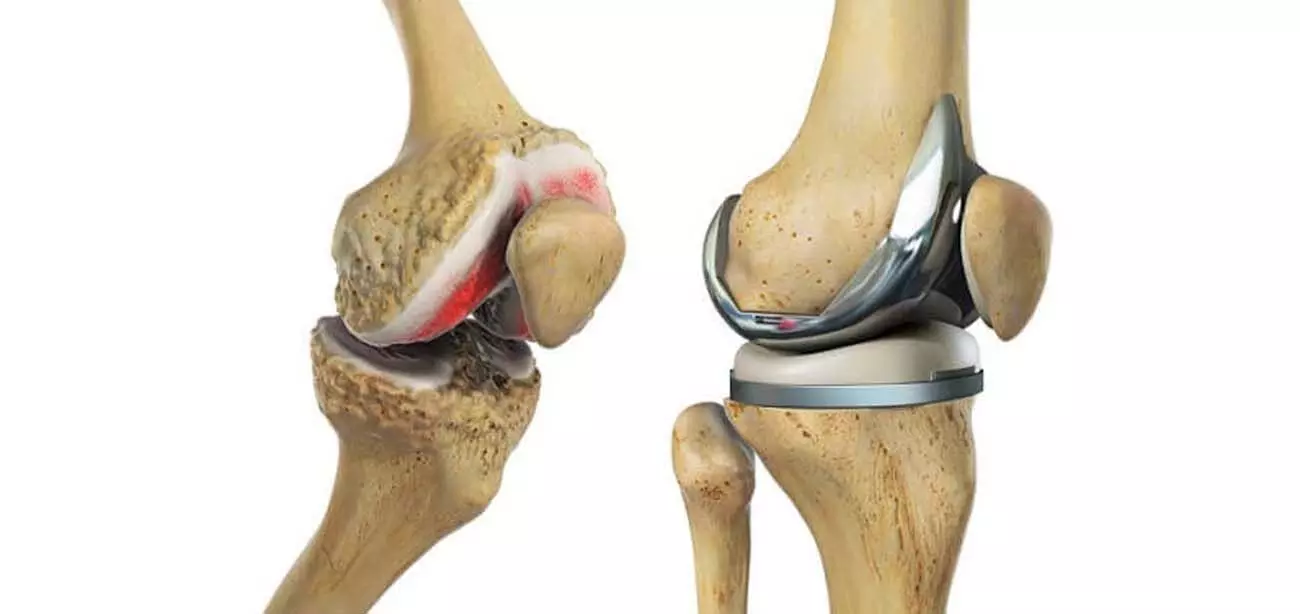


Researchers have found in a new study that asymmetric cement distribution can increase compressive stress concentration in cancellous bone, particularly on the side with a thinner cement mantle. A cement thickness of less than 2 mm, reported as a threshold associated with prosthesis loosening, may therefore increase the risk of aseptic loosening.
Total knee arthroplasty (TKA) is the standard treatment for end-stage knee osteoarthritis (KOA). Aseptic loosening of the tibial component is a common complication following TKA. Previous studies have indicated that reduced cement volume and thinner cement mantles can lead to stress concentration in the cancellous bone beneath the tibial plateau, which serves as an etiological basis for prosthetic loosening. Our preliminary study has shown that variations in cement distribution can alter the local biomechanical environment. Asymmetric cement distribution is a frequently observed clinical phenomenon; however, no study has yet investigated its impact on the risk of prosthetic loosening.
A three-dimensional model of the tibial side following total knee arthroplasty was constructed. The model included the tibial cortex, cancellous bone, polyethylene insert, tibial tray, and bone cement. Three model groups were created based on the coronal plane distribution of the cement: symmetric cement distribution, 75% of cement on the tibial side (medial), and 75% of cement on the fibular side (lateral).
The model with symmetrical cement distribution achieved cement thickness exceeding 2 mm on both sides. In contrast, in models with asymmetrical cement distribution, the cement thickness on the thinner side fell below this threshold. All models were subjected to a 2100 N compressive load at flexion angles of 0°, 30°, and 60°, under both varus and valgus loading conditions. The differences in compressive stress distribution within the cancellous bone beneath the tibial plateau were analyzed across the models to predict the risk of prosthetic loosening.
In models with asymmetric cement distribution, a pronounced stress concentration trend was observed in the cancellous bone on the thinner cement side. Under varus and valgus loading conditions, the load borne by the cancellous bone on the thicker cement side decreased compared to the symmetric distribution model, with the extent of this reduction being smaller than the increase in stress on the thinner cement side. Under axial loading conditions, the peak stress in the asymmetric cement distribution model was consistently higher than that in the symmetric model. A more substantial increase in peak stress was observed when the lateral cement layer was thinner.
Asymmetric cement distribution leads to an aggravated trend of compressive stress concentration in the cancellous bone on the side with a thinner cement mantle, where the cement thickness is less than 2 mm, the threshold for prosthesis loosening reported by published studies. This serves as a risk factor for increased aseptic loosening of the prosthesis.
Reference:
Han, J., Zhou, Z., Xu, W. et al. Asymmetric cement distribution in the coronal plane increases the risk of prosthetic loosening following total knee arthroplasty: an in-silico study. BMC Surg (2026). https://doi.org/10.1186/s12893-026-04066-w