
Early Detection and Timely Management of Anastomotic Leak Improves Survival After Colon Resection: JAMA
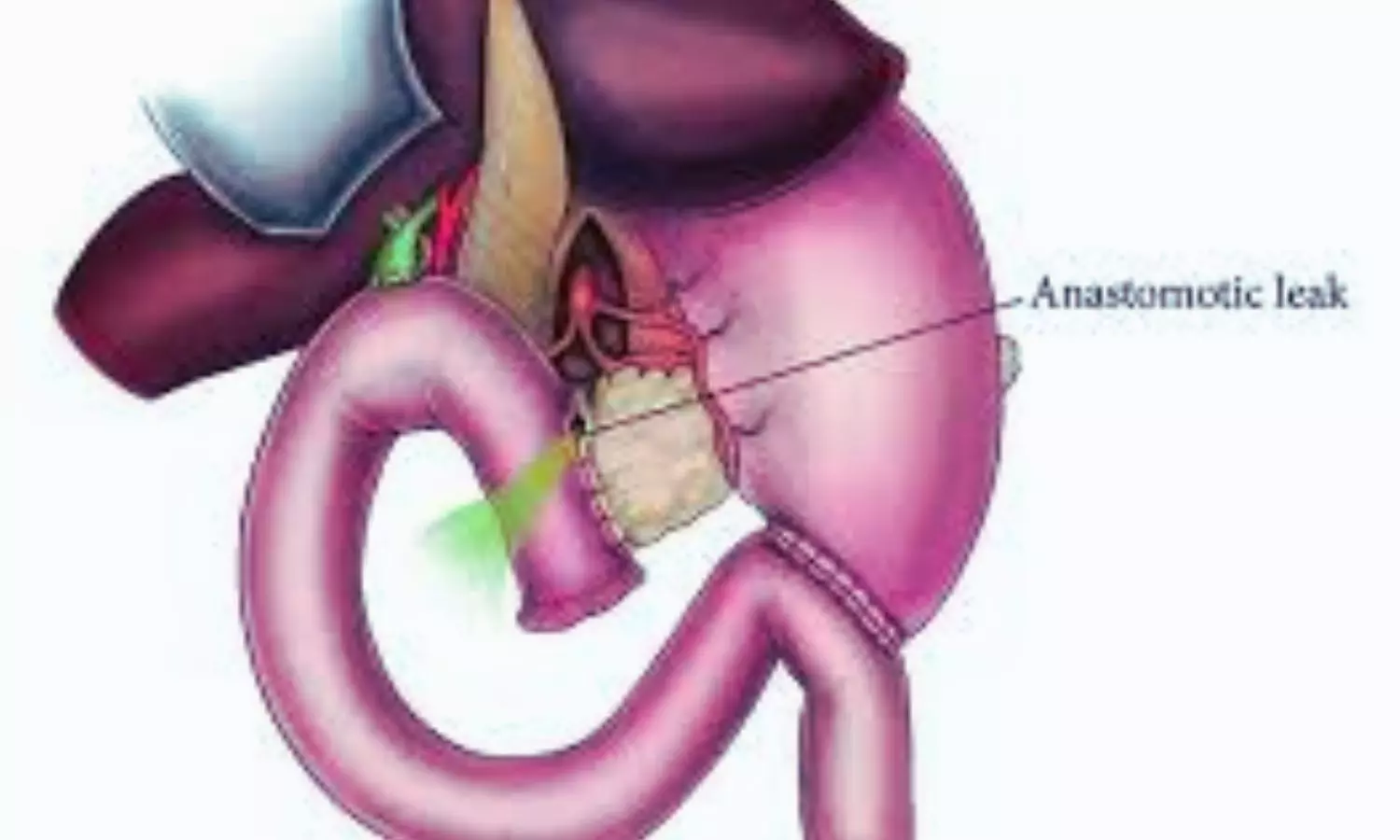


USA: Researchers have found in a new study that early identification of an anastomotic leak and prompt, appropriate management can significantly reduce mortality following colon resection.
The findings, published in JAMA Surgery, come from a large cohort analysis led by Samantha L. Savitch, MD, from the Department of Surgery at the University of Michigan Health System, Ann Arbor, and colleagues. The investigators examined whether delays in recognizing an anastomotic leak after colon resection increase the likelihood of failure to rescue (FTR)—defined as death following a postoperative complication.
Using data from the Veterans Affairs Surgical Quality Improvement Program (VASQIP), the team analyzed 39,175 patients who underwent colon resection between 2004 and 2023. The average age was 65 years, and most patients were male, reflecting the VA population. Indications for surgery included colon cancer, diverticular disease, inflammatory bowel disease, and other causes such as colitis or ischemia.
Because direct coding for anastomotic leak was not available, the researchers used postoperative organ space surgical site infection (OSSI) as a proxy. Among the cohort, 1,227 patients (3.1%) developed OSSI. Of these, nearly one-third were classified as “delayed,” meaning the infection was identified after the onset of sepsis, while the remainder were diagnosed early, before or without sepsis.
The study led to the following findings:
- Patients with delayed diagnosis of anastomotic leak had significantly worse clinical outcomes compared to those diagnosed early.
- They experienced a higher average number of complications.
- The likelihood of requiring reoperation was significantly greater in the delayed group.
- Hospital stays were longer among patients with delayed leak recognition.
- The probability of failure to rescue was substantially higher with delayed diagnosis (7.8% vs 2.2% with early identification).
- Development of sepsis was strongly associated with increased mortality.
- Patients who progressed to sepsis had a failure-to-rescue rate of 8.1%, compared to 1.4% in those who did not develop sepsis.
- Delayed recognition of leak remained independently associated with increased mortality even after adjusting for other factors.
The findings indicate that poor outcomes are driven less by the leak itself and more by delays in its detection and treatment.
The authors stress the need for early warning systems, close postoperative monitoring, and rapid response strategies to prevent sepsis. Prompt imaging, timely source control, and coordinated multidisciplinary care may help reduce preventable deaths after colon surgery.
The study has limitations. OSSI was used as a proxy for anastomotic leak, which may have led to misclassification. The dataset lacked detailed information on imaging, treatments, and timing of interventions. As the analysis was limited to VA hospitals, the findings may not be fully generalizable.
However, the large national dataset and its ability to map complication timelines offer important insights. Overall, the results highlight that early recognition and swift management are key to improving survival after colon resection.
Reference:
Savitch SL, Lagisetty KH, Suwanabol PA. Delayed Diagnosis of Anastomotic Leak and Failure to Rescue After Colon Resection. JAMA Surg. Published online February 11, 2026. doi:10.1001/jamasurg.2025.6551

Next Story