
Early Trismus Therapy Shows Lasting Benefits After Facial Nerve Reconstruction: Study
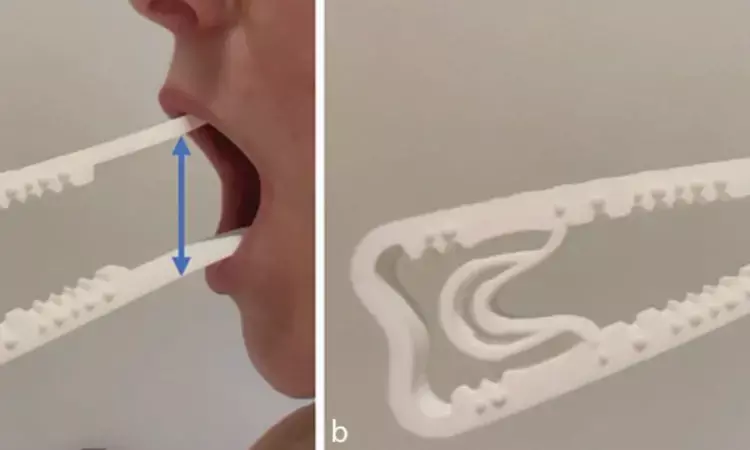


Australia: Early rehabilitation using a force-controlled trismus device may significantly improve jaw function and quality of life in patients undergoing facial nerve palsy reconstruction, a study published in the Head & Neck journal has shown.
The research, led by Briony Adshead from the Department of Head and Neck Surgery at Chris O’Brien Lifehouse, Sydney, Australia, evaluated the impact of initiating trismus therapy soon after facial nerve reconstruction using tensor fascia lata (TFL) slings.
Facial nerve reconstruction with TFL slings is a well-established surgical technique aimed at restoring facial symmetry and resting tone in patients with facial nerve palsy. While effective for facial reanimation, the procedure is frequently complicated by postoperative trismus, a condition characterized by restricted mouth opening that can impair eating, speech, oral hygiene, and overall quality of life. Despite its clinical relevance, optimal strategies for early trismus management following facial nerve reconstruction remain poorly defined.
In this prospective feasibility study, the investigators assessed early postoperative rehabilitation using Restorabite, a novel, force-controlled device designed to gently and progressively increase jaw opening. The study included 27 patients who underwent facial nerve reconstruction with TFL slings. Participants initiated Restorabite therapy within a mean of 1.3 weeks following surgery and continued the intervention for 10 weeks.
Clinical outcomes focused on changes in maximal incisal opening (MIO), an objective measure of jaw mobility, along with patient-reported trismus-related quality of life assessed using the Gothenburg Trismus Questionnaire (GTQ). These measures were evaluated during the intervention period and followed longitudinally to determine the durability of response.
Key Findings:
- Mean maximal incisal opening (MIO) increased by 13.0 mm during the therapy period, representing a clinically meaningful and statistically significant improvement in jaw opening.
- More than half of the patients showed an improvement in trismus severity following intervention.
- Eight participants no longer met the diagnostic criteria for trismus, defined as an MIO greater than 35 mm.
- Patient-reported outcomes, assessed using the Gothenburg Trismus Questionnaire (GTQ), showed significant overall improvement, indicating reduced symptom burden and enhanced quality of life.
- The greatest improvements in GTQ scores were observed in domains related to eating and pain, which are among the most functionally limiting aspects of trismus.
- Improvements in both functional and patient-reported outcomes were sustained at six- and twelve-month follow-up, suggesting long-term benefit beyond the active treatment phase.
- Receipt of radiotherapy was associated with less favorable rehabilitation outcomes, underscoring the need for individualized trismus management strategies in patients undergoing multimodal cancer treatment.
Overall, the findings suggest that early initiation of Restorabite therapy is both safe and effective for managing trismus following facial nerve reconstruction with TFL slings. The authors conclude that incorporating early, structured trismus rehabilitation into postoperative care may reduce long-term morbidity and enhance recovery. They note that larger, controlled studies are warranted to further define best practices and optimize outcomes for this patient population.
Reference:
Adshead, B., Charters, E., Lai, M., Clark, J., Dunn, M., Cheng, K., & Low, T. H. Impact of Early Trismus Intervention Following Facial Nerve Palsy Reconstruction. Head & Neck. https://doi.org/10.1002/hed.70169

Next Story