Gallbladder Removal Alters Metabolic Fuel Use: Study
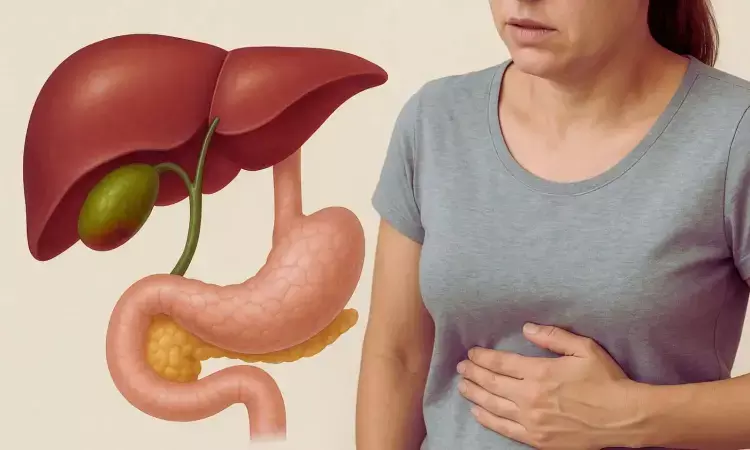


According to a recent study, gallbladder removal seems to affect the choice of metabolic fuels, as there are data suggesting a reduced respiratory exchange ratio and enhanced lipid oxidation and sleep energy expenditure, independent of obesity. In a study of 384 healthy Southwestern Indigenous American participants, those with a previous cholecystectomy showed significant differences in substrate utilization compared with those who had not undergone surgery. The study was published in the Obesity journal by Aydin B. N. and fellow researchers. These results indicate that the gallbladder may have a hitherto underappreciated role in the regulation of energy metabolism. Cholecystectomy (GBX) is a frequently performed surgical procedure, and its long-term effects on human metabolism are still not well understood.
A total of 384 healthy individuals of Southwestern Indigenous American descent, aged 28 ± 6 years, with a mean age of 28 years and consisting of 222 males, were included in the study. Of these, 39 individuals had a history of gallbladder surgery [GBX(+)], and 345 individuals had no history of surgery [GBX(-)].
The participants were subjected to comprehensive metabolic phenotyping. The 24-hour energy metabolism studies were carried out in a respiratory chamber. The statistical models were adjusted for age, sex, body composition, and glucose regulation status. The analyses of respiratory exchange ratio (RER) and macronutrient oxidation were adjusted for energy balance.
Key findings
• Participants in the GBX(+) group were older, with a mean age of 31 ± 7 years compared to 27 ± 6 years in the GBX(−) group (p = 0.0002).
• The GBX(+) group was mainly female, at 95% compared to 36% in the non-surgery group (p < 0.0001).
• The body fat percentage was higher in the GBX(+) group at 40% ± 5%, compared to 32% ± 8% in the GBX(−) group (p < 0.0001).
• However, the authors observed that the differences in body composition were mainly accounted for by the sex distribution and not by the surgery status per se.
• After adjusting for confounding variables, subjects who had a cholecystectomy had a significantly lower respiratory exchange ratio, with a beta coefficient of −0.01 (p = 0.01), suggesting an increase in fat utilization compared to carbohydrate oxidation.
• Lipid oxidation was higher in the GBX(+) group by 79 kcal/day (β = 79 kcal/day, p = 0.03). Sleep energy expenditure was also higher by 78 kcal/day (β = 78 kcal/day, p = 0.006) in subjects without a gallbladder.
This study concluded that, without adjusting for obesity, the absence of the gallbladder was found to be associated with lower respiratory exchange ratio, higher lipid oxidation of 79 kcal/day, and higher sleep energy expenditure of 78 kcal/day. The results of this study suggest that the gallbladder could be a critical organ involved in the regulation of metabolic fuel and energy. This study provides new human evidence that cholecystectomy affects energy metabolism.
Reference:
Aydin, B. N., Stinson, E. J., Looker, H. C., Walter, P., Cabeza de Baca, T., Krakoff, J., & Chang, D. C. (2026). Cholecystectomy is linked with lower respiratory exchange ratio and higher lipid oxidation and sleep energy expenditure. Obesity (Silver Spring, Md.), oby.70145. https://doi.org/10.1002/oby.70145