
Increased Risk of Nontyphoidal Salmonella Infection After Pediatric Appendectomy: Study
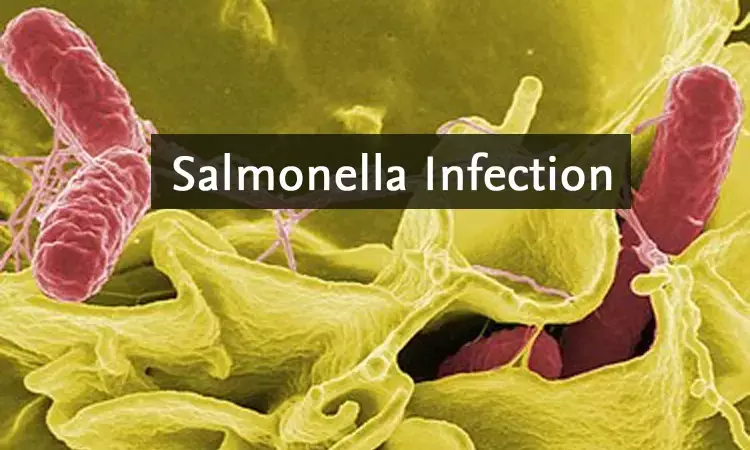


A new study published in the Journal of the American Medical Association showed that children who had an appendectomy were more likely to contract nontyphoidal Salmonella (NTS) when compared to the general pediatric population.
The function of appendix in shielding kids from intestinal illnesses like nontyphoidal Salmonella (NTS) is still unknown. Although appendectomy is one of the most common surgical operations performed on children, little is known about how it may affect immune response. According to new research, removing the appendix may change gut microbiota and immunity, making children more vulnerable to non-typhoidal *Salmonella* infections. Thus, this study determined whether a pediatric appendectomy is linked to a higher risk of a subsequent NTS infection.
From January 1, 2000, to December 31, 2019, Taiwan's National Health Insurance Research Database provided data for this nationwide population-based cohort study. Based on age, sex, and index date, children who had an appendectomy were matched in a 1:4 ratio to children who did not. Data from January 2000 to December 2019 were examined. The incidence of NSA infection, which was defined as three outpatient or one inpatient diagnoses following the index date, was the main outcome. Prior to data collection, the hypothesis that appendectomy increases susceptibility to NTS infection was established.
The cohort consisted of 74 616 matched children in the control group (mean [SD] age, 9.73 [4.30] years; 47 532 [63.7%] male) and 18 654 children who had appendectomy (mean [SD] age, 10.04 (4.17) years; 11 883 [63.7%] male). When compared to children in the control group, children who had appendectomy had a substantially increased risk of NTS infection (aHR, 1.58; 95% CI, 1.17-2.13). Children under the age of 5 were particularly at risk (aHR, 2.00; 95% CI, 1.35-2.97).
For one to four years (aHR, 1.51; 95% CI, 0.98-2.32) and five or more years (aHR, 1.78; 95% CI, 0.89-3.54), the risk was increased but not statistically significant. Overall, an elevated risk of NTS infection was linked to appendectomy. Given the immunologic function of the appendix, this conclusion is biologically feasible, but it should be interpreted cautiously and confirmed in a variety of groups.
Source:
Guo, J.-Y., Lin, W.-S., Lin, C.-H., & Wu, M.-C. (2026). Appendectomy and risk of nonyphoidal Salmonella infection in children. JAMA Network Open, 9(1), e2555278. https://doi.org/10.1001/jamanetworkopen.2025.55278

