
Intraoperative ICG Improves Safety and Outcomes in Laparoscopic Cholecystectomy: JAMA
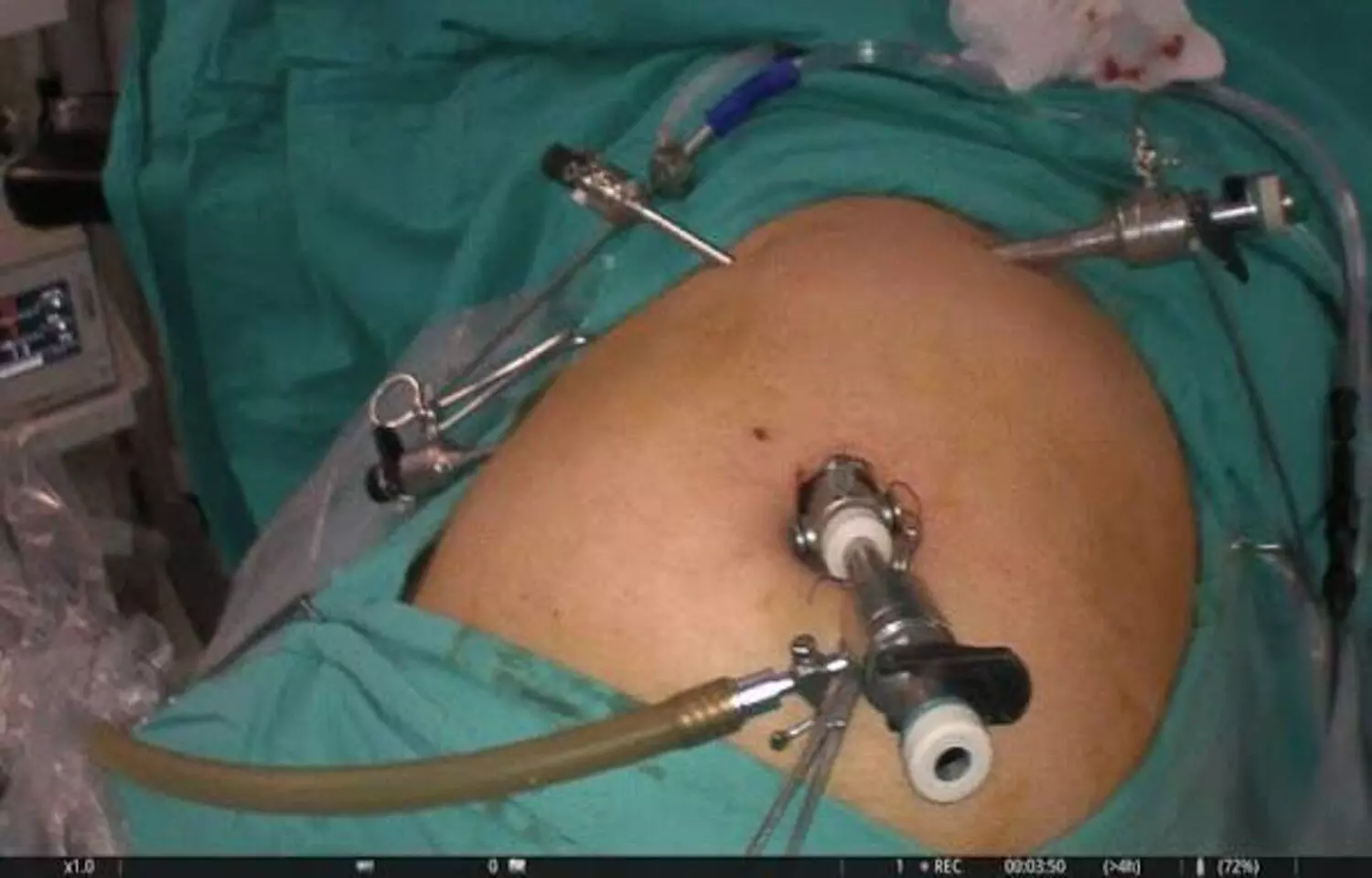


According to a new study published in JAMA, intraoperative indocyanine green (ICG) use was associated with a significant reduction in common bile duct (CBD) injury during laparoscopic cholecystectomy. In a large national cohort, ICG use was also linked to fewer postoperative biliary and nonbiliary complications and reduced conversion to open surgery, supporting its use as a simple adjunct to enhance biliary safety and surgical outcomes. Common bile duct (CBD) injury is a rare but devastating complication of laparoscopic cholecystectomy. Intraoperative indocyanine green (ICG) fluorescence cholangiography may improve biliary visualization, but its effect on CBD injury has not been well demonstrated.
A study was done to evaluate the association between intraoperative ICG use and CBD injury after laparoscopic cholecystectomy. This cohort study included data from multiple hospitals in the Epic Cosmos dataset for adult patients (18 years and older) undergoing laparoscopic cholecystectomy between 2016 and 2024. Robotic cases, surgery for hepatobiliary malignancies, planned open procedures, and patients with inadequate follow-up were excluded from analysis. Data were analyzed from November 2025 to January 2026. Inverse probability of treatment weighting (IPTW) was used to adjust for confounding by indication. A total of 1 266 024 patients were included for analysis, of whom 164 695 (13%) underwent indocyanine green cholangiography. Among them, 118 626 (72.0) were female and 46 069 (28.0) were male; the mean (SD) age was 51 (17) years. ICG use increased from 1143 patients (1.6%) in 2016 to 47 816 (26%) in 2024. After IPTW adjustment, ICG was associated with lower rates of CBD injury, need for any subsequent biliary intervention, conversion to open surgery, and nonbiliary complications at 30 days. In this large national cohort, intraoperative ICG use was associated with lower rates of CBD injury, fewer postoperative biliary procedures and nonbiliary complications, and reduced conversion to open surgery. These findings support the use of ICG to enhance biliary safety in laparoscopic cholecystectomy and demonstrate its utility in reducing CBD injury.
Reference: Neel NC, Van Doosselaere L, Thareja NS, et al. Indocyanine Green Fluorescent Cholangiography During Laparoscopic Cholecystectomy and Bile Duct Injury. JAMA Surg. Published online July 22, 2026. doi:10.1001/jamasurg.2026.2908
Keywords: Neel NC, Van Doosselaere L, Thareja NS, Intraoperative, ICG, Improves, Safety, Outcomes, Laparoscopic Cholecystectomy, JAMA

Next Story