
Mesh Use Reduces Long-Term Reoperation After Emergent Ventral Hernia Repair: JAMA
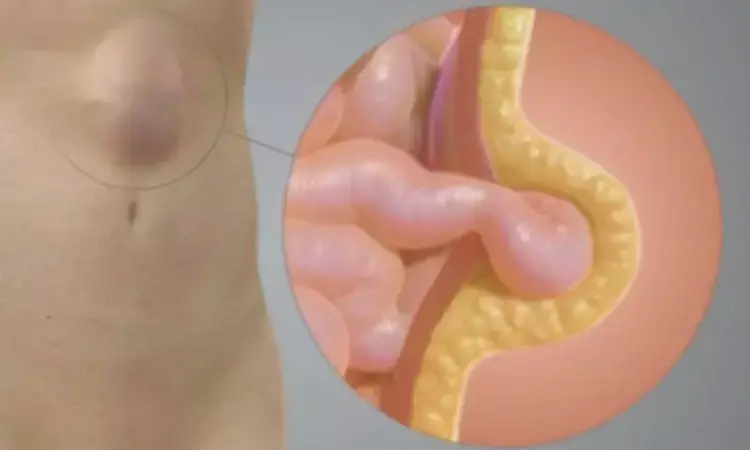


USA: Researchers have found in a new study that the use of mesh during emergent open ventral hernia repair was linked to fewer long-term reoperations for recurrence, suggesting improved long-term outcomes. The findings come from a large population-based study published in JAMA Network Open by Erin E. Isenberg and colleagues from the University of Texas Southwestern Medical Center.
The study addresses a long-standing clinical dilemma: whether mesh should be used when ventral hernias present as emergencies, especially in patients who may require bowel resection. Many surgeons avoid mesh in these situations due to concerns about infection and postoperative complications. However, long-term data on recurrence and mesh safety in the emergency setting have been limited.
To better understand these outcomes, researchers analyzed Medicare claims records from 2011 to 2021, focusing on adults aged 18 years and older who underwent emergent inpatient ventral hernia repair. The dataset included 122,651 patients, with a mean age of 71 years. Participants were followed for a median of 3.2 years, with some tracked for up to a decade.
The study to the following notable findings:
- The overall 10-year reoperation rate for recurrent hernia in the full cohort was 16.3%.
- In open repairs, outcomes differed markedly depending on mesh use: patients who received mesh had a 13% recurrence-related reoperation rate over 10 years.
- Those repaired without mesh had a significantly higher recurrence rate of 18.9%.
- This reflected a 34% reduction in long-term recurrence risk with mesh placement (hazard ratio 0.66).
- Safety was also assessed in patients requiring enterectomy, where mesh was used in 18.2% of repairs.
- Mesh explantation rates at 10 years were low—3.8% in patients with enterectomy and 3.2% in those without.
- The lack of a significant difference suggests that performing an enterectomy does not necessarily preclude safe use of mesh.
The authors emphasize that these findings point toward a potential benefit of wider mesh use, even in emergency repairs where contamination concerns have historically influenced surgical decision-making. They note that recurrence requiring reoperation carries substantial morbidity, particularly in older adults, and preventing these events could improve long-term patient outcomes.
However, the authors note key limitations. The retrospective design restricts causal conclusions, and claims data lack details such as hernia size, mesh type, placement technique, and nonoperative complications. Because the cohort included only Medicare beneficiaries, the findings may not generalize to younger or healthier populations. The study also could not capture recurrences that did not require reoperation.
Despite these constraints, the study offers one of the most comprehensive long-term assessments of mesh use in emergency ventral hernia repair to date.
The authors conclude that mesh placement was associated with both lower recurrence rates and no increase in long-term mesh-related removals, even in the presence of bowel resection. These insights may encourage surgeons to reconsider mesh avoidance in the emergent setting and support more standardized approaches to improve long-term surgical outcomes.
Reference:
Isenberg EE, Fry BT, Sinamo J, et al. Long-Term Recurrence and the Safety of Mesh Use After Emergency Ventral Hernia Repair. JAMA Netw Open. 2025;8(11):e2544303. doi:10.1001/jamanetworkopen.2025.44303

Next Story