
Novel Low-Cost Laparoscopic Technique Improves Right Adrenal Surgery Outcomes in Resource-Limited Settings, Finds Study
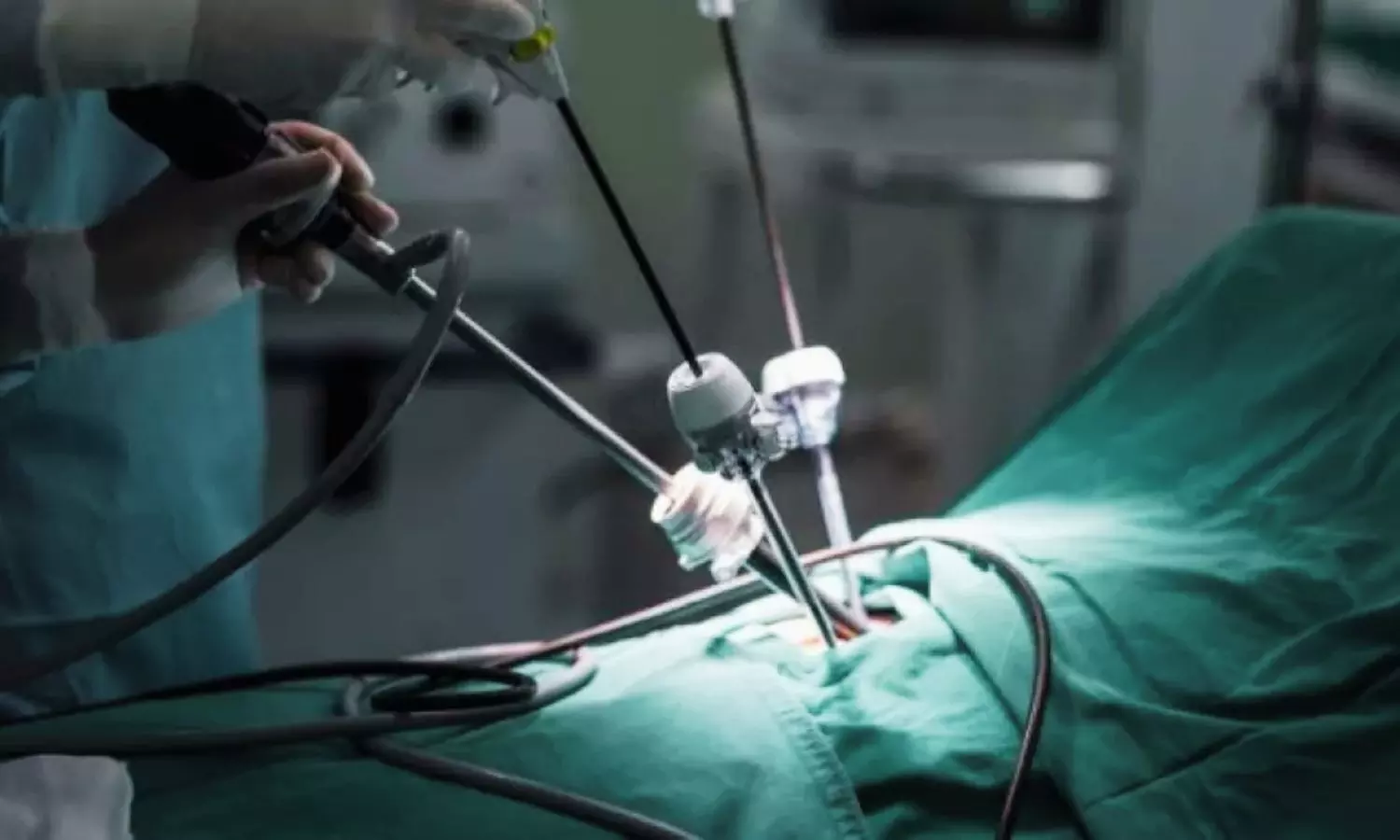


A recent study published in the Journal of Minimal Access Surgery in May 2025 introduces a novel, highly cost-effective approach that revolutionizes right-sided adrenal procedures in resource-limited settings. By utilizing standard laparoscopic instruments, this simple technique dramatically reduces equipment costs and retraction effort, delivering safe, optimal surgical exposure comparable to expensive robotic systems.
Right laparoscopic adrenalectomy poses a high risk of liver injury, yet advanced retractors remain expensive, and manual methods are limited by assistant fatigue. Addressing this clinical gap, Dr. Saarim Bari and colleagues at King George's Medical University evaluated a simple, cost-effective technique using standard surgical instruments to achieve safe, static liver retraction.
Therefore, the initial tertiary-care study evaluated a four-port laparoscopic technique with patients in a 15°–20° reverse Trendelenburg position and laterally rotated to displace the bowel. To achieve optimal surgical exposure without complex equipment, a standard Maryland forceps was inserted through a 5-mm epigastric port and anchored to the right parietal peritoneum, uniformly elevating the right hepatic lobe.
Key Clinical Findings of the Study Include:
Economic Feasibility: The researchers demonstrated that employing locally accessible standard instruments completely circumvents the high procurement costs universally associated with robotic or Nathanson systems.
Static Stability: The study highlights that the locking mechanism of the conventional needle holder ensures static retraction, preventing dangerous tissue drift during the procedure.
Ergonomic Efficiency: The findings reliably show that eliminating the strict reliance on a dedicated assistant avoids the muscular fatigue that traditionally causes unsafe, non-uniform retractive forces.
Enhanced Safety: The authors observed that uniform weight distribution mitigates the risk of severe complications, including hepatic tears, lobar atrophy, or hematomas.
Operational Independence: The investigators noted that bypassing the need for a physical assistant allows the surgical staff to purely focus on monitoring the operative site.
The results suggest that standard 5-millimeter and 10-millimeter laparoscopic tools can efficiently substitute expensive retractors, seamlessly providing optimal operative exposure while simultaneously keeping institutional funding requirements to a bare minimum.
Thus, the study concludes that operating surgeons in resource-constrained centers might consider adopting this straightforward needle-holder technique to safely enhance operational efficiency during complex right-sided adrenal operations.
While representing a promising initial clinical experience from a single tertiary care institution, it would be beneficial for future multicenter trials to comprehensively validate these outcomes across a larger demographic to fully cement its comparative efficacy against established robotic methods.
Reference
Bari S, Gaurav K, Anand A, Sonkar AA. Simple and cost-effective liver retraction technique for laparoscopic right adrenalectomy – An initial experience from a tertiary care centre. J Min Access Surg 2026;22:215-7.
