
Ona-Port Percutaneous Internal Ring Suturing Halves Operative Time in Pediatric Female Hernia Repair, Suggests Study
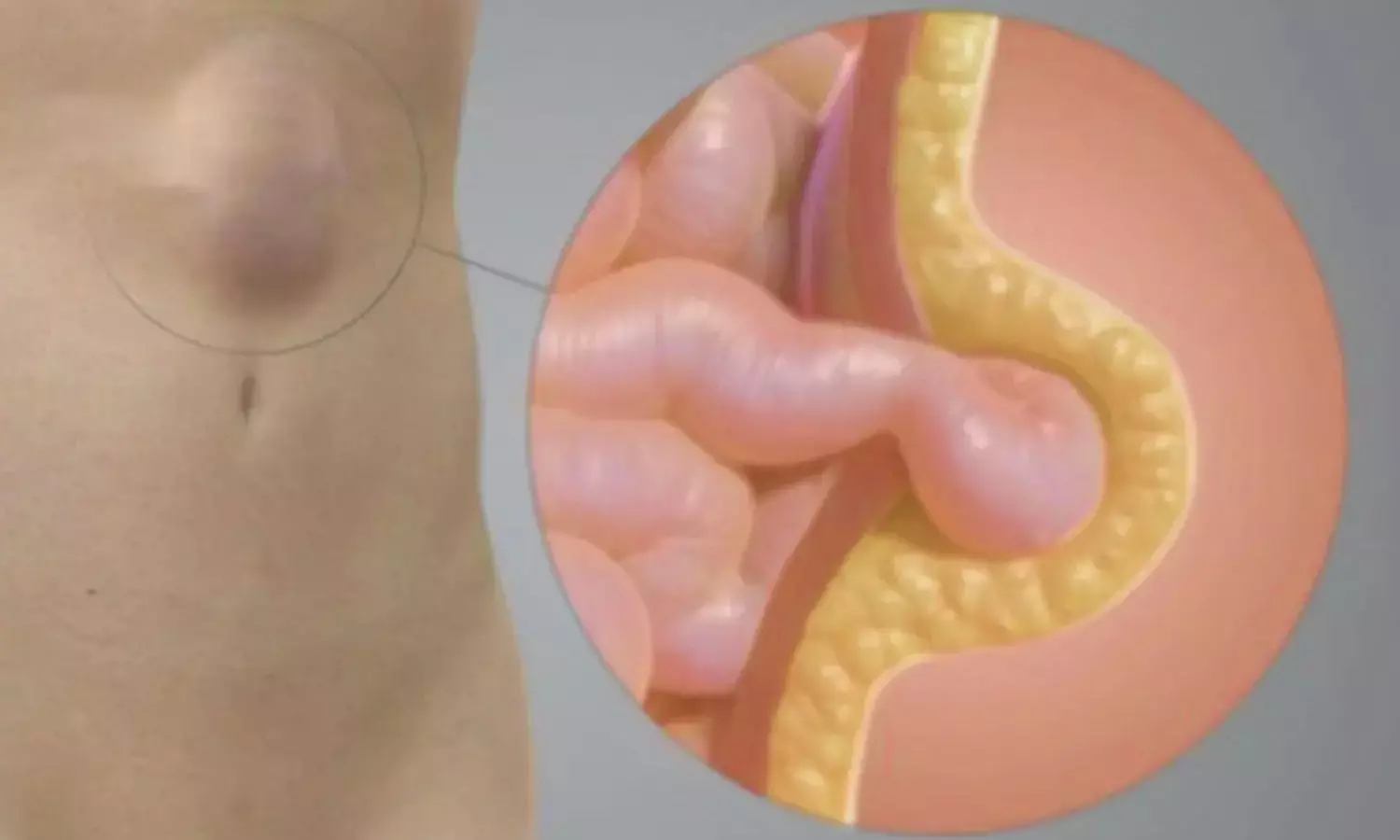


A recent study published in the Journal of Indian Association of Pediatric Surgeons July 2026 reveals that one-port percutaneous internal ring suturing (PIRS) offers a simpler, faster, and cosmetically superior alternative to traditional three-port incision, dissection, excision, and suturing (IDES) in Pediatric Female Hernia Repair. While both techniques demonstrated equivalent long-term safety with a near-zero recurrence rate (~1.2%) over a nine-year follow-up, PIRS significantly reduced average operating times from 37.2 to 22.1 minutes.
Pediatric inguinal hernias are common, affecting 0.8% to 4.4% of children, yet the optimal laparoscopic approach is still debated due to a 3% recurrence rate and the lack of high-level evidence regarding contralateral patent processus vaginalis (CPPV) detection. To address this, Dr. Roshan Chanchlani (All India Institute of Medical Sciences [AIIMS], Bhopal) and Prof. Vikesh Agrawal from Netaji Subhash Chandra Bose Government Medical College, Jabalpur, India evaluated the feasibility, safety, and long-term efficacy of single-port PIRS versus traditional multi-port IDES in girls.
Therefore, the 10-year comparative study in Central India evaluated 178 girls (aged 1–12) undergoing elective hernia repair, comparing 93 conventional three-port IDES procedures against 85 one-port PIRS repairs. Excluding patients with complex or recurrent hernias, the trial primarily compared operative duration, recurrence rates, and postoperative recovery between the two techniques.
Key clinical findings of the study include:
Shorter Operative Time: The study demonstrated the percutaneous technique took 22.1 ± 4.6 minutes versus 37.2 ± 6.1 minutes for conventional repair (-(P < 0.001-)).
Equivalent Long-Term Durability: It reported identical safety, with only one recurrence in each group (1.2% for PIRS vs. 1.1% for IDES; -(P = 0.97-)) over a nine-year follow-up.
Comparable Contralateral Detection: They noted similar CPPV detection rates, occurring in 15.3% of percutaneous and 15.1% of conventional cohorts (-(P = 0.97-)).
Consistent Postoperative Recovery: The study found comparable recovery, including mean hospital stays of 18.1 ± 4.9 hours for PIRS and 18.9 ± 5.2 hours for IDES (-(P = 0.33-)).
Fragile Minor Events: Study observed that minor complications, including PIRS-related subperitoneal hematomas (7.1%) and IDES suture breakages (5.4%), carried a fragility index of 1.
The results suggest that one-port PIRS offers a clinically equivalent and highly effective alternative to conventional laparoscopic repair, achieving comparable safety and near-zero recurrence rates of approximately 1.2% over a long-term follow-up of nearly nine years. Ultimately, this simpler technique provides the distinct advantage of a significantly reduced operative duration of 22.1 minutes, making it a compelling option for routine pediatric female hernioplasties.
Thus the study concludes clinicians may consider adopting this simplified one-port approach as a routine procedure of choice for young girls, given its combination of technical simplicity, accelerated operating time, and excellent aesthetic outcomes without any loss of long-term therapeutic durability.
Although the study's single-centre, non-randomised cohort design presents potential selection bias, future prospective trials could further clarify the learning curve for surgical residents training in this technically straightforward percutaneous technique.
Reference
Chanchlani R, Tiwari A, Acharya H, Mishra R, Harchandani R, Agrawal V. Can one-port laparoscopic percutaneous internal ring suturing technique be an alternative to conventional laparoscopic repair for female inguinal hernia? – A nonrandomized comparative cohort study. J Indian Assoc Pediatr Surg. 2026; Epub ahead of print.
