Onlay and Preperitoneal Mesh Placement May Offer Better Outcomes in Primary Ventral Hernia Repair: JAMA
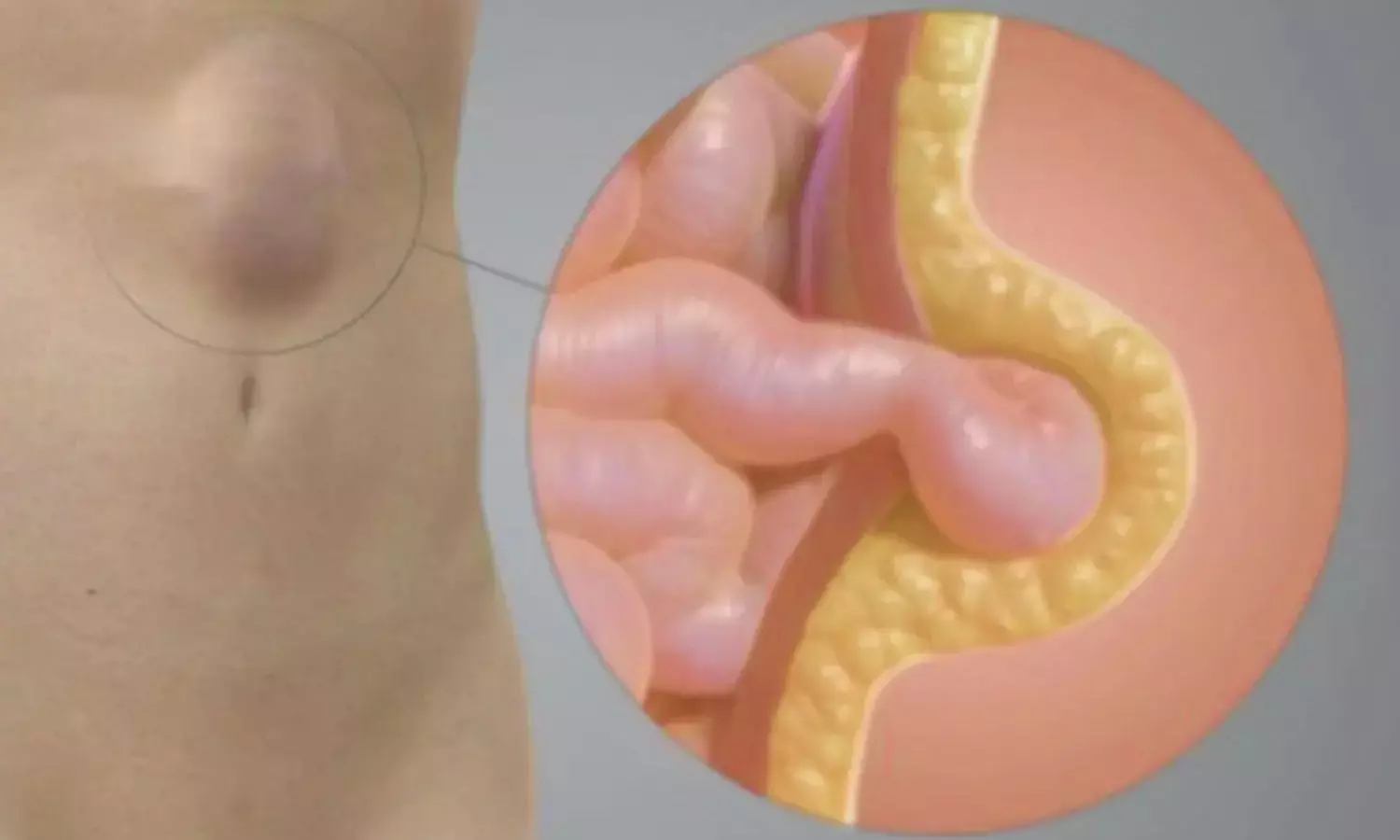


Mesh reinforcement is standard in ventral hernia repair, but the optimal anatomical mesh placement remains debated.
A study was done to compare the risk of reoperation for recurrence and bowel obstruction across different mesh placements after elective primary ventral hernia repair.
This Danish nationwide register-based cohort study included adults (age ≥18 years) who underwent elective primary (umbilical or epigastric) ventral hernia repair with mesh for hernia defects 10 cm or smaller between January 2014 and April 2025, with follow-up through November 1, 2025. Patients were identified in the Danish National Patient Register, with data linked to the Danish Ventral Hernia Database and the Danish Civil Registration System. Data were analyzed from November 2025 through January 2026.
The primary outcomes were reoperation for recurrence and bowel obstruction, with data presented as estimated hazard ratios (HRs) from Cox proportional hazards regression models.
Results A total of 17 832 patients were included: 8764 with onlay mesh placement, 1239 with retromuscular mesh placement, 4292 with preperitoneal mesh placement, and 3537 with IPOM. Mean (SD) patient age was 54 (13.5) years, and 4873 patients (27.3%) were female. Compared with onlay mesh placement, both retromuscular mesh placement and IPOM were associated with an increased risk of reoperation for recurrence (HR, 1.63; 95% CI, 1.12-2.38; and HR, 1.38; 95% CI, 1.02-1.86, respectively).
The risk of bowel obstruction was also higher after retromuscular and IPOM placement compared with onlay (HR, 2.01; 95% CI, 1.05-3.82; and HR, 3.47; 95% CI, 2.27-5.28, respectively).
In this nationwide register-based cohort study, retromuscular mesh placement and IPOM were associated with a higher risk of reoperation for recurrence and bowel obstruction compared with onlay mesh placement. When considering the risks of recurrence and bowel obstruction, onlay and preperitoneal mesh placement may be preferable options for primary ventral hernia repair.
Reference:
Á Lakjuni Guttesen E, Reistrup H, Joensen A, Gram-Hanssen A, Rosenberg J, Baker JJ. Mesh Placement and Risk of Recurrence and Bowel Obstruction After Primary Ventral Hernia Repair. JAMA Surg. Published online May 27, 2026. doi:10.1001/jamasurg.2026.1626