
Telesurgery Matches Local Robotic Surgery Outcomes in Urological Procedures: Study
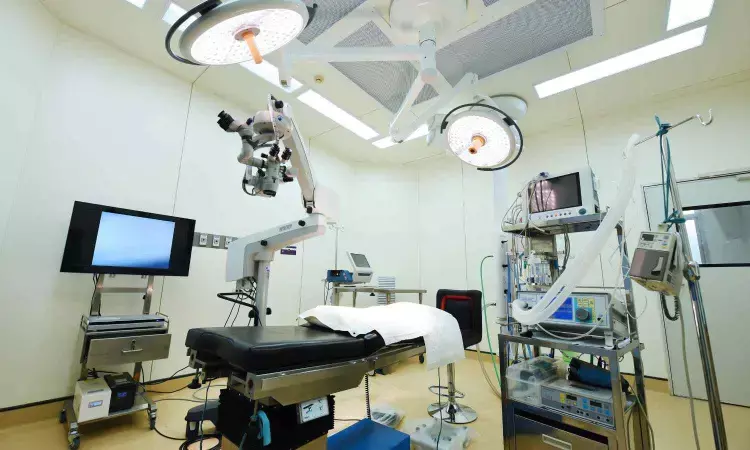


A new trial from China published in the BMJ journal revealed that telesurgery was non-inferior to standard local robotic surgery for radical prostatectomy and partial nephrectomy in small renal masses.
The study set out to determine whether the reliability of telesurgery was non-inferior to that of standard local robotic surgery in patients undergoing urological operations. This research focused on two common and complex procedures: radical prostatectomy and partial nephrectomy. Using a rigorous non-inferiority framework, the trial tested whether telesurgery’s success rate fell within an acceptable margin compared with local surgery.
Conducted between December 2023 and June 2024, this trial involved five hospitals across China. A total of 72 patients scheduled for robotic urological surgery were enrolled and randomly assigned in a 1:1 ratio to either telesurgery or local surgery. Surgeons performing telesurgery operated remotely, with physical distances ranging from 1,000 to 2,800 kms.
The primary outcome was surgical success, judged by the medical team using predefined clinical criteria. This research established a non-inferiority margin of a 0.1 absolute reduction in success probability which makes telesurgery to be acceptable if its success rate was no more than 10% points lower than that of local surgery.
After accounting for clustering by surgeon, the difference in success probability between telesurgery and local surgery was 0.02, with a 95% credible interval ranging from −0.03 to 0.15. The Bayesian posterior probability that telesurgery was non-inferior reached 0.99, providing strong statistical confidence in the finding.
The median age was 61 years in the telesurgery group and 65 years in the local surgery group, with similar interquartile ranges. Both groups underwent comparable proportions of prostate and kidney surgeries. 13 clinical outcomes captured operative details, complications, oncological results, and early recovery, while another assessed the workload of the medical team. 4 technical outcomes evaluated system performance, including network latency, display delay, frame loss, and system malfunctions.
Operative times, blood loss, complication rates, and early postoperative recovery were broadly similar. Follow-up at four and six weeks showed comparable recovery and complication profiles. The telesurgery system proved technically stable, with mean round-trip network latency ranging from 20.1 to 47.5 milliseconds and minimal frame loss with no major system failures reported. Overall, the findings indicate that, within the tested parameters, telesurgery can match the reliability of local robotic surgery.
Source:
Wang, Y., Xia, D., Xu, W., Rexiati, M., Zhao, W., Huang, Q., Shi, T., Wang, B., Wang, S., Tai, S., Qiao, B., Zhang, Y., Ye, S., Zhang, X., Mao, J., Zhu, Y., Wang, H., Ma, S., Yang, C., … TeleS Research Group. (2026). Reliability of urological telesurgery compared with local surgery: multicentre randomised controlled trial. BMJ (Clinical Research Ed.), 392, e083588. https://doi.org/10.1136/bmj-2024-083588

