
PSMA PET/CT More Sensitive Than MRI for Detection of Prostate Cancer Recurrence: Study
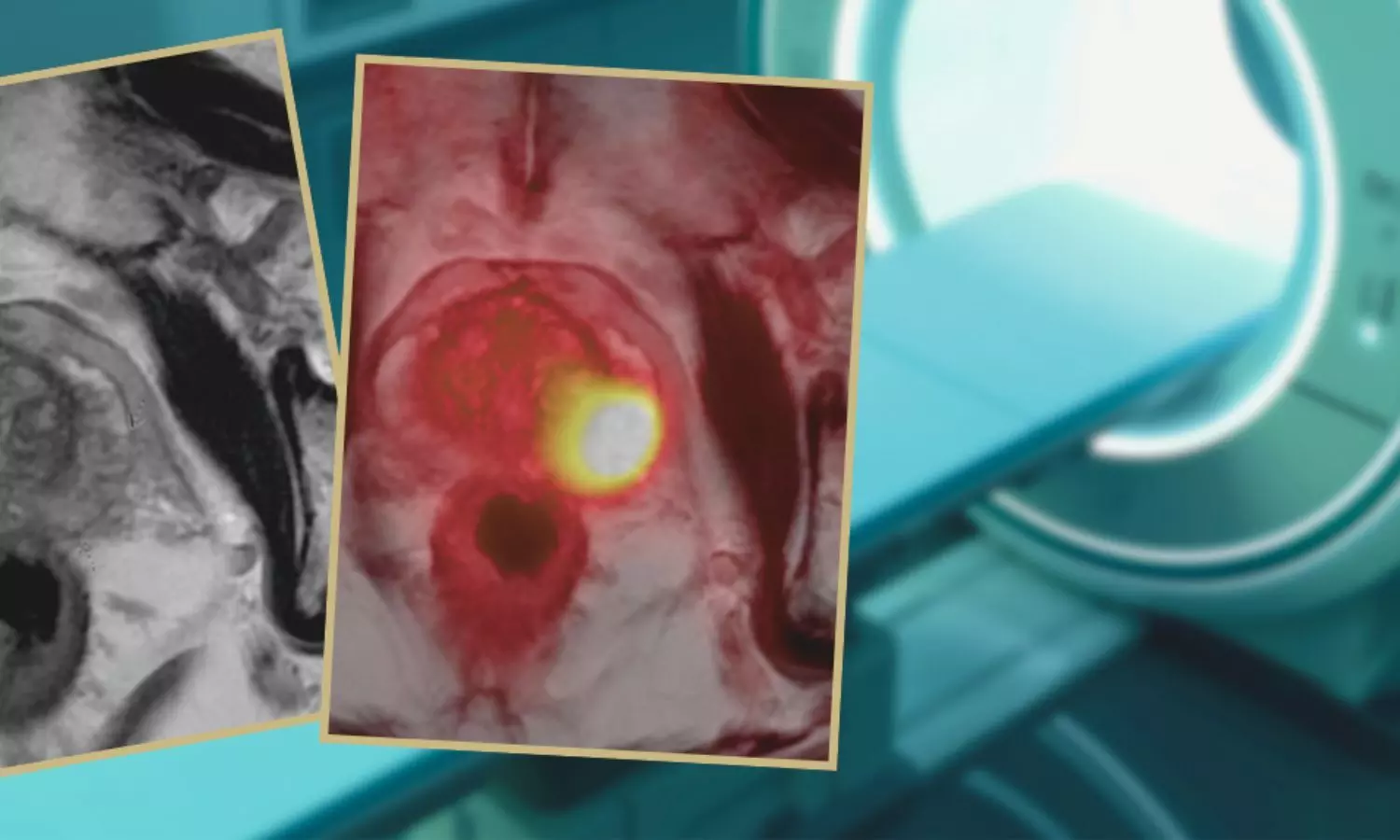


USA: Researchers have found in a study of 112 patients that Ga-68 PSMA-11 PET/CT detected and localized recurrent prostate cancer after focal therapy with greater sensitivity than multiparametric MRI (mpMRI). The findings suggest that PSMA PET/CT could play an important role in post-treatment surveillance and recurrence detection.
The study, published in the Journal of Nuclear Medicine, was conducted by Mahbod Jafarvand, Ahmanson Translational Theranostics Division, Department of Nuclear Medicine and Theranostics, UCLA, Los Angeles, California, and colleagues. The researchers evaluated whether PSMA-targeted PET/CT could reliably identify recurrent disease in patients previously treated with minimally invasive focal therapies such as high-intensity focused ultrasound, laser ablation, or cryoablation.
Although PSMA PET/CT is widely used for staging and restaging prostate cancer, its performance following focal therapy has been less well established. To investigate its utility, researchers retrospectively reviewed 112 patients who underwent 68Ga-PSMA-11 PET/CT between 2016 and 2023 because of suspected recurrence. None had received additional treatment between focal therapy and imaging.
Three independent readers assessed the PET/CT scans for disease involving the prostate, pelvic lymph nodes, or distant sites. In a subgroup of 39 patients who also had mpMRI and biopsy results obtained within 3 months of PET/CT, the researchers compared the diagnostic performance of both imaging methods. Biopsy-confirmed prostate cancer of International Society of Urological Pathology (ISUP) grade group 2 or higher was considered clinically significant disease.
The major findings were:
- PSMA PET/CT identified intraprostatic recurrence in 82% of patients.
- Pelvic lymph node involvement was detected in 15% of patients.
- Distant metastases were identified in 9%.
- Among the subgroup with MRI and biopsy data, PET/CT demonstrated a sensitivity of 85%, compared with 82% for MRI on a per-patient basis.
- All lesions with a maximum standardized uptake value (SUVmax) of ≥10 were associated with ISUP grade group 3 or higher disease.
- Agreement among PET/CT readers was moderate, with a Fleiss κ of 0.40.
The investigators noted that PSMA PET/CT may provide useful information not only for identifying recurrence but also for localizing disease and guiding targeted biopsy after focal treatment.
However, the study had several limitations, including its retrospective, single-center design and potential selection bias from enrolling patients with suspected recurrence. Only about one-third had paired MRI and biopsy data, while MRI and some PET images were assessed by single readers, limiting evaluation of interreader variability. Standardized criteria for biochemical recurrence after focal therapy are also lacking.
The researchers concluded that PSMA PET/CT shows promising sensitivity for detecting recurrent prostate cancer after focal therapy and may complement or outperform mpMRI in post-treatment evaluation. They emphasized that larger prospective studies are needed to confirm its diagnostic role and establish standardized imaging and interpretation approaches.
Reference:
PSMA PET Imaging for Prostate Cancer Recurrence After Minimally Invasive Focal Therapy: A Single-Center Retrospective Study. Mahbod Jafarvand, Andrea Farolfi, Riccardo Mei, Loic Djaileb, Matthias Benz, Alex Chung, Wayne Brisbane, Leonard Marks, Tristan Grogan, Andrei Gafita, Lela Theus, Andrew T. Nguyen, Johannes Czernin, Jeremie Calais. Journal of Nuclear Medicine Aug 2026, jnumed.125.271556; DOI: 10.2967/jnumed.125.271556

Next Story