
Unexpected Hair Loss Reported After Single-Dose Intravesical Gemcitabine in Bladder Cancer Patients: Case Series
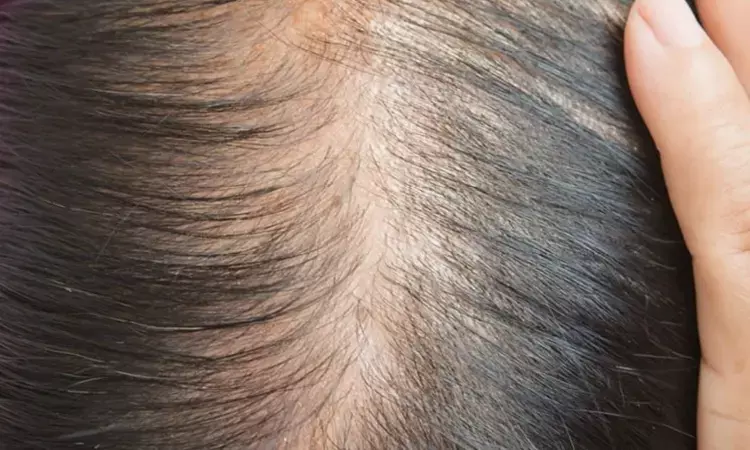


USA: Researchers have drawn attention to an unusual but potentially distressing adverse effect linked to a commonly used postoperative treatment for non–muscle-invasive bladder cancer (NMIBC).
A multi-institutional case series published in Urologic Oncology: Seminars and Original Investigations reports that temporary hair loss can occur after a single dose of intravesical gemcitabine administered following transurethral resection of bladder tumor (TURBT). The study was led by Anosh Dadabhoy from the University of Southern California, Los Angeles, along with colleagues from multiple high-volume bladder cancer centers in the United States.
Single-dose intravesical gemcitabine therapy (IVGT) is widely accepted as a standard-of-care option after TURBT for patients with low- to intermediate-risk NMIBC. Its safety profile has traditionally focused on local urinary symptoms such as dysuria, frequency, and bladder irritation. However, the authors note that systemic side effects, including alopecia, may be underrecognized and underreported in routine practice.
To explore this observation, urologic oncologists from seven referral centers were surveyed regarding cases of hair loss following same-day IVGT after TURBT, either for newly diagnosed or recurrent NMIBC. Patients were identified based on self-reported concerns or hair loss observed by clinicians during follow-up visits. Between January 2020 and December 2024, 20 patients were documented to have developed alopecia after receiving a single postoperative dose of intravesical gemcitabine. The cohort included six men and 14 women.
Key Findings:
- Hair loss occurred at variable time points, with most cases appearing within the first month after surgery, ranging from less than one week to more than four weeks post-procedure.
- Severe alopecia was reported in 13 of 20 patients (65%).
- None of the affected patients were on systemic chemotherapy or other medications known to cause hair loss, supporting a possible link with intravesical gemcitabine.
- All cases of alopecia were temporary and resolved on their own without treatment.
- Resection size differed among patients, with five having large (>5 cm), ten medium (2–5 cm), and five small (<2 cm) tumor resections.
- Some patients had prior intravesical treatments, including Bacillus Calmette-Guérin or mitomycin C, and two had previously received intravesical gemcitabine without alopecia.
- No bladder perforations were observed, suggesting systemic drug absorption due to surgical complications was unlikely.
The authors acknowledge several limitations, including the inability to determine the total number of patients who underwent TURBT with postoperative IVGT across all centers, which precluded estimation of incidence rates. In addition, alopecia severity was not uniformly documented, and reliance on patient self-reporting or clinician observation may have missed milder cases. As a result, the true frequency of hair loss following IVGT is likely underestimated.
Despite these constraints, the study highlights a clinically relevant adverse effect that warrants discussion. The researchers recommend that clinicians counsel patients about the possibility of temporary alopecia before administering intravesical gemcitabine and consider routinely asking about hair loss during follow-up. Larger prospective studies are needed to better define risk factors, underlying mechanisms, and potential preventive strategies for this unexpected side effect.
Reference:
Dadabhoy, A., Doshi, C., Zahir, M., Ladi-Seyedian, S., Escobar, D., Xia, L., Schuckman, A., Anderson, C. B., Kates, M., Agarwal, P. K., Lerner, S. P., Chamie, K., Weizer, A., & Daneshmand, S. (2026). Alopecia following single-dose postoperative intravesical gemcitabine in nonmuscle-invasive bladder cancer: A multi-institutional case series. Urologic Oncology: Seminars and Original Investigations, 44(3), 110984. https://doi.org/10.1016/j.urolonc.2025.12.020

Next Story