New Era for Anesthesiologists: Closed-Loop BIS Guidance Enhances Patient Safety and Recovery, study suggests
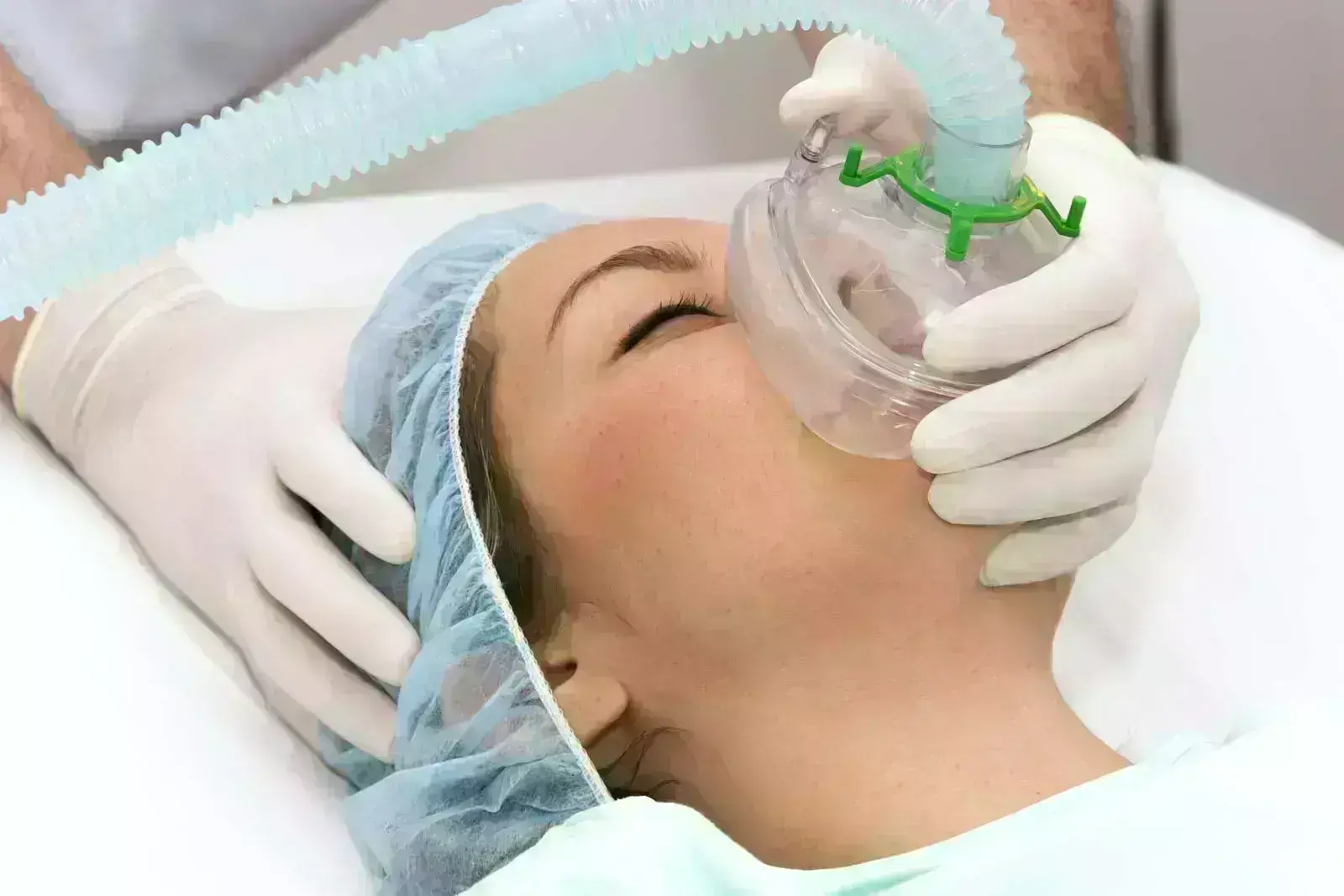


Would You Trust a Computer to Deliver Your Anesthesia?
Picture an OR where an automated system—guided by real-time brain monitoring—controls hypnotic drug delivery more precisely than any human can. Sound futuristic? Not anymore. A recent meta-analysis in the British Journal of Anaesthesia brings this vision closer to clinical reality, showing that closed-loop systems can improve both safety and recovery for adult noncardiac surgical patients.
Study Design: A Rigorous Systematic Review
This PROSPERO-registered meta-analysis synthesized 17 randomized controlled trials with a total of 1,898 patients. Included studies compared BIS-guided closed-loop systems (where a computer algorithm adjusts hypnotic infusions based on continuous bispectral index readings) to conventional, clinician-directed manual titration. The primary endpoint was the proportion of time patients’ BIS values stayed within ±10 units of target—an indicator of optimal anesthetic depth.
Key Findings: Reducing Deep Anesthesia Without Raising Awareness Risk
Time within target BIS range increased by 17.6% (about 20 extra minutes per 2-hour procedure) with closed-loop control.
Exposure to deep anesthesia (BIS <40) dropped by 17.2%, while episodes of light anesthesia (BIS >60) did not increase.
Controller performance metrics (wobble, MDAPE, global score) consistently favored automation.
Time to extubation was shorter by an average of 1.7 minutes with closed-loop systems.
No difference in total propofol consumption or vasopressor use was observed, underscoring preserved hemodynamic stability.
How the Systems Work: From PID Loops to AI Potential
Closed-loop anesthesia systems use a feedback loop:
Sensor: BIS monitor continuously assesses depth of anesthesia.
Controller: An algorithm calculates infusion adjustments.
Actuator: An infusion pump delivers the revised dose.
These platforms have evolved from basic proportional-integral-derivative (PID) controllers to advanced models utilizing fuzzy logic and, in some prototypes, machine learning—enabling more nuanced and individualized anesthesia care.
Why This Matters for Clinical Practice
Manual anesthetic titration is subject to human limitations, workload, and bias—often resulting in unnecessarily deep anesthesia to avoid awareness. This asymmetric risk approach may increase the chance of postoperative delirium, cognitive dysfunction, or delayed recovery. The reviewed data show that closed-loop systems can break this trade-off, cutting oversedation without increasing light anesthesia events.
For anesthesiologists, this suggests a paradigm shift: with appropriate supervision, automation can rebalance intraoperative risk, improve patient outcomes, and potentially reduce medicolegal concerns related to awareness and oversedation.
Conclusion
Closed-loop hypnotic drug delivery, guided by BIS, offers more precise anesthetic depth control than manual titration—reducing deep sedation risk, maintaining safety against awareness, and speeding recovery. As technology advances and integration challenges are addressed, these systems could transform routine anesthesia care.
Key points
Closed-loop systems increased optimal anesthetic depth time by 17.6% and reduced deep anesthesia exposure by 17.2%.
No increase in light anesthesia or awareness risk was observed with automated control.
Controller metrics (wobble, MDAPE, global score) all favored automation over manual titration.
Patients with closed-loop anesthesia had shorter extubation times, without higher drug or vasopressor use.
Automation helps address human bias toward oversedation, optimizing risk balance and patient recovery.
Citation: Felippe VA, Dias HS, da Hora DAB, et al. Closed-loop systems for automated hypnotic drug delivery during general anaesthesia: a systematic review and meta-analysis. British Journal of Anaesthesia. 2026;136(6):1811–1821. doi: 10.1016/j.bja.2026.03.020.