India's Medical Startups: From Innovation to Impact - Prof. (Dr) Yogendra Kumar Gupta
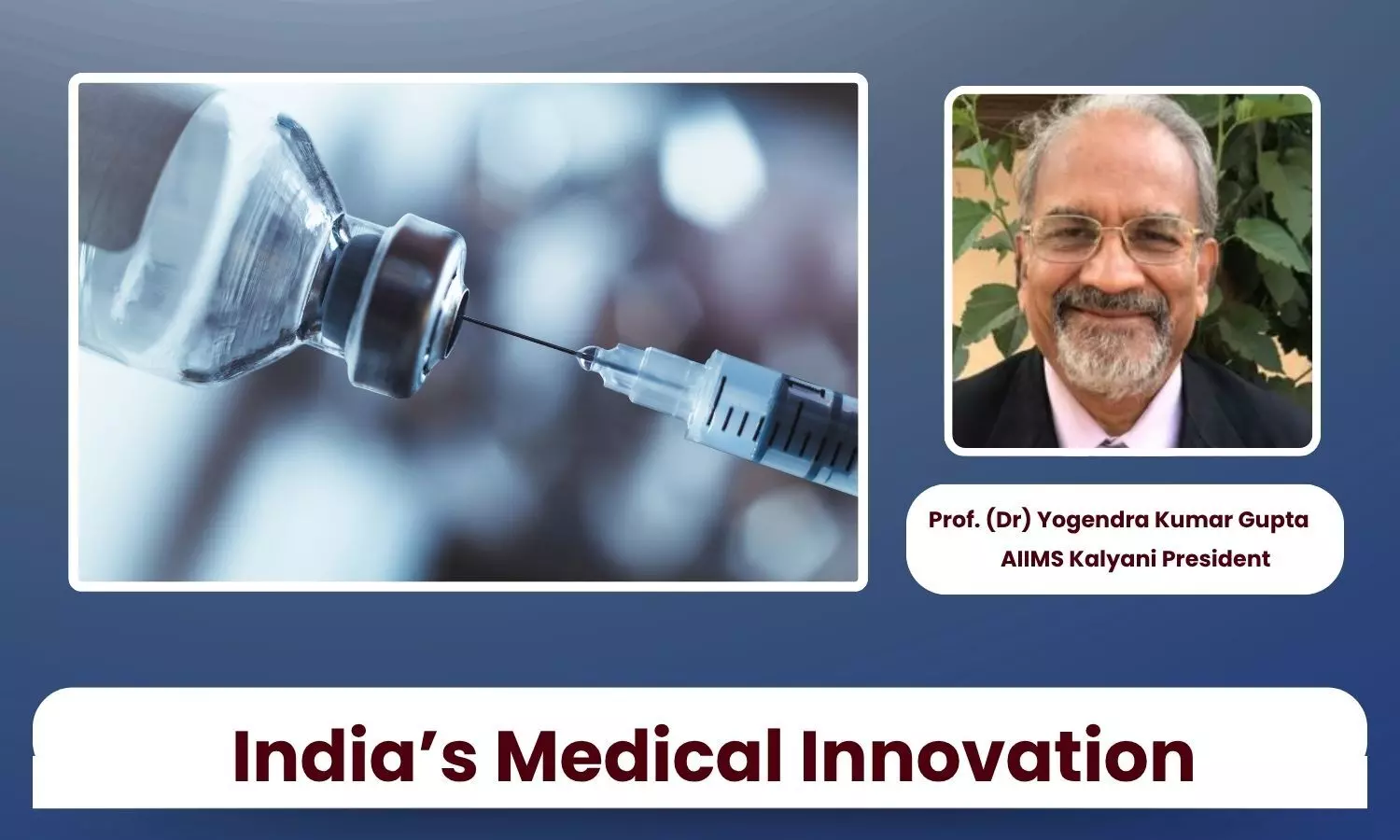


India is at an important inflection point in healthcare innovation. Over the past decade, startups working in medical devices, diagnostics, biotechnology, digital health, artificial intelligence, genomics and therapeutics have expanded rapidly. According to the Department of Biotechnology (DBT), India had fewer than 500 biotech startups in 2014; by 2025, the number had crossed 10,000 a twenty-fold increase. Biotech incubators rose from six to more than 100, while biotech products increased from around 10 to more than 800. The Indian bioeconomy reached US$165.7 billion in December 2024, compared with US$28 billion in 2014.
India has moved beyond the question of whether it can create a medical device and biotechnology startup ecosystem. The question now is: Can India convert this entrepreneurial energy into validated, affordable and globally competitive healthcare solutions? The answer is a big Yes, and AMTZ, Andhra Pradesh, is a live example.
A population of more than 1.4 billion, a burden of communicable and non-communicable diseases, uneven healthcare access, and strong medical, basic science and engineering talent create an exceptional ecosystem for innovation. Low-cost diagnostics, point-of-care technologies, remote monitoring, AI-assisted diagnosis, medical devices and personalised medicine can address problems conventional healthcare systems have struggled to solve.
However, medical innovation is fundamentally different from software innovation. A promising laboratory idea must pass through scientific validation, clinical evaluation, regulatory scrutiny, quality assurance, manufacturing and adoption.
The real challenge: validation, quality and affordability
The critical issue is validation. A device or diagnostic may work in a laboratory but fail in the real world. Startups need hospitals, clinicians, patients, laboratories and clinical research networks to establish safety, accuracy, efficacy and usability.
Equally important is quality. Moving from prototype to mass production requires robust quality-management systems, appropriate standards, certification and post-market surveillance.
Finally, there is affordability ensuring sophisticated products are accessible beyond a small segment. The real measure of innovation should be clinical evidence + quality + cost-effectiveness + accessibility.
Regulation should enable, not dilute
Startups need clarity on required evidence, regulatory pathways and applicable standards.
This is particularly important for AI-based medical technologies, advanced diagnostics, gene and cell therapies, personalised medicine and digital therapeutics. India needs regulation that is predictable, transparent and science-based, with early engagement between innovators and regulators.
The objective should be better regulation, not weaker.
Policy momentum is growing
The Union Cabinet, chaired by Prime Minister Narendra Modi, approved the Bio-RIDE scheme in 2024, with an outlay of ₹9,197 crore for 2021–22 to 2025–26. It combines biotechnology R&D, industrial and entrepreneurship development, and biomanufacturing and biofoundries to foster bio-entrepreneurship, industry-academia collaboration and bridge the gap between academic research and industrial application.
The BioE3 Policy aims to accelerate high-performance biomanufacturing through Bio-AI hubs, biofoundries and biomanufacturing hubs, supporting India’s ambition to become a global biomanufacturing hub and build a US$300-billion bioeconomy by 2030.
Medical institutions can become innovation engines
Medical institutions are a major untapped asset. AIIMS can partner in identifying clinical needs, validating devices, incubating startups and mentoring entrepreneurs.
AIIMS New Delhi’s Centre for Medical Innovation and Entrepreneurship (CMIE), a BIRAC-sponsored BioNEST programme, strengthens academia-industry interaction through research infrastructure, preclinical and clinical facilities.
AIIMS, IIT Delhi and ICMR have collaborated around pre-compliance and clinical validation of implantable and diagnostic devices, offering clinical expertise, patient-centric evaluation, real-world testing and trusted mentorship.
India should develop Medical Innovation and Validation Centres across government and private hospitals:
Clinical problem → Prototype → Hospital-based evaluation → Preclinical/clinical validation → Regulatory assessment → Quality assurance → Affordable manufacturing → Adoption.
A roundtable that can actually solve problems
A regular roundtable of startups, regulators, policymakers, DBT, BIRAC, clinicians, medical institutions, investors and industry could make a real difference.
Startups could identify regulatory bottlenecks; regulators could clarify evidence; DBT and BIRAC could identify funding and incubation opportunities; medical institutions could facilitate validation; policymakers could address systemic barriers. Each meeting should produce measurable outcomes, responsibilities and timelines.
From startup numbers to patient impact
India has demonstrated that it can create startups at scale. The next test is whether companies can produce technologies that are safe, validated, high-quality, affordable and scalable.
The pipeline should be:
Laboratory → Innovation → Validation → Regulation → Quality → Affordable Manufacturing → Clinical Adoption → Scale → Global Market.
India does not need more medical startups. It needs more medical technologies that reach patients.
If government policy, DBT, BIRAC, regulatory expertise, institutions, investors and industry collaborate, India can bridge innovation gaps. India’s medical startup ecosystem should be measured by validated, adopted innovations—not companies created.
The MEDTECH WORKSHOP – Empowering Medical Device Startups, MSMEs & Industry, organised by AIIMS Guwahati, in collaboration with the National Academy of Medical Sciences (NAMS), with VaidyaRx Private Limited, as the Knowledge Partner, will bring together policymakers, regulators, industry leaders, government officials, clinicians, innovators and other key stakeholders. This will give a huge boost to the startup ecosystem.
Disclaimer: The views expressed in this article are of the author and not of Medical Dialogues. The Editorial/Content team of Medical Dialogues has not contributed to the writing/editing/packaging of this article.