New Ultrasound Landmark Emerges as Key to Preoperative Airway Risk, study finds
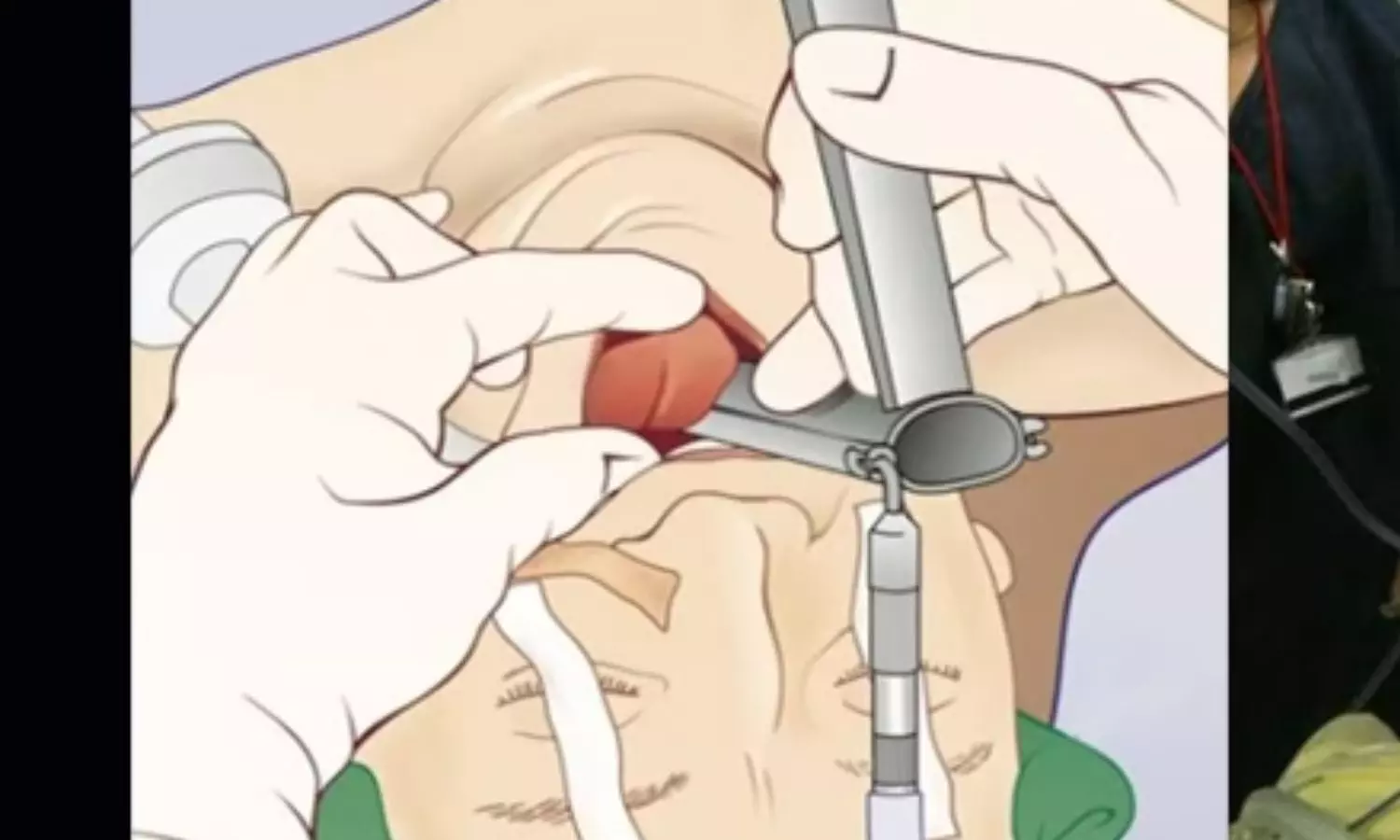


How can we more reliably identify patients at risk for difficult laryngoscopy before induction? Despite the widespread use of bedside airway predictors, their accuracy remains modest. Recent research suggests that ultrasonographic measurement of skin-to-epiglottis depth (SED) could offer more objective airway assessment—but does the anatomical level of measurement matter?
Study Design: Comparing SED Across Three Anatomical Levels
In this recently published prospective observational trial, 150 adults scheduled for elective surgery under general anesthesia underwent preoperative airway ultrasonography. SED was measured in the parasagittal plane at three distinct landmarks: the upper hyoid border (HUB), lower hyoid border (HLB), and thyrohyoid membrane (THM). Difficult laryngoscopy (DL) was defined as Cormack–Lehane grade III–IV, and the predictive value of each SED measurement was evaluated against standard clinical airway tests.
Key Findings: Upper Hyoid Border SED Outperforms Other Levels
Anatomical Level Makes a Difference: SED varied significantly between HUB, HLB, and THM. Only HUB SED achieved an area under the ROC curve (AUC) of 0.86 (95% CI: 0.79–0.92), outperforming HLB (AUC 0.75) and THM (AUC 0.65).
Optimal Cutoff: HUB SED >24 mm showed high sensitivity (91%) and acceptable specificity (68%) for predicting DL.
Combined Predictors: Multivariable analysis identified HUB SED >24 mm, inter-incisor distance ≤4 cm, and upper lip bite test class II–III as independent predictors, with a combined model accuracy of 88% and specificity of 96%.
Conventional Airway Tests: Standard bedside tests alone had only modest predictive value (AUC 0.62–0.72).
Clinical Implications: Level-Dependent SED Can Refine Risk Stratification
These findings highlight that the predictive power of SED is highly dependent on where it is measured—specifically, the upper hyoid border is most informative. Parasagittal SED at the HUB directly reflects the anatomical region that limits glottic exposure during laryngoscopy, offering clinicians a practical, reproducible ultrasound parameter to complement (not replace) traditional assessment. Incorporating HUB SED and clinical bedside tests may reduce false positives and improve airway risk stratification.
Limitations and Next Steps
This was a single-center study with a modest number of difficult cases and operator-dependent measurements. Larger, multicenter studies are needed to validate optimal cutoff values, assess interobserver variability, and solidify the role of parasagittal SED in routine airway assessment.
Conclusion
Ultrasonographic SED is a promising adjunct for identifying patients at risk of difficult laryngoscopy, especially when measured at the upper hyoid border. Selection of the correct anatomical level is crucial for maximizing diagnostic performance, and combining ultrasound findings with clinical predictors may improve preoperative airway management.
KEY points
SED measured at the upper hyoid border (HUB) had the highest diagnostic accuracy for difficult laryngoscopy.
HUB SED >24 mm is a strong predictor, with high sensitivity and acceptable specificity.
Combining HUB SED, inter-incisor distance ≤4 cm, and upper lip bite test improves overall prediction.
Conventional airway tests alone remain modest predictors of difficult laryngoscopy.
Parasagittal, level-specific SED should complement—not replace—clinical assessment in airway risk evaluation.
Citation:
Savran Ç, Köner Ö, Temür S, Türe H. Anatomical level–dependent variation in ultrasonographic skin-to-epiglottis depth and its diagnostic performance for difficult laryngoscopy: A prospective observational study. Indian Journal of Anaesthesia. 2026;70(8):935-42. DOI: 10.4103/ija.ija_406_26