Study Suggests Platelet Count Before ECMO Predicts Survival Chances


Platelets: More Than Just Clotting Cells
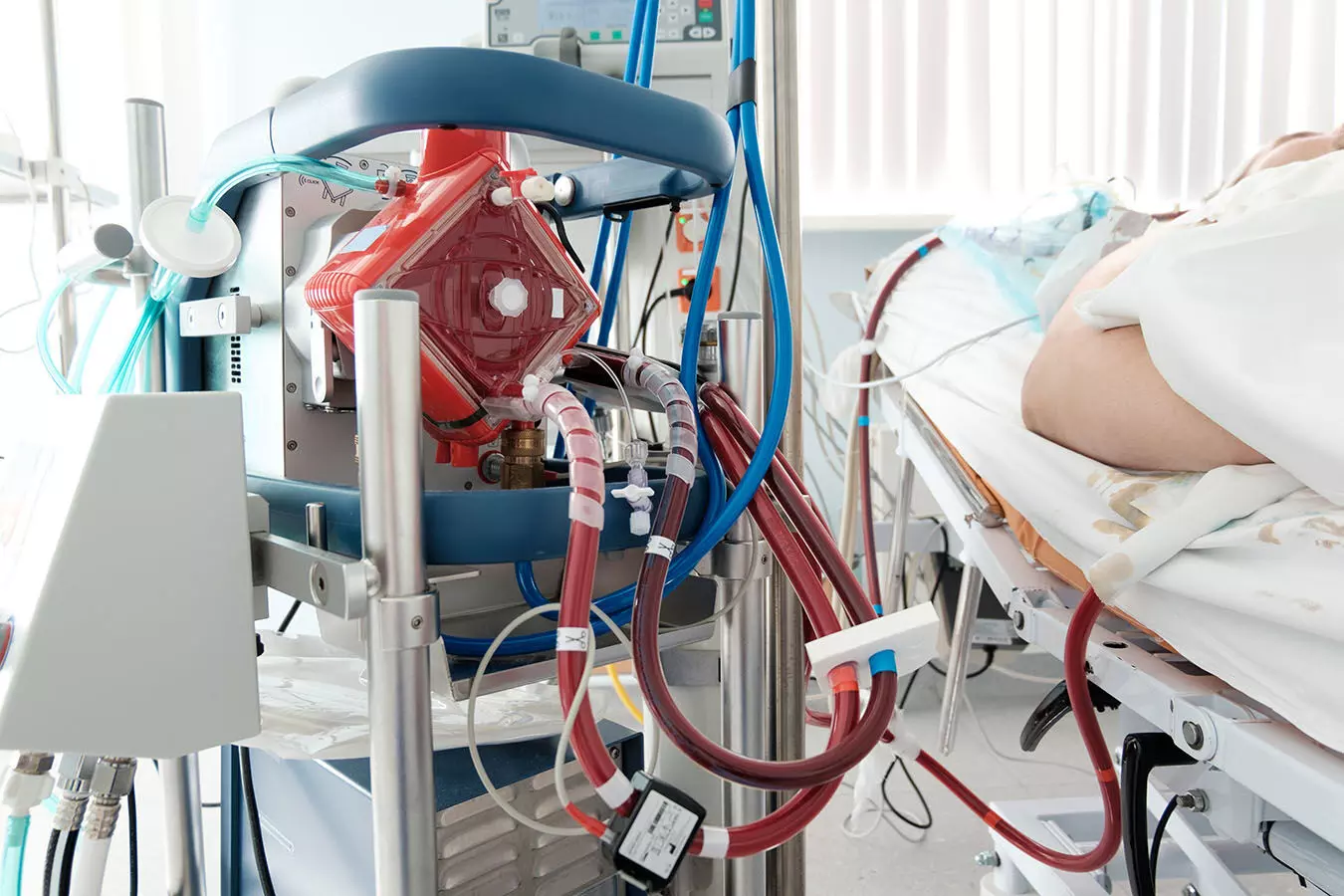
When patients’ hearts are failing and all other options are exhausted, doctors may turn to venoarterial extracorporeal membrane oxygenation (VA-ECMO)—a life-saving machine that temporarily takes over the work of the heart and lungs. Despite its promise, surviving VA-ECMO remains a challenge, with mortality rates still worryingly high.
But what if a simple blood test could help predict which patients are most at risk—even before ECMO begins? That’s exactly what a new study from a major Chinese cardiac center set out to explore.
Tapping Into the Power of Platelet Counts
Platelets, those tiny blood fragments best known for stopping bleeding, turn out to be powerful players in both immunity and inflammation—key factors when dealing with critically ill patients. This study looked at 582 adults who needed VA-ECMO and grouped them by their preoperative platelet counts (PLT):
G1: ≤100 x 10⁹/L
G2: 101–200 x 10⁹/L
G3: 201–300 x 10⁹/L
G4: >300 x 10⁹/L
A Clear Link: Higher Platelets, Better Outcomes
After crunching the numbers, researchers found a compelling pattern:
Each 10 x 10⁹/L increase in platelet count reduced in-hospital death odds by 4%.
Patients with low platelet counts (G1) had the highest risk of dying in the hospital, while those with the highest counts (G4) had the lowest risk.
These findings held up even after adjusting for age, sex, chronic illnesses, and other confounding factors.
Interestingly, the predictive value of platelet count was even stronger in patients already on anticoagulant medications or those with diabetes.
Why Does This Matter?
Platelet counts are easy and inexpensive to measure—no fancy technology required. By identifying high-risk patients early, clinicians can prioritize closer monitoring, tailor treatments, and possibly even intervene to improve outcomes before ECMO is started.
Looking Forward
This study marks an important step in making ECMO care safer and more personalized. While more research is needed—especially in different hospitals and diverse populations—platelet count could soon become a key part of risk assessment and decision-making for these vulnerable patients.
Key Takeaways:
Low pre-ECMO platelet counts predict higher in-hospital mortality for VA-ECMO patients.
Every 10 x 10⁹/L rise in platelets reduces death risk by 4%.
The effect is particularly strong in diabetic and anticoagulated patients.
Platelet count is a simple, accessible tool for early risk stratification.
Future studies may change how doctors manage and monitor ECMO patients.
Citation:
Bao, R., Jiang, C., Liu, Q., He, H., Gu, X., Luo, D., & Zhang, C. (2026). Preoperative Platelet Count Predicts In-Hospital Mortality in Patients Supported With Venoarterial Extracorporeal Membrane Oxygenation: A Single-Center Retrospective Cohort Study. Journal of Cardiothoracic and Vascular Anesthesia, 40, 1749–1758. https://doi.org/10.1053/j.jvca.2026.01.010