WHO, AYUSH Ministry host meeting to promote global recognition of AYUSH systems
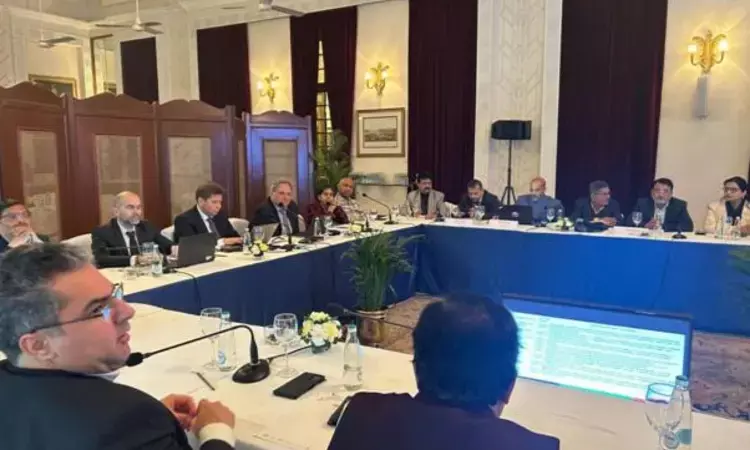


New Delhi: In a major step toward the global integration of traditional healthcare, the World Health Organization (WHO) organized a two-day Technical Project Meeting on Traditional Medicine (TM) intervention code set development at the Hotel Imperial, New Delhi, on December 20-21, 2025.
This initiative was fundamentally driven by the landmark Memorandum of Understanding (MoU) and Donor Agreement signed between the Ministry of Ayush and WHO on May 24, 2025.
This agreement serves as the cornerstone for developing a dedicated Traditional Medicine module within the International Classification of Health Interventions (ICHI), the international global standard for classifying healthcare interventions, with India facilitating both the financial and technical frameworks necessary to bring Ayurveda, Siddha, and Unani (ASU) systems into the global healthcare mainstream, the PIB stated.
Also Read:2nd WHO Global Summit on Traditional Medicine scheduled from 17-19 December
The facilitation of this meeting aligns with the vision of Prime Minister Shri Narendra Modi, who has emphasized that such initiatives help Ayush systems reach a maximum number of people globally in a scientific manner. During his Mann Ki Baat address, the Prime Minister noted that this standardized framework would enable Ayush systems to achieve global recognition and scientific credibility.
Vaidya Rajesh Kotecha, Secretary, Ministry of Ayush, had previously observed that a dedicated ICHI module would facilitate global recognition of Ayush systems and support WHO’s efforts for inclusive, safe, and evidence-based healthcare.
The technical sessions were chaired by Ms. Kavita Garg, Joint Secretary, Ministry of Ayush, who led the Indian team in the development of National Health Intervention Codes for Ayurveda, Siddha, and Unani medicine. Under her leadership, a distinguished team of experts contributed to the initiative, including Prof. Rabinarayan Acharya (Director General, CCRAS), Prof. N. J. Muthukumar (Director General, CCRS), and Dr. Zaheer Ahmad (Director General, CCRUM).
The meeting saw extensive participation from all six WHO regions, including AFRO, AMRO, EMRO, EURO, SEARO, and WPRO, ensuring a comprehensive global perspective on traditional medicine. Key representatives from WHO Headquarters in Geneva, such as Robert Jakob, Nenad Kostanjsek, Stéphane Espinosa, and Dr. Pradeep Dua, led the classification discussions.
They were joined by Dr. Geetha Krishnan from the WHO Global Traditional Medicine Centre (GTMC) in Jamnagar and Dr. Pawan Kumar Godatwar from the WHO SEARO office in Delhi. Member states including Bhutan, Brazil, India, Iran, Malaysia, Nepal, Mauritius, South Africa, Sri Lanka, Philippines, the UK, and the USA participated to appraise their country status and harmonize intervention descriptions.
The integration of traditional medicine into ICHI is vital because intervention coding provides a common language for health procedures across different countries and medical systems.
By standardizing these codes, healthcare providers can better document, report, and analyze the frequency and efficacy of traditional treatments. The project will be undertaken by the World Health Organization with strict timelines, adopting a scientific approach. It will not only aid in clinical research and policy support but also pave the way for scaling up traditional medicine within national health information systems globally.
Also Read:UP: New AYUSH App to make healthcare more accessible