AI-Assisted Retinal AV Ratio Analysis Predicts CAD Severity in Chronic Coronary Syndrome: Study
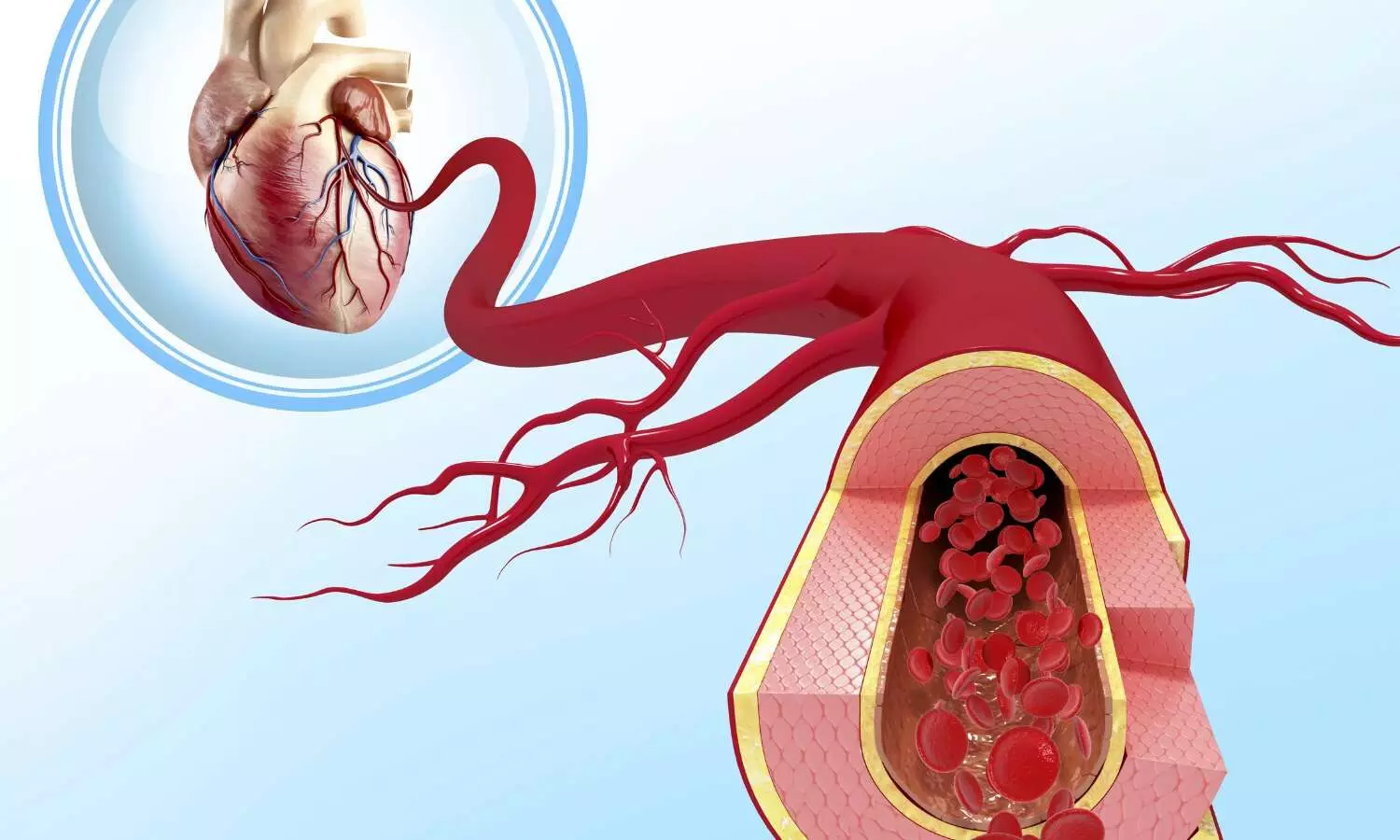


A recent study found a significant inverse correlation between retinal arteriovenous (AV) ratio and coronary artery disease (CAD) severity in patients with chronic coronary syndrome (CCS). Decreased AV ratios were closely associated with higher SYNTAX (SYNergy between percutaneous coronary intervention with TAXus and Cardiac Surgery) scores, indicating a more severe atherosclerotic burden. The research utilized an artificial intelligence (AI) model that achieved 94.1% accuracy in patient risk stratification.
These findings are published in the Indian Heart Journal in January 2026.
The Clinical Burden of Undiagnosed Coronary Disease
Atherosclerotic cardiovascular disease (ASCVD) disproportionately impacts South Asian populations, making early detection a critical healthcare challenge. While advanced non-invasive modalities like computed tomography (CT) coronary angiography exist, they remain expensive and largely inaccessible to massive populations, creating an urgent demand for cost-effective alternatives. The retinal vasculature provides a unique, non-invasive window into the systemic microvasculature. Because retinal vessels share embryological origins and risk factors with coronary microcirculation, changes such as arteriolar narrowing—reflected in the AV ratio—can mirror coronary pathology. The study aimed to systematically evaluate the association between the AV ratio and the SYNTAX score while developing an AI-based automated categorization method.
Study Overview
The single-center, prospective observational study enrolled 332 adult participants scheduled for coronary angiography. The cohort included 110 patients with CCS, 120 with acute coronary syndrome (ACS), and 102 angiographically normal controls. Retinal fundus imaging was obtained for all participants. Researchers deployed a two-phase AI pipeline: VC-Net for automated vessel segmentation and AV ratio computation, followed by a RETFound foundation model combined with Radial Basis Function (RBF) Kernel Ridge Regression to predict SYNTAX risk categories directly from the retinal images.
The Key findings from the study include:
• Among the groups, the overall mean AV ratio was statistically similar across the CCS (0.62), ACS (0.62), and normal control (0.65) patients.
• In CCS patients, a significant inverse correlation was observed between the retinal AV ratio and the SYNTAX score (r = -0.344, p < 0.001), confirming that lower AV ratios align with higher coronary complexity.
• This correlation was notably absent in the ACS cohort, suggesting that retinal changes more reliably reflect chronic atherosclerotic burden rather than acute plaque instability.
• The AI model correctly classified 94.1% of cases into appropriate SYNTAX risk categories (mild, moderate, or severe disease), highlighting its robust automated screening potential.
Clinical Relevance and Targeted Prevention
For practicing physicians, the study demonstrates that automated retinal fundus analysis could serve as a highly accessible, low-cost screening tool for chronic CAD. The robust correlation in stable patients means clinicians could potentially use simple eye exams to prioritize individuals for definitive angiographic testing. The AI integration achieving 94.1% accuracy in risk stratification represents a major leap forward, allowing for rapid, non-invasive triaging of high-burden populations without the need for expensive imaging. While this does not serve as a diagnostic marker for acute events, it optimizes long-term chronic disease management and early cardiovascular intervention.
Reference
Gupta MD, Megotia A, Girish MP, et al. Association between retinal AV ratio and coronary artery disease severity in acute coronary syndrome and chronic coronary syndrome patients: A prospective study. Indian Heart Journal. 2026 Jan 16.