
AI in Heart Transplantation: CJC, February 2026 Review Highlights Transformative Potential and Clinical Applications
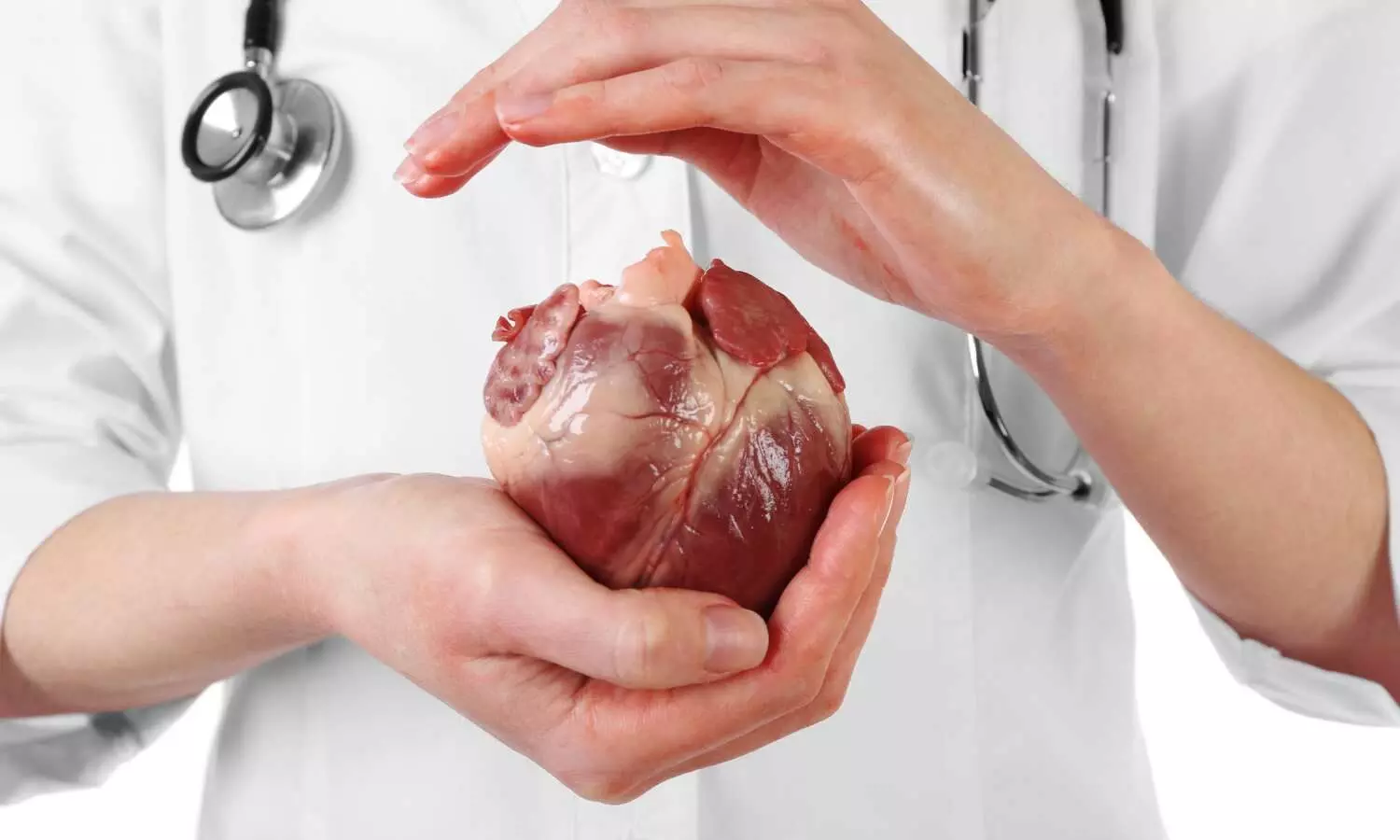


Artificial intelligence is transforming heart transplantation (HT), with models achieving a 0.962 area under the curve (AUC) for rejection surveillance and 94% precision in donor matching, as a recent study has shown.
These findings are published in February 2026 in the Canadian Journal of Cardiology.
The Clinical Burden of Transplant Management
HT is a complex field where patient selection and organ matching remain critical challenges. The shortage of donor organs necessitates highly accurate identification of candidates who will derive the maximal quality-of-life benefit. Traditional clinical scores often fail to integrate the vast amount of data available in modern cardiovascular care. Machine learning (ML), a subset of AI, allows for model optimization to improve predictive performance beyond simple clinical "guessing." Deep Learning (DL) further automates the analysis of large, unstructured datasets, such as medical imaging and electronic records.
Study Overview
The review involved a search of 794 research items published through August 2025 to identify novel applications of AI in HT. The analysis spanned the entire clinical journey: risk assessment, listing survival, donor-recipient matching, and graft rejection. Researchers evaluated how models trained on data from the United Network for Organ Sharing (UNOS) and the Scientific Registry of Transplant Recipients (SRTR) compare to standard clinical metrics. The review also addressed technical hierarchies, from Deep Neural Networks (DNN) to reinforcement learning.
The key findings from the review include:
• In the review, the waitlist survival AI models achieved an AUC of 0.89, significantly outperforming traditional statistical methods.
• For donor matching, a DL-based model automated Total Cardiac Volume (TCV) measurements from Computed Tomography (CT) scans with 94% accuracy, offering a better standard than weight-based matching.
• The AI successfully predicted Primary Graft Dysfunction (PGD) with an AUC of 0.868, identifying novel detrimental combinations of donor and recipient risk factors.
• Surveillance tools attained an AUC of 0.962 for detecting rejection in endomyocardial biopsies, providing improvements in both consistency and time-saving.
• New research suggests Natural Language Processing (NLP) of Electronic Health Records (EHR) can extract insights into psychosocial risk factors and patient adherence.
Clinical Relevance and Future Implementation
For practicing clinicians, this review underscores that while AI-derived gains over traditional scores are sometimes small, they offer a more personalized and nuanced assessment of risk. The integration of Donor-Derived Cell-Free DNA (dd-cfDNA) and Gene Expression Profiling (GEP) with AI algorithms allows for the detection of rejection at earlier stages than histological methods alone. However, the "black box" nature of some models and the potential for algorithmic bias against underrepresented populations remain significant hurdles. Ethical adoption is essential to ensure AI supports, rather than replaces, expert clinician judgment. Overall, large-scale collaborations and prospective trials are necessary to refine these tools for routine clinical use.
Reference
Richter I, Raikhelkar J, Clerkin K, et al. Novel Artificial Intelligence Applications in Heart Transplantation. Canadian Journal of Cardiology. 2026 Feb;42(2):255-264.
