Biolimus-Eluting Stents Match Efficacy and Improve Long-Term Safety with conventional SES: Meta analysis
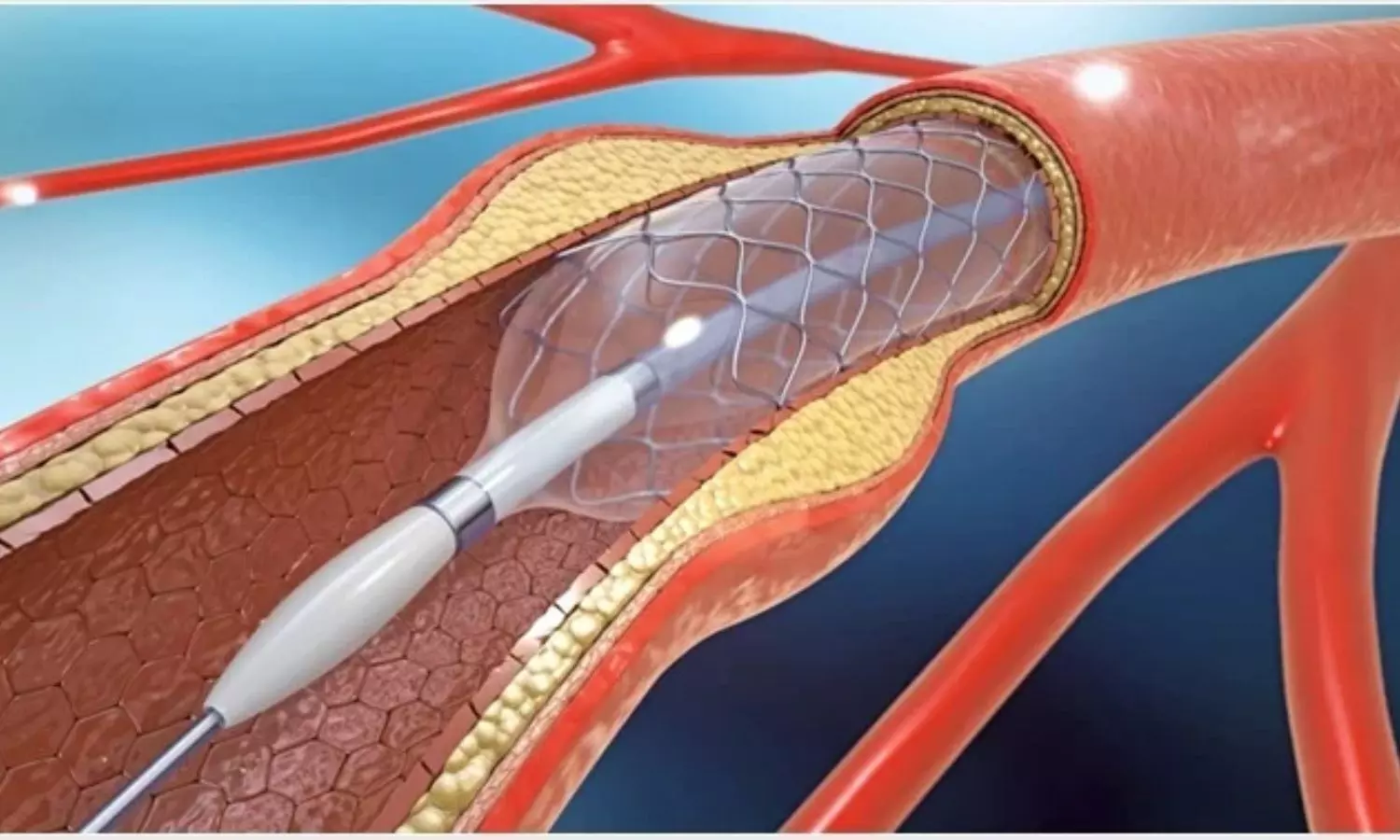


A systematic review and meta-analysis on randomized controlled trials have shown that biolimus-eluting stents (BES) offer comparable long-term clinical effectiveness and morbidity compared to conventional sirolimus-eluting stents (SES), coupled with enhanced late-term stent safety. Percutaneous coronary intervention requires stents to be inserted into blocked coronary arteries; however, the physical hazards of late-term reocclusion or formation of blood clots present difficulties for cardiologists. The conventional sirolimus stent platform has been highly effective in reducing abnormal cell growth within the artery; however, its durable coating may lead to inflammation in the long term, thus increasing the likelihood of forming fatal late-term blood clots. The biolimus stent platform consists of a biodegradable polymer coating that is intended to disintegrate after the drug elution, leaving behind a non-inflammable metal frame.
Investigators conducted a systematic review on scientific literature in medical database sources such as PubMed, Embase, and Cochrane Central Register of Controlled Trials up to June 30, 2025. Investigators identified randomized controlled trials comparing the efficacy of BES against SES among individuals undergoing elective or urgent percutaneous coronary interventions. For both devices, investigators abstracted various baseline demographics from studies used for the comparison in terms of diabetes, hypertension, previous history of myocardial infarction, and smoking prevalence rates.
MACE, defined as the occurrence of any cardiac mortality, myocardial infarction, or TVR, served as the main outcome of interest. The independent outcome of interests included myocardial infarction rate, TLR, and ST. In order to assess the performance of the device over time, investigators categorized data in two different follow-up periods: early-term follow-up at 1-year and mid-term follow-up between 1-year and 5-years by calculating pooled risk ratio (RR) using a random-effects model in R Studio.
Key findings:
- In the conducted systematic review, altogether 6 randomized controlled trials were considered involving a total sample size of 12,109 patients, with 6,088 in the BES group and 6,021 in the SES group.
- The baseline characteristics of both treatment options were well-matched with identical mean age being 65 years, prevalence of men at 76%, 19% of patients in the BES and 18% of patients in the SES having diabetes, while rates of hypertension among all patients were identical being at 58%.
- One-year rates of primary MACEs proved to be very similar (RR 0.95; 95% CI 0.85-1.07; p = 0.44; I2 = 0%) and so did five-year follow-up rates of the same measure (RR 0.98; 95% CI 0.59-1.63; p = 0.90; I2 = 64%).
- There was no statistically significant difference between the groups as regards to secondary myocardial infarctions within one-year timeframe (RR 1.17; 95% CI 0.94-1.45; p = 0.16) or during the follow-up period of 5 years (RR 0.91; 95% CI 0.73-1.14; p = 0.43).
- In the first year of use, the biolimus platform showed a non-significant numerical excess of blood clots that did not reach statistical relevance (RR 1.85; 95% CI 0.79–4.34; p = 0.12; I2 = 44%).
- Between 1 and 5 years, the biolimus platform achieved a significant 46% reduction in late stent thrombosis compared to the sirolimus group (RR 0.54; 95% CI 0.33–0.88; p = 0.014; I2 = 0%).
To conclude, the use of biolimus eluting stents results in similar levels of efficacy and morbidity in comparison with sirolimus-eluting stents after five years. The BES outperforms its rival by virtue of its greater safety characteristics, particularly, by providing significant protection from the development of late stent thrombosis without incurring an initial risk factor. This evidence provides a solid foundation for interventional cardiology, showing that modifications in the stent coating can prove highly efficacious.
Reference:
Franco, J., Suruagy-Motta, R. F. O., da Silva, L. D., Neves, G. R., Farias, C. A., de Oliveira, L. G., & de Sousa, P. A. M. G. (2025). Cardiovascular events of Biolimus vs. Sirolimus in PCI: A systematic review and meta-analysis of randomized controlled trials. https://europcr2026.europa-inviteo.com/gws/index.php?langue=en&onglet=33¶mProjet=100108