Coronary Calcium Score: The Investigation that Reduces Mortality
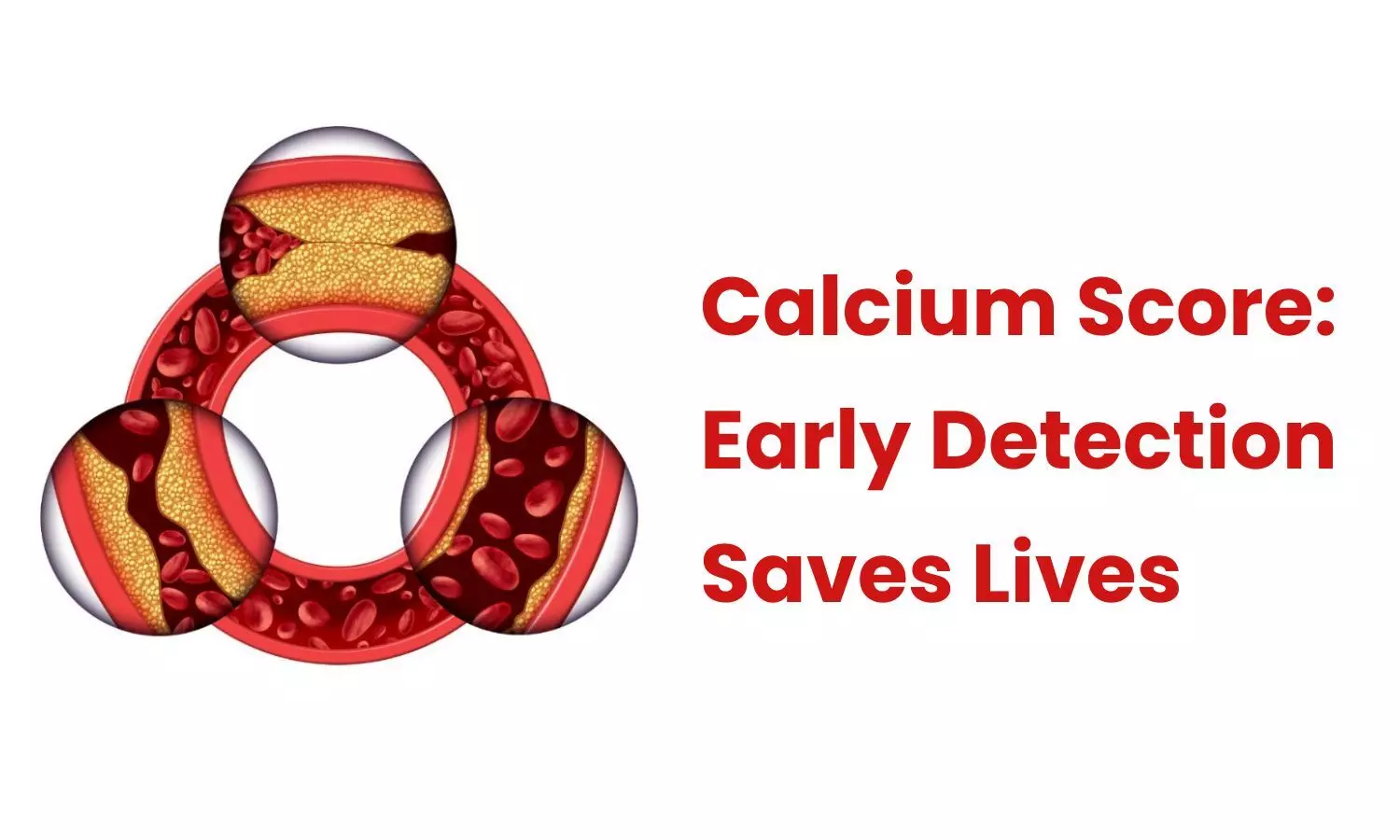


In modern cardiology, one of the greatest challenges is not treating heart attacks — but identifying silent coronary artery disease before the first event occurs. Many individuals appear healthy, have no symptoms, and yet carry significant atherosclerosis silently within their arteries.
Among the investigations available today, the Coronary Artery Calcium (CAC) Score, commonly called the Calcium Score, has emerged as one of the most powerful tools for detecting hidden coronary disease and predicting cardiovascular mortality. Unlike many investigations that merely diagnose disease, the calcium score changes behaviour, modifies treatment intensity, improves preventive therapy, and potentially alters survival itself.
What is a Calcium Score?
A calcium score is a non-invasive CT scan of the coronary arteries that detects and quantifies calcium deposits within the arterial walls.
Coronary calcification represents the footprint of atherosclerotic plaque.
The greater the calcium burden, the greater the probability of underlying coronary artery disease and future cardiovascular events.
Calcium Score Interpretation
The result is reported as a numerical Calcium Score, interpreted as follows:
| Calcium Score | Interpretation |
| 0 | Very low short-term cardiovascular risk |
| 1–99 | Mild plaque burden |
| 100–399 | Moderate coronary artery disease |
| 400+ | Extensive atherosclerosis |
| 1000+ | Very high-risk vascular disease |
MESA Score — Moving Beyond Traditional Risk Calculation
One of the most important advances associated with calcium scoring is the development of the MESA Risk Score.
The MESA (Multi-Ethnic Study of Atherosclerosis) Score combines:
- Age
- Sex
- Blood pressure
- Cholesterol
- Smoking
- Diabetes
- Family history
- and importantly, the Coronary Artery Calcium Score
to estimate a person’s 10-year risk of cardiovascular events.
Traditional risk calculators estimate risk based only on clinical factors. The MESA score improves prediction because it includes the actual burden of coronary disease detected by CT calcium scanning. This transforms risk estimation from theoretical probability into disease-based prediction.
Why MESA Is Important?
Two patients may have similar cholesterol, similar blood pressure, similar diabetes status, yet completely different calcium scores.
One patient may have:
CAC = 0 → very low event risk.
Another may have:
CAC = 500 → very high cardiovascular risk.
The MESA score captures this difference powerfully. This is why calcium scoring has become one of the strongest “risk modifiers” in preventive cardiology.
The MESA Calculator
The MESA calculator is now widely used internationally for refining cardiovascular risk assessment.
It estimates:
- Coronary heart disease risk
- ASCVD risk
- Long-term cardiovascular event probability
The calculator particularly helps in deciding whether statins are necessary, how aggressive prevention should be, whether aspirin may be beneficial and how intensively lifestyle intervention should be pursued.
The Power of a Zero Calcium Score
Perhaps the most fascinating finding in preventive cardiology is the concept of the “Power of Zero.” A calcium score of zero often identifies individuals with remarkably low short- to intermediate-term cardiovascular risk. Current guidelines suggest that in selected borderline or intermediate-risk individuals, a CAC score of zero may justify postponing statin therapy when other high-risk conditions are absent.
This is where calcium scoring becomes more than a test — it becomes a clinical decision-making instrument.
Does Calcium Scoring Have a Mortality Benefit?
The scan itself does not reduce mortality. The mortality benefit arises from what follows after the scan.
When high-risk individuals are identified early, statins are initiated appropriately, blood pressure control becomes aggressive, lifestyle modification improves, smoking cessation increases and preventive adherence becomes stronger.
Studies have shown that identification of coronary calcium significantly increases preventive treatment intensity and improves cardiovascular risk-factor management.
Thus, calcium scoring acts as a behaviour-changing investigation. It transforms invisible risk into visible disease and visible disease changes both physician and patient behaviour.
Severe Calcium Scores and Mortality
Several studies have shown that CAC scores above 300–400 identify individuals whose risk approaches that of patients with established coronary artery disease. This is why many cardiologists now treat severe CAC as a “secondary prevention equivalent.”
The higher the score:
- the higher the plaque burden,
- the higher the event rate,
- and the greater the mortality risk.
A Shift from Reactive to Preventive Cardiology
Traditional cardiology reacts after angina, myocardial infarction, heart failure or sudden cardiac death.
Calcium scoring shifts medicine toward early disease detection, silent plaque identification, preventive intervention and vascular preservation. In preventive cardiology, this transition is transformative.
Conclusion
The coronary calcium score is not merely an imaging test. It is one of the most powerful predictors of cardiovascular mortality available today. Combined with the MESA risk calculator, it allows physicians to move beyond theoretical risk estimation toward actual disease-based prediction. It identifies hidden coronary disease years before symptoms arise and by enabling early intervention, it offers an opportunity not only to predict cardiovascular events — but potentially to prevent them.