
Elevated Lipoprotein(a) and Peripheral Artery Disease Linked to Increased Arterial Stiffness in Hypertension: Study
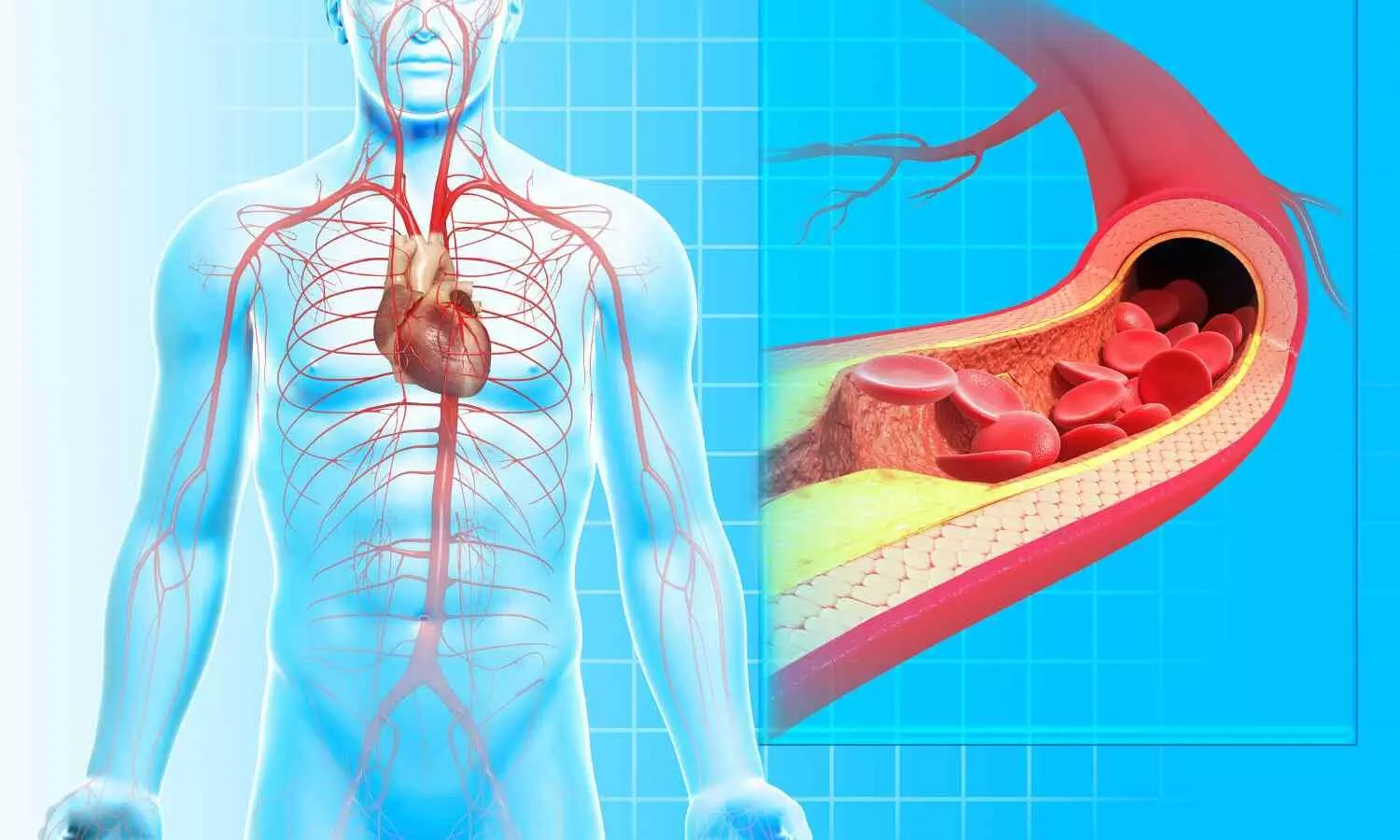


A new study published in the Journal of Clinical Hypertension showed that higher lipoprotein(a) [Lp(a)] levels and peripheral artery disease (PAD) were both independently linked to increased central arterial stiffness in persons with treated hypertension.
Arterial stiffness, a significant independent predictor of cardiovascular mortality as determined by carotid–femoral pulse wave velocity (cfPWV), is accelerated by hypertension, which affects more than 30% of people globally. Standard antihypertensive medications can reduce blood pressure, but there is still a significant residual risk of cardiovascular disease.
A genetically established, independent modulator of atherosclerosis and thrombosis, lipoprotein (a) [Lp(a)] causes arterial damage through pro-inflammatory pathways and endothelial dysfunction. Moreover, PAD, which is characterized by systemic atherosclerosis and decreased arterial compliance, is predicted by higher Lp(a) levels.
Although PAD and Lp(a) are both separately associated with vascular dysfunction, their combined clinical significance is uncertain. In order to ascertain if Lp(a) and PAD have additive or multiplicative effects on progressive arterial stiffness, this study assesses whether they are independently linked to higher cfPWV.
366 persons with treated hypertension participated in this cross-sectional research. cfPWV was used to measure central arterial stiffness. Tertiles were used to classify plasma Lp(a) concentrations. Clinical history, physical examination, and accessible diagnostic tests were used to identify PAD.
Robust linear regression was used to investigate relationships between Lp(a) tertiles and PAD with cfPWV. In univariable analyses, multivariable models were adjusted for variables linked to cfPWV, and interaction terms were employed to evaluate impact modification by PAD.
Across rising Lp(a) tertiles, the mean cfPWV rose. Following multivariable correction, cfPWV was greater in the middle tertile by 0.82 m/s (95% CI, 0.31–1.32; p = 0.002) and in the highest tertile by 1.29 m/s (95% CI, 0.75–1.84; p < 0.001) as compared to the lowest tertile.
Higher cfPWV was independently linked to PAD (adjusted difference, 1.20 m/s; 95% CI, 0.78–1.62; p < 0.001). PAD and Lp(a) tertiles did not interact (p for interaction >0.10).
Higher central arterial stiffness was independently linked to increased lipoprotein (a) concentrations in persons with treated hypertension, and higher cfPWV was independently linked to PAD. There was no discernible modifying impact associated with PAD status.
Overall, elevated Lp(a) may be linked to cardiovascular risk through cfPWV, a pertinent intermediate vascular phenotype, and Lp(a) may be a sign of unfavorable arterial remodeling in hypertension.
Source:
Mwipatayi, B. P., Dodd, J., Carnagarin, R., Mori, T. A., Golledge, J., Burrows, S., Watts, G. F., Iida, O., & Schlaich, M. P. (2026). Lipoprotein(a) and peripheral artery disease as independent predictors of arterial stiffness in patients with hypertension: A single-Center Cross-sectional study. Journal of Clinical Hypertension (Greenwich, Conn.), 28(6), e70309. https://doi.org/10.1111/jch.70309

