
Excellent 2-Year Outcomes After Mitral Valve Repair With Concomitant Tricuspid Valve Disease: JACC Study
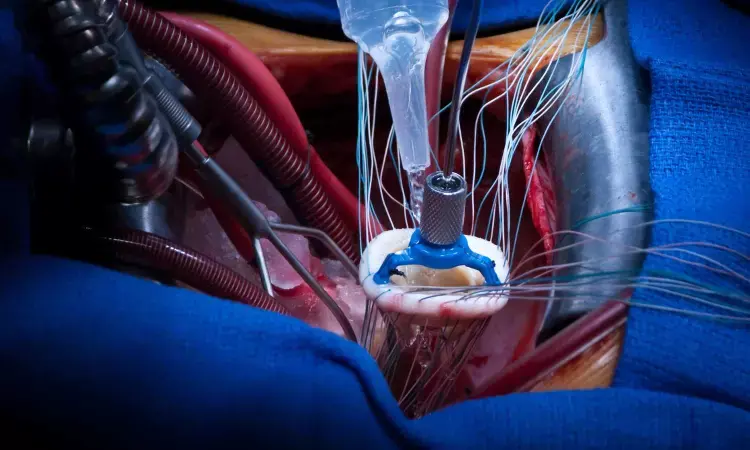


USA: A post hoc analysis of data from more than 300 patients in the Cardiothoracic Surgical Trial Network (CTSN) showed favorable outcomes among patients with degenerative mitral regurgitation (MR) and concomitant tricuspid valve disease who underwent surgical mitral valve repair.
At 2 years, more than 90% of patients were alive and free from mitral valve reoperation or severe recurrent MR. The incidence of the primary composite endpoint—death, mitral valve reoperation, or severe MR—was 8.0%, indicating durable short-term surgical success in this population.
The findings are from a multicenter cohort analysis published in the Journal of the American College of Cardiology (JACC) by Michael W.A. Chu, Division of Cardiac Surgery, Department of Surgery, Western University, London Health Sciences Centre, London, Ontario, Canada, and colleagues. The investigators examined echocardiographic outcomes adjudicated by a centralized core laboratory to assess the quality and durability of mitral valve (MV) repair in patients with degenerative mitral regurgitation (DMR) and coexisting tricuspid valve (TV) disease.
The study represents a post hoc evaluation of a previously conducted randomized trial involving 401 patients across 39 centers between 2016 and 2018. The parent trial assessed the role of concomitant tricuspid valve repair during mitral surgery in patients with DMR and moderate or less tricuspid regurgitation. For the current analysis, 87 patients were excluded due to mitral valve replacement, conversion from repair to replacement, non-isolated DMR, or lack of complete echocardiographic follow-up data. The final cohort included 314 patients with a median age of 67.4 years; approximately one-quarter were women.
Key Findings:
- At hospital discharge, 1.0% of patients had moderate mitral regurgitation (MR) and 0.7% had severe MR.
- The 30-day all-cause mortality rate was 1.0%, indicating low perioperative risk.
- At two years, 3.5% of patients had died, and 2.2% underwent mitral valve reoperation.
- Among survivors free from reoperation with available echocardiographic follow-up, 9.2% had moderate MR and 1.4% had severe MR.
- A mean mitral valve gradient greater than 5 mm Hg was observed in 2.5% of patients during follow-up.
- The composite endpoint of death, mitral valve reoperation, or severe MR occurred in 8.0% of patients over two years.
- Anterior or bileaflet mitral valve pathology was associated with a higher risk of treatment failure compared with isolated posterior leaflet disease (OR 2.48).
The authors concluded that surgical mitral valve repair in patients with DMR and concomitant tricuspid valve disease provides durable results over two years, with 92% of patients surviving free from reoperation or severe MR. These contemporary data offer a benchmark for evaluating surgical quality and may inform clinical decision-making and future trials in this patient population.
Reference:
Chu MWA, Raymond S, Gelijns AC, Moskowitz AJ, Borger MA, Mack M, Hung J, Voisine P, Gammie JS, Krane M, Yerokun BA, Bowdish ME, Conradi L, Bolling SF, Taddei-Peters WC, Jeffries NO, Marks ME, Gupta L, Iribarne A, Beyersdorf F, Bagiella E, Geirsson A, Overbey JR, Gillinov M, O'Gara PT, Ailawadi G, Falk V. Mitral Valve Repair for Degenerative MR With Moderate or Less Tricuspid Regurgitation: 2-Year Outcomes From a Multicenter Echocardiographic Core Laboratory-Adjudicated Cohort. J Am Coll Cardiol. 2026 Feb 18:S0735-1097(25)10598-6. doi: 10.1016/j.jacc.2025.12.065. Epub ahead of print. PMID: 41706073.

Next Story