
Fat tissue around heart may contribute to greater heart injury after heart attack, suggests study
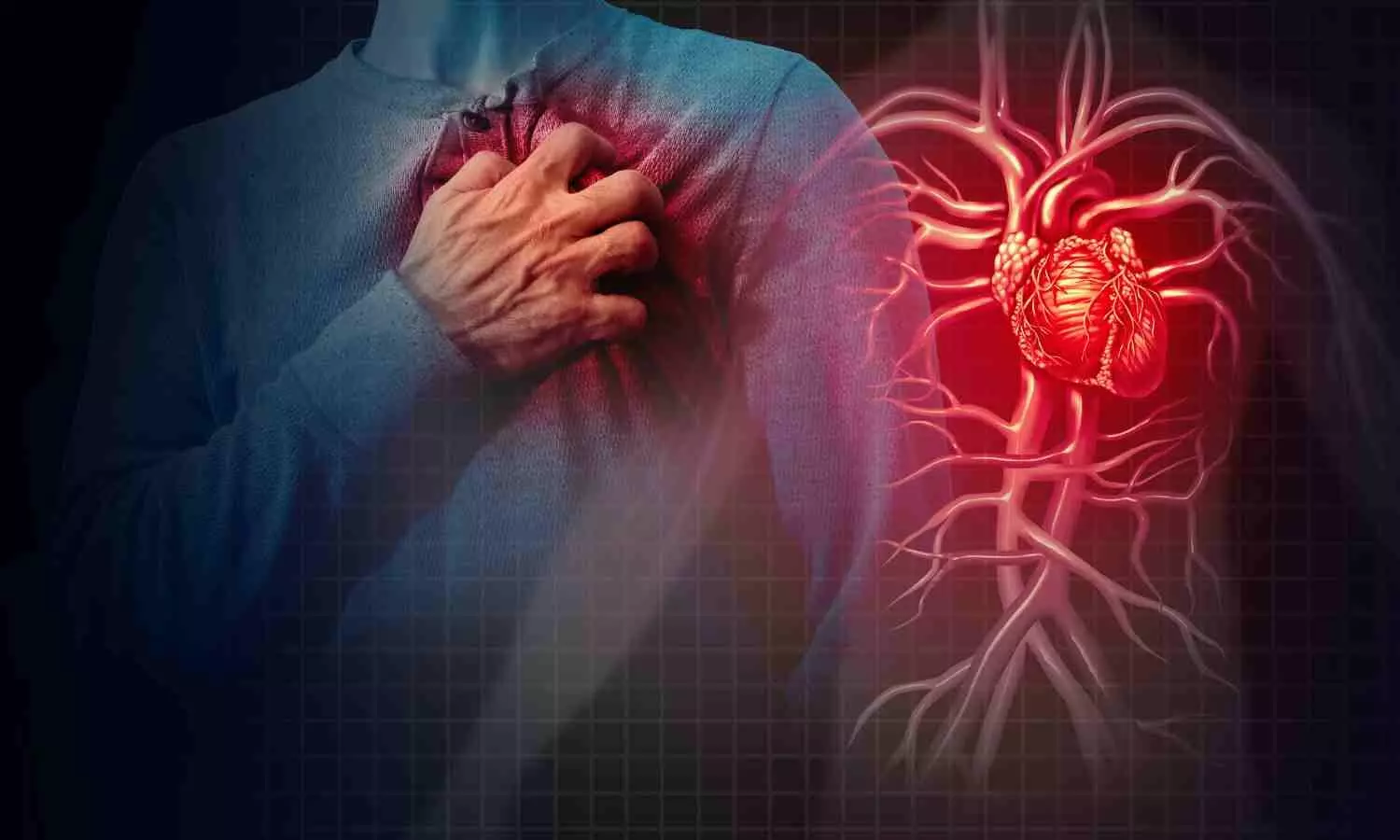


Increased volume of epicardial adipose tissue, detected by cardiovascular imaging, was found to be associated with greater myocardial injury after a myocardial infarction. These findings were presented today at EACVI 2025, the flagship congress of the European Association of Cardiovascular Imaging (EACVI), a branch of the European Society of Cardiology (ESC).
Cardiovascular diseases are the leading cause of death globally, accounting for around one-third of all deaths, of which 85% are due to myocardial infarction (MI) and stroke. “Mortality after an MI is largely driven by the extent of injury to the myocardium, the heart muscle. Characterising risk factors driving myocardial injury severity may help to identify patients are at the highest risk,” noted study presenter, Ms Clara Hagedorn from the University Hospital Göttingen, Germany.
Epicardial adipose tissue (EAT) is the layer of fat between the myocardium and the lining of the heart, directly surrounding the coronary arteries. Under certain pathological conditions, EAT releases inflammatory mediators leading to myocardial infiltration and constrictive effects. Over time, adverse remodelling of the myocardium can occur.3 It is already known that EAT is associated with coronary artery disease and major cardiovascular events.3 “As a potential marker, we investigated the relationship between the volume of EAT and the extent of myocardial injury after an MI using cardiovascular magnetic resonance (CMR) imaging,” explained Ms Hagedorn.
A prospective multicentre study enrolled 1,168 patients who underwent CMR within 10 days after a percutaneous coronary intervention following an acute MI. The study population was divided into quartiles based on EAT volume.
The researchers found that patients with EAT volume in the upper quartile were older than those in the lower quartile (66 years versus 63 years; p=0.002) and had a higher body mass index (28.9 kg/m2 versus 27.4 kg/m2; p=0.001). Higher EAT volume was independently associated with greater infarct size (p=0.032) and larger areas at risk (p=0.018), but lower microvascular obstruction (p=0.012). There appeared to be no differences in left ventricular ejection fraction, the heart’s pumping ability, between patients with larger versus smaller EAT volume.
Summing up the findings, Ms Hagedorn said: “We were able to show that patients with increased EAT volume exhibited greater acute myocardial injury following MI. Non-invasive quantification of EAT volume using CMR could play a decisive role in cardiovascular risk assessment beyond conventional risk factors and prospective validation is now warranted.”
Senior author, Doctor Alexander Schulz, also from the University Hospital Göttingen, Germany, concluded: “We would like to understand more about the mechanisms by which EAT impacts the myocardium. MI occurs at a relatively late stage in the development of coronary artery disease and it may be possible to intervene earlier in the process, identifying patients with elevated EAT volume and modulating effects as a preventive measure.”
