Food Supplementation after HF feasible but may not reduce hospitalization or ED visits: JAMA
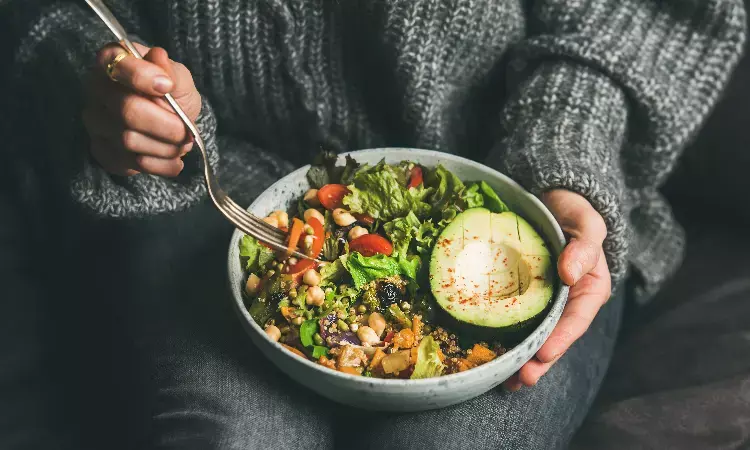


A pilot randomized trial showed that food supplementation after hospitalization for heart failure (HF) is feasible, with fresh produce being more acceptable and better adhered to than medically tailored meals. However, it did not reduce HF hospitalizations or emergency visits.
These findings support the need for larger trials to evaluate its clinical impact.
Low-quality dietary intake is associated with adverse heart failure (HF) outcomes, yet evidence evaluating food-as-medicine interventions that supply high-quality dietary content is limited. A study was done to determine the feasibility of providing food supplementation with medically tailored meals or fresh produce and explore the association of food supplementation vs usual care with clinical outcomes in patients recently hospitalized with HF and whether it differs by conditioning food supplementation to health care engagement.
This open-label factorial randomized clinical trial was conducted between April 2024 and October 2025 at 2 hospitals in Dallas, Texas. The study included patients who were hospitalized for HF and enrolled within 14 days of discharge, excluding those with prior heart transplant, a left ventricular assist device, or inotropic support at discharge; current enrollment in meal delivery programs; and inability to receive home deliveries. Participants were followed up with for 12 weeks. Of 150 participants enrolled, 2 were withdrawn due to clinical deterioration, 1 died, and 6 were lost to follow-up; all were included in the intention-to-treat analysis.
Participants were randomized 1:1:1 to medically tailored meals, fresh produce, or usual care. Those receiving food supplementation underwent secondary 1:1 randomization to conditional (linked to clinic attendance and medication fills) vs unconditional delivery. Implementation outcomes included delivery completion, adherence, and acceptability and exploratory clinical outcomes. The primary clinical outcome was defined as readmission for HF or emergency department (ED) visits for HF over 90-day follow-up. Secondary clinical outcomes included a win-ratio–based hierarchical composite (all-cause death, total HF hospitalizations or ED visits, and ≥10-point Kansas City Cardiomyopathy Questionnaire-Clinical Summary Score [KCCQ-CSS] improvement).
Results Among 150 participants (median [IQR] age, 59.5 [52.0-66.0] years; 91 [60.7%] male), the baseline median (IQR) left ventricular ejection fraction was 35% (25.0-54.0), the baseline median (IQR) KCCQ-CSS was 56.6 (36.8-72.9), and 79 (52.7%) had food insecurity. Food delivery completion was 93.6% with a mean (SD) reported consumption adherence of 4.7 (2.4) days per week (medically tailored meals) and 5.5 (2.3) days per week (fresh produce), with high retention (96.0%). Fresh produce demonstrated superior acceptability compared with medically tailored meals (Net Promoter Score: 8.6 vs 7.3; P = .02). There was no significant difference in the primary clinical outcome (HF readmission or ED visit) between food supplementation (23 events among 100 participants) vs usual care (9 events among 50 participants) (adjusted rate ratio, 1.09; 95% CI, 0.49-2.43; P = .83).
The hierarchical composite favored food supplementation vs usual care (win ratio, 1.21; 95% CI, 1.14-1.29; P < .001). Among participants receiving food supplementation, conditional delivery (vs unconditional) was not associated with risk of HF events. In this randomized clinical trial, 90-day food supplementation was feasible and well accepted in individuals with recent HF. Food supplementation was not associated with an improvement in the primary clinical outcome and there was no difference when conditioning food supplementation on health care engagement.
Reference:
Pandey A, Keshvani N, Coellar JD, et al. Food Supplementation in Patients Hospitalized for Heart Failure: A Randomized Clinical Trial. JAMA Cardiol. Published online April 08, 2026. doi:10.1001/jamacardio.2026.0435