
Investigational drug could control cholesterol, suggests study
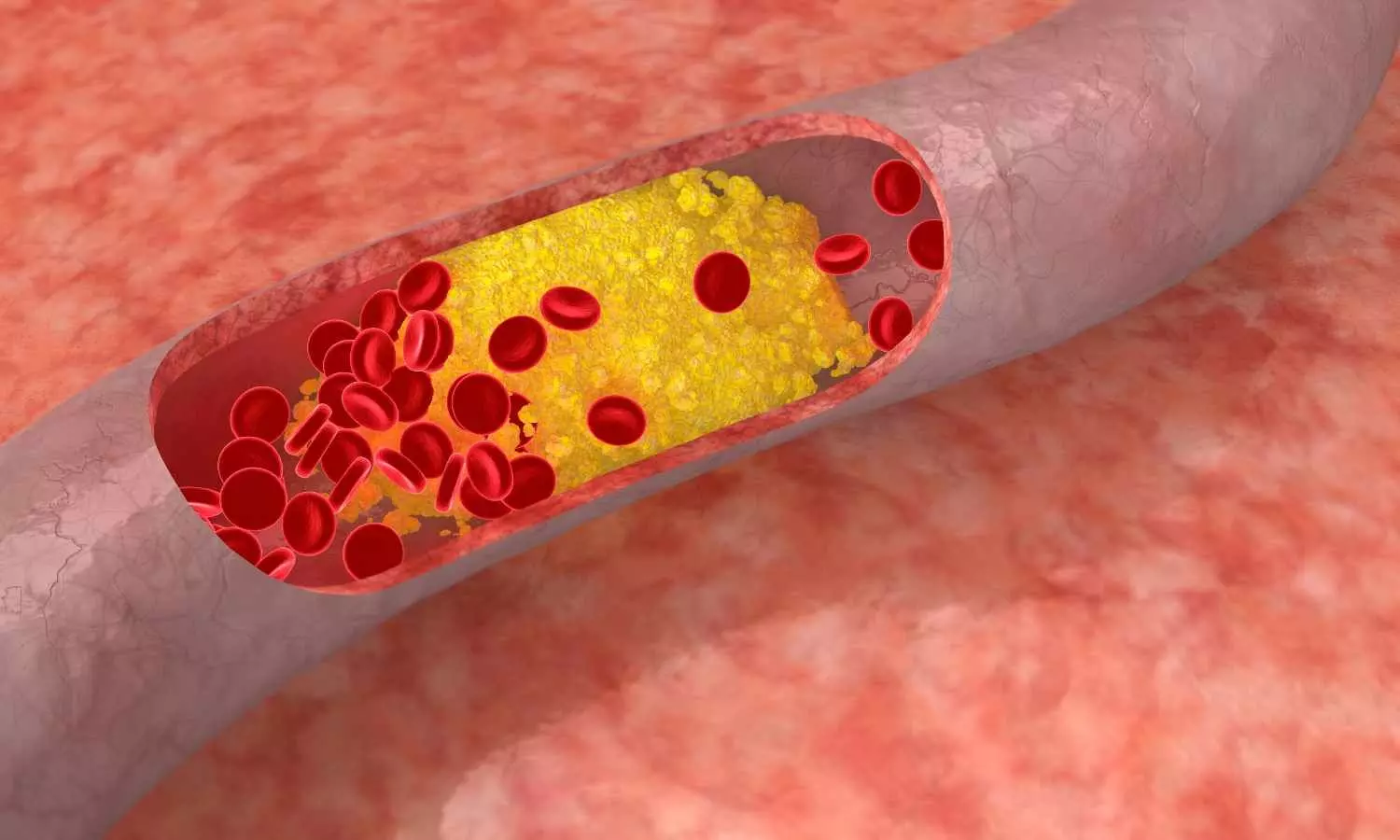


Cholesterol-related heart disease remains the leading cause of death worldwide, and while doctors have more tools than ever to treat it, many patients still can't achieve safe cholesterol levels, or can't tolerate the side effects of available medications. Now, researchers from University of California San Diego School of Medicine have uncovered a hidden biological pathway that explains why high-cholesterol diets steadily chip away at our body's ability to clear harmful low-density lipoprotein (LDL) cholesterol from the blood, and they've identified a drug candidate already proven safe in humans that could potentially target it. The results are published in Nature.
"We've known for a long time that a high-cholesterol diet reduces the liver's ability to clear cholesterol from the blood, but we didn't fully understand why," said senior author Alan Saltiel, PhD, professor of medicine at UC San Diego School of Medicine and director of the UC San Diego/UCLA Diabetes Research Center. "This new discovery explains a critical piece of that puzzle."
The liver is the main organ involved in removing cholesterol from the blood so it can be broken down and used elsewhere. This is done through LDL receptors, which sit on the surface of liver cells and act like docking stations, grabbing LDL cholesterol from the bloodstream and pulling it inside the cell for processing. The more LDL receptors on liver cells, the more cholesterol gets cleared from the blood — which is why most cholesterol-lowering drugs, such as statins or PCSK9 inhibitors, work by preserving or increasing the number of these receptors.
The new research, carried out in a combination of mice and human cells, reveals a previously unknown mechanism that quietly works against the cholesterol removal process, slowly reducing the number of LDL receptors and contributing to high blood cholesterol. The team found that this process begins when a protein called Ral — which Saltiel has previously studied in fat cells — is activated by high dietary cholesterol. The more Ral is activated, the fewer LDL receptors remain available to clear cholesterol from the blood.
This depletion process ultimately relies on an enzyme called cathepsin A (CTSA). The researchers found that blocking CTSA with a small molecule inhibitor was enough to stabilize LDL receptors and dramatically lower circulating LDL cholesterol in mice.
"There's still a real need for new cholesterol-lowering options, since some people can't get to safe levels even with the drugs we have now," said Saltiel. "This new pathway we discovered is completely separate from anything that existing drugs target, so it gives us a new opportunity to fill that gap."
After a fundamental biological breakthrough, it typically takes significant additional research to find drugs that target it. However, in this case, a CTSA inhibitor has already been through the early stages of drug development, with the initial goal of treating heart failure. While it was eventually shelved for strategic reasons, the drug had previously advanced to a Phase 1 clinical trial, where it was successfully tested for safety. This new discovery suggests that the investigational drug is already ready for testing in a Phase 2 trial for high cholesterol.
"Luckily, there's an experimental drug sitting on the shelf that's already been shown to be safe in humans," said Saltiel. "We hope to test whether this might be effective by conducting a clinical trial — which could potentially bring a new treatment option to patients much sooner than would have been expected."
Reference:
Feng, X., Zhang, S., Wang, Y. et al. Dietary cholesterol activates a Ral-dependent pathway driving LDLR turnover. Nature (2026). https://doi.org/10.1038/s41586-026-10697-z
