Low Plasma Potassium Linked to Increased Day-to-Day Atrial Fibrillation Risk: Study
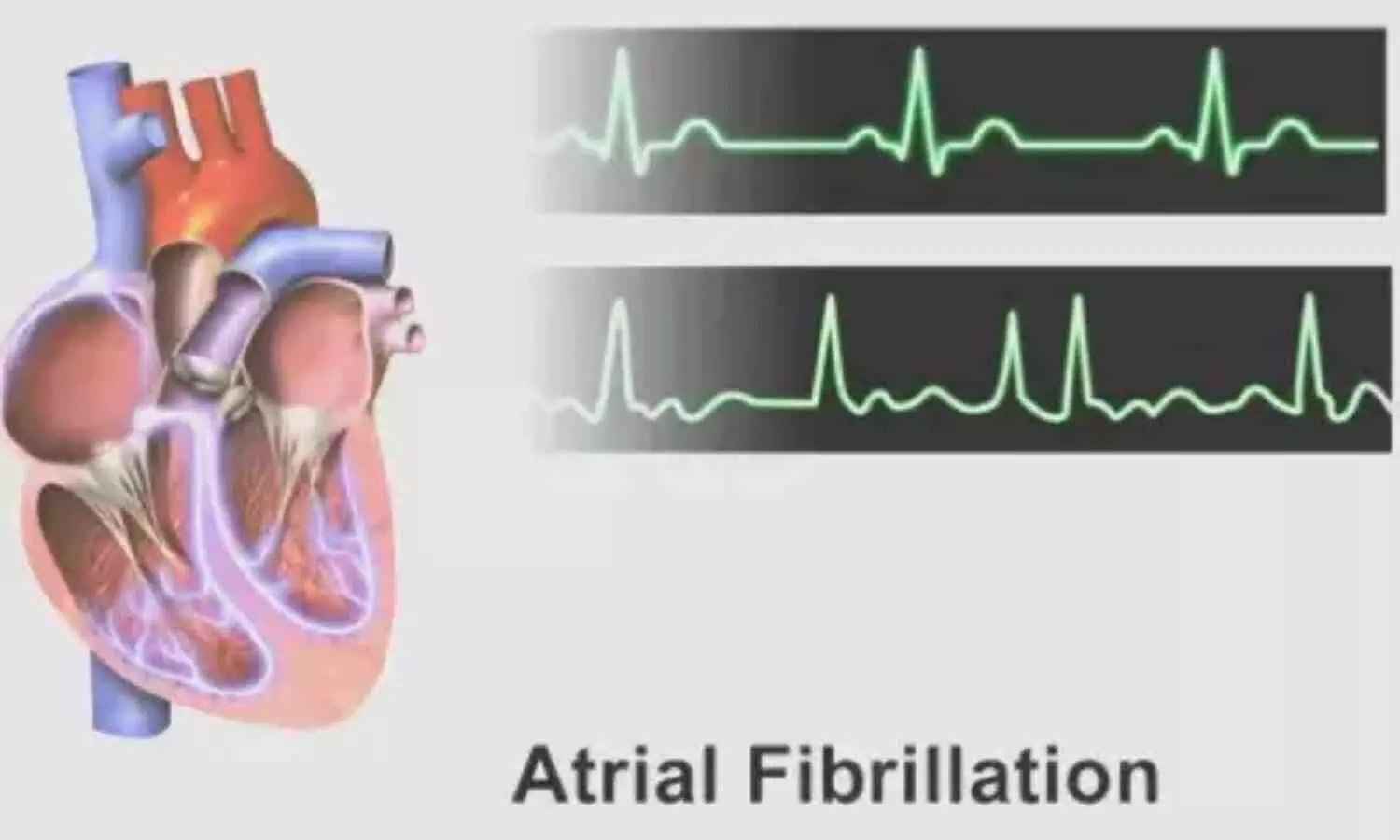


Researchers have found in an exploratory study that lower plasma potassium (p-potassium) levels were associated with an increased likelihood of day-to-day atrial fibrillation (AF) occurrence. The association was especially pronounced for longer AF episodes and when potassium levels deviated from an individual’s usual baseline, suggesting that both absolute low levels and intra-individual fluctuations in potassium may trigger AF
Potassium levels influence cardiac electrophysiology, yet their day-to-day association with atrial fibrillation (AF) remains unclear. This study investigated the association between plasma potassium (p-potassium) and daily AF in at-risk individuals undergoing continuous electrocardiographic monitoring.
This is a post hoc analysis of the LOOP study randomizing participants with stroke risk factors to implantable loop recorder (ILR) screening for AF (n = 1501) or usual care. The ILR raw data were linked to p-potassium measurements collected in routine care allowing for 1-day time difference. Associations between p-potassium and daily AF > 60 min (main outcome) were analysed using generalized and linear mixed effect models.
Results: The ILR data and blood tests results were available for 1334 participants combining >1.6 million days of heart rhythm monitoring (including 50 746 days with AF) with 12 136 p-potassium measurements. P-potassium was lower on days with AF [mean difference -.21 mmol/L (-.25; -.18)]. Self-controlled case analyses comparing AF incidence during hypokalaemia (p-potassium <3.5 mmol/L) vs in normal range yielded an incidence rate ratio of 2.24 (1.29-3.88).
Hypokalaemia was present in 5.1% of days with AF lasting <60 min and 19.1% with AF lasting >240 min. Each mmol/L decrease in p-potassium was associated with a five-fold increase in odds of AF [adjusted odds ratio (aOR) .20 (.15-.28)], more strongly when p-potassium deviated from the individual's usual value [aOR .15 (.10-.24); P-interaction = .001], and less in participants receiving diuretics [aOR .28 (.17-.47); P-interaction < .0001].
This exploratory study found that low p-potassium was associated with day-to-day AF occurrence, particularly for longer episodes and when deviating from the individual's usual level.
Reference:
Hessellund AK, Kongebro EK, Haugan KJ, Graff C, Spona DC, Baadsgaard JA, Xing LY, Højberg S, Krieger D, Brandes A, Køber L, Frikke-Schmidt R, Svendsen JH, Diederichsen SZ. Hypokalaemia and atrial fibrillation detected by implanted loop recorders. Eur Heart J. 2025 Dec 15;46(47):5129-5139. doi: 10.1093/eurheartj/ehaf623. PMID: 40884202.