
New Study: hs-TnT Levels Accurately Flag Cancer Patients at Risk of Serious Immunotherapy-Related Heart Events
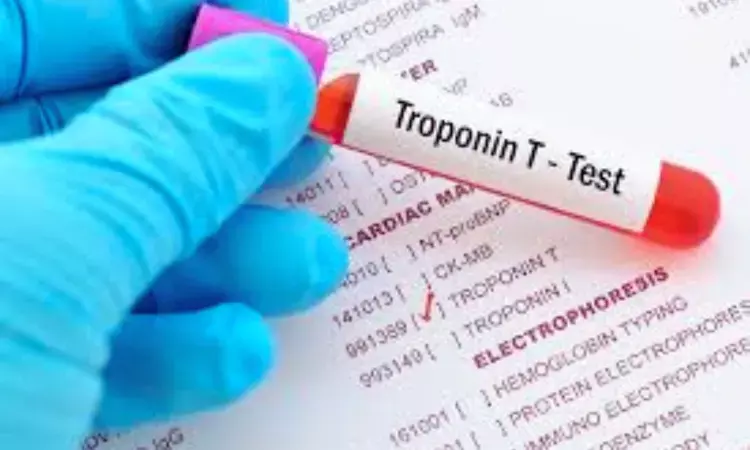


USA: A new study published in the Journal of the American Heart Association has shed important light on the diagnostic and prognostic value of high-sensitivity troponin T (hs-TnT) in patients receiving immune checkpoint inhibitors (ICIs).
The research, led by Milagros Pereyra Pietri from the Department of Cardiovascular Medicine at Mayo Clinic, Phoenix, examined how hs-TnT levels can help identify patients at heightened risk for serious cardiovascular events during cancer treatment.
ICIs have transformed cancer care, offering substantial survival benefits across several malignancies. However, these therapies are also linked to potential cardiac complications, including myocarditis, heart failure, and ischemic events. While elevated troponin levels are widely used to diagnose myocarditis or myocardial infarction, limited information exists on how troponin elevations from other causes impact outcomes in this population. The current study sought to fill that gap.
The analysis included 5,423 patients treated with ICIs between 2011 and 2022, of whom 1,669 had post-treatment hs-TnT measurements. The average age was nearly 69 years, and over half were male. Patients were followed for one year to assess cardiovascular outcomes, including cardiac death, heart failure, and major adverse cardiovascular events (MACE).
The study reported the following findings:
- Nearly 20% of patients developed elevated hs-TnT levels after initiating immune checkpoint inhibitor therapy.
- ICI-related myocarditis was identified as the most serious cause of troponin elevation, carrying an exceptionally high risk of cardiac death with hazard ratios above 50.
- Patients with ICI-related myocarditis also showed the highest rates of major adverse cardiovascular events, indicating severe immune-mediated cardiac toxicity.
- Elevated hs-TnT levels caused by heart failure, myocardial infarction/type 2 ischemia, or infection/sepsis were also linked to increased cardiovascular risks, although to a lesser extent than ICI-related myocarditis.
- Troponin values above 576 ng/L were found to strongly predict the risk of cardiac death in ICI-treated patients.
- hs-TnT levels exceeding 319 ng/L were associated with a significantly higher likelihood of major adverse cardiovascular events.
Importantly, the findings suggest that hs-TnT is not only a diagnostic marker for myocarditis but also a valuable tool for risk stratification in a broader group of ICI-treated patients. Stratifying troponin elevations by their underlying cause may help clinicians determine which patients need closer cardiac monitoring or early therapeutic intervention.
The researchers acknowledged several limitations, including the retrospective design, incomplete baseline troponin data, and the lack of uniformity in biomarker testing across sites. Despite these constraints, the study offers crucial real-world insights and underscores the need for prospective trials to validate the proposed risk thresholds.
"Overall, the findings highlight hs-TnT as a critical biomarker that could enhance early detection of cardiovascular complications, guide clinical decision-making, and ultimately improve outcomes in patients undergoing immune checkpoint inhibitor therapy," the authors concluded.
Reference:
Pereyra Pietri M, Farina JM, Awad K, Kanaan CN, Scalia IG, Tagle-Cornell C, Novais BS, Koepke LM, Kenyon CR, Mahmoud AK, Abbas MT, Ali NB, Larsen CM, Narayanasamy H, Tamarappoo B, Lee KS, Herrmann J, Arsanjani R, Ayoub C. Diagnostic and Prognostic Value of High-Sensitivity Troponin T for Cardiovascular Outcomes in Patients Receiving Immune Checkpoint Inhibitor Therapy. J Am Heart Assoc. 2025 Nov 26:e041680. doi: 10.1161/JAHA.125.041680. Epub ahead of print. PMID: 41294120.

Next Story